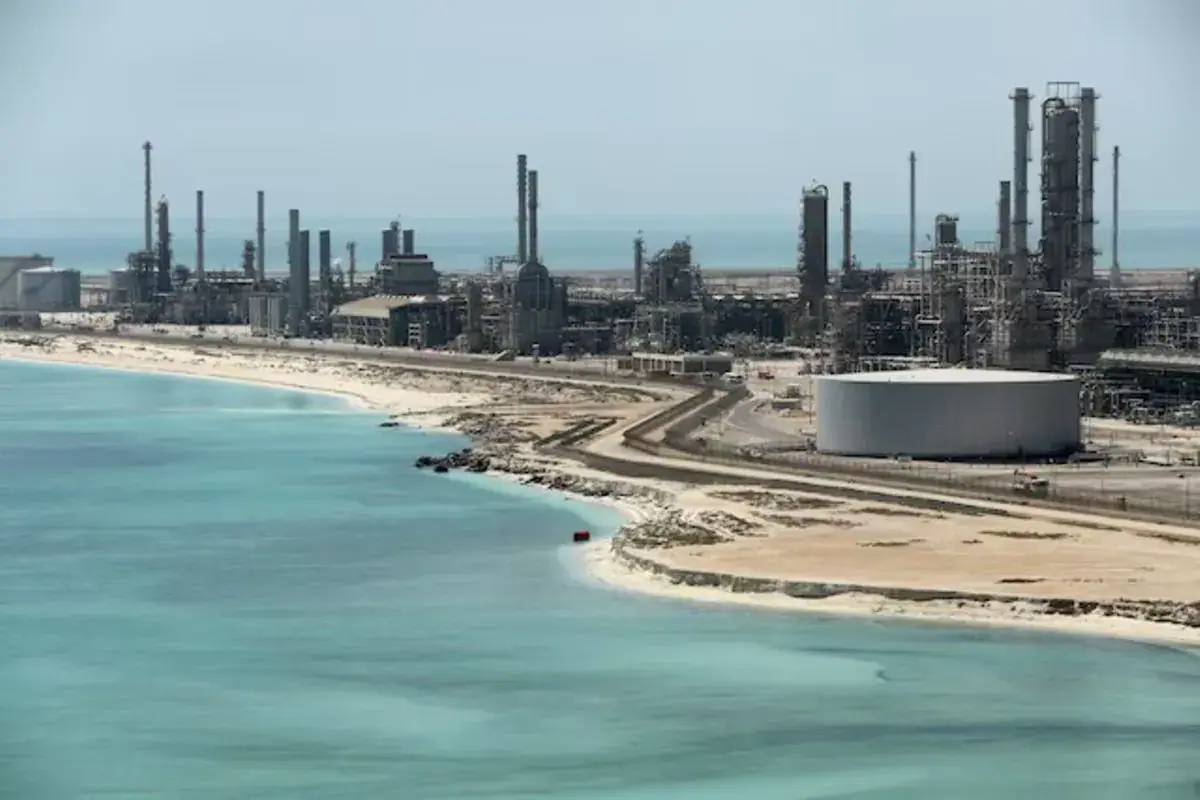
Yemen's Iran-aligned Houthis announced on Tuesday that they had launched a successful ballistic missile strike on Saudi Arabia's Ras Tanura oil refinery, the largest in the kingdom. The refinery, which has a capacity of 550,000 barrels per day, is a critical component of Saudi Arabia's oil export infrastructure. Located on the Gulf, west of the Strait of Hormuz, the complex also includes a shipping terminal.
The Houthis' military spokesperson, Yahya Saree, stated that the strike had caused a fire at the complex. However, Saudi authorities did not immediately confirm the attack. The incident has further disrupted oil supplies and heightened the risk of a wider regional conflict, eight months since the Iran war began. The Houthis also claimed to have attacked Saudi military aircraft and repelled an advance by Saudi-backed forces near the Bab el-Mandeb Strait.
The Bab el-Mandeb Strait is an important Red Sea shipping route, and the Houthis' claims of repelling Saudi-backed forces are significant. Saudi-backed Yemeni government forces had earlier pushed the Houthis out of coastal areas they had seized in September, loosening the group's grip on the vital Red Sea oil route. The Houthis' military actions have been met with a strong response from the Saudi-led coalition fighting in support of Yemen's internationally recognised government.
The Saudi-led coalition reported that they had intercepted and destroyed two ballistic missiles launched by the Houthis towards Riyadh, the Saudi capital. Civil defence authorities briefly issued an air raid alert in Riyadh on Tuesday afternoon, and falling debris from the interception caused material damage to a building, a construction site, and a vehicle. The Houthis also claimed to have attacked two military transport jets at Najran Airport and an airbase in Khamis Mushait.
In addition to the Ras Tanura refinery, the Houthis claimed to have attacked the Saudi defence ministry building in Riyadh, Abha airport, and other military targets. However, there was no immediate Saudi confirmation of these attacks. The escalation of hostilities has shattered a 2022 UN-brokered truce between the coalition and the Houthis, who control the Yemeni capital Sanaa.
The conflict has drawn in other regional nations, with Saudi Arabia, Turkey, and Pakistan meeting Iranian officials in Tehran on Monday to try to reduce regional tensions. Egypt's parliament authorised the country's military on Monday to help defend Saudi Arabia if asked, as the nation considers joining a mutual defence pact with the three countries.
The ongoing conflict in Yemen has significant implications for regional stability and global oil supplies. The Houthis' continued military actions against Saudi Arabia's oil infrastructure pose a substantial threat to the kingdom's economy and the global energy market.
Key points
- The Houthis claim to have hit Saudi Arabia's Ras Tanura oil refinery with a ballistic missile, causing a fire at the complex.
- The incident has further disrupted oil supplies and heightened the risk of a wider regional conflict.
- The conflict has drawn in other regional nations, with diplomatic efforts underway to reduce tensions.