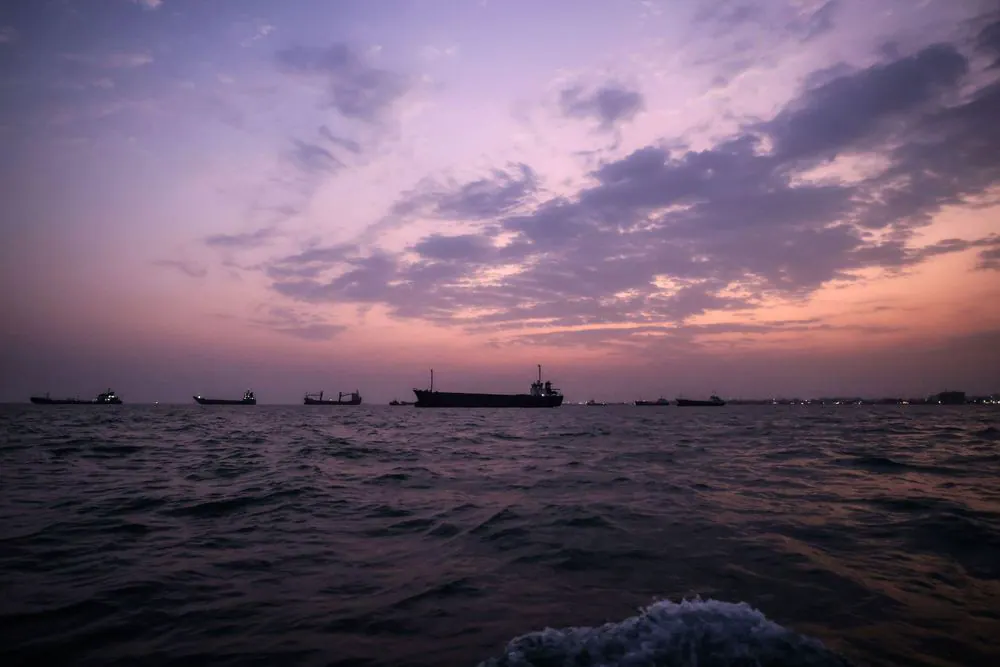
The military situation in Yemen has rapidly deteriorated following a week of intense fighting between government forces and Ansar Allah, also known as the Houthis. The Houthis, backed by Iran, have taken control of the western coast, including the strategic Bab al-Mandab Strait. This development has significant implications for international maritime security, as the strait is a major chokepoint for global trade, with millions of barrels of oil passing through daily.
The Houthis' control of the Bab al-Mandab Strait comes after they seized the islands of Greater and Lesser Hanish, the last two islands around the strait that had remained in government hands. This move gives the Houthis direct oversight of maritime traffic, allowing them to track ships heading toward Saudi ports with precision. The strait's importance cannot be overstated, as it is a gateway for trade between Asia and Europe via the Suez Canal.
The fall of the western coast, including the Bab al-Mandab Strait, has been attributed to various factors, including the withdrawal of Emirati forces from Yemen at the request of Saudi Arabia. Yemeni researcher Yaqoub al-Sufyani notes that the UAE played a direct and pivotal role in establishing and supporting local forces that had been fighting the Houthis. However, Riyadh's shift in focus from confronting the Houthis to confronting its allies and partners in the anti-Houthi camp has been criticized.
The consequences of the failure to protect the Bab al-Mandab Strait are far-reaching. The Houthis' control of the strait threatens to disrupt Saudi oil supplies to Asia, as well as global trade. The strait is also a critical passage for transporting essential goods to all parts of the world. Any prolonged disruption could affect the movement of trade bound for Egypt's Suez Canal, leading ships to reroute around Africa.
The Houthi group's disruption of maritime navigation in the Red Sea in 2023 was in response to Israel's war on the Gaza Strip. This year, they have resumed attacks on shipping in the Red Sea and on Saudi Arabia, in response to the US war on Iran, the Houthis' close ally. The international community is watching the developments in Yemen with concern, as the conflict threatens to spread to other fronts.
Saudi Crown Prince Mohammed bin Salman recently spoke with US President Donald Trump, urging him to launch strikes against the Houthis, but Trump rejected the request. The US has strict restrictions on its support for Saudi Arabia, with American forces not directly participating in strikes or assisting in refueling Saudi warplanes.
The humanitarian implications of the conflict in Yemen are dire, with millions of people affected by the fighting. The international community is calling for a peaceful resolution to the conflict, but the situation remains volatile. The Houthis' control of the Bab al-Mandab Strait has significant implications for global trade and security.
Key points
- The Houthi rebels' seizure of the Bab al-Mandab Strait has significant implications for international maritime security and global trade.
- The conflict in Yemen threatens to spread to other fronts, with the US and Iran on opposite sides.
- The humanitarian situation in Yemen is dire, with millions of people affected by the fighting.