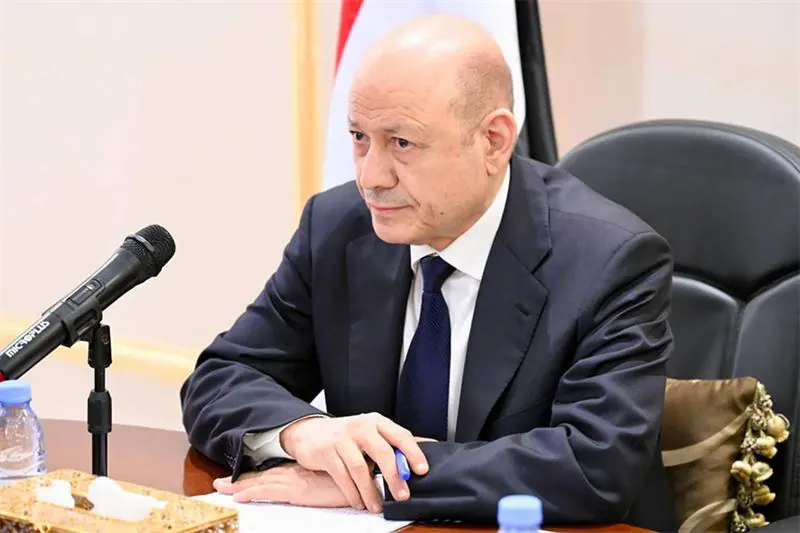
Yemen's leader, Rashad al-Alimi, recently held a phone call with former US President Donald Trump, seeking American assistance in the fight against the Iran-backed Houthis. According to a source in Alimi's office, the call took place on Sunday and was intended to demonstrate solidarity with Yemen's embattled government. The Houthis have made significant gains, seizing the country's entire Red Sea coast in a swift offensive.
The Houthis' advances have raised concerns about the security of the Bab al-Mandeb strait, a vital waterway for oil shipments. The group's control of strategic coastal areas has cemented Iran's hold on the region, which could have far-reaching implications for the wider Gulf. Saudi Arabia, a key crude exporter, relies heavily on this route for its oil shipments.
Alimi heads Yemen's Saudi-backed Presidential Leadership Council, whose forces are fighting the Houthis with air support from Saudi Arabia. The request for US help comes after a Houthi attack on Riyadh on Saturday, their first to target the Saudi capital in years. This escalation has heightened tensions in the region, with Saudi Crown Prince Mohammed bin Salman also urging Trump to take action against the Houthis.
According to US media reports, Trump did not promise military support, but did indicate that the Houthis have agreed not to hit US targets. Fox News reported that Trump had made this assurance, although the details of the conversation remain unclear. The US has been cautious in its involvement in the conflict, but the situation on the ground is becoming increasingly dire.
The conflict in Yemen has been ongoing for several years, with a fragile 2022 truce between the Houthis and the government falling apart in July. The Houthis' decision to allow an Iranian plane to land in Sanaa, in defiance of Riyadh's control over Yemeni airspace, sparked a spate of attacks. Since then, the group has announced a maritime blockade of Saudi Arabia and begun hitting its ships and territory.
The humanitarian situation in Yemen is also deteriorating, with over 100,000 people fleeing fighting in recent weeks, according to the UN. The Crisis Group has warned that the Houthi advance risks widening the regional war, which could have far-reaching consequences. Egypt, Sudan, and US officials have discussed ending the Sudanese war on the sidelines of the UN General Assembly.
The international community is closely watching the situation in Yemen, with the US Treasury chief announcing plans to "shut down" Iran airlines. The conflict has significant implications for regional stability, and the US, Saudi Arabia, and other key players are under pressure to find a solution. The situation remains fluid, with the potential for further escalation in the coming weeks.
Key points
- Yemen's leader Rashad al-Alimi requests US support against Houthis
- Houthis seize strategic coastal areas, threatening oil shipments
- US cautious in involvement, but situation on ground becoming increasingly dire