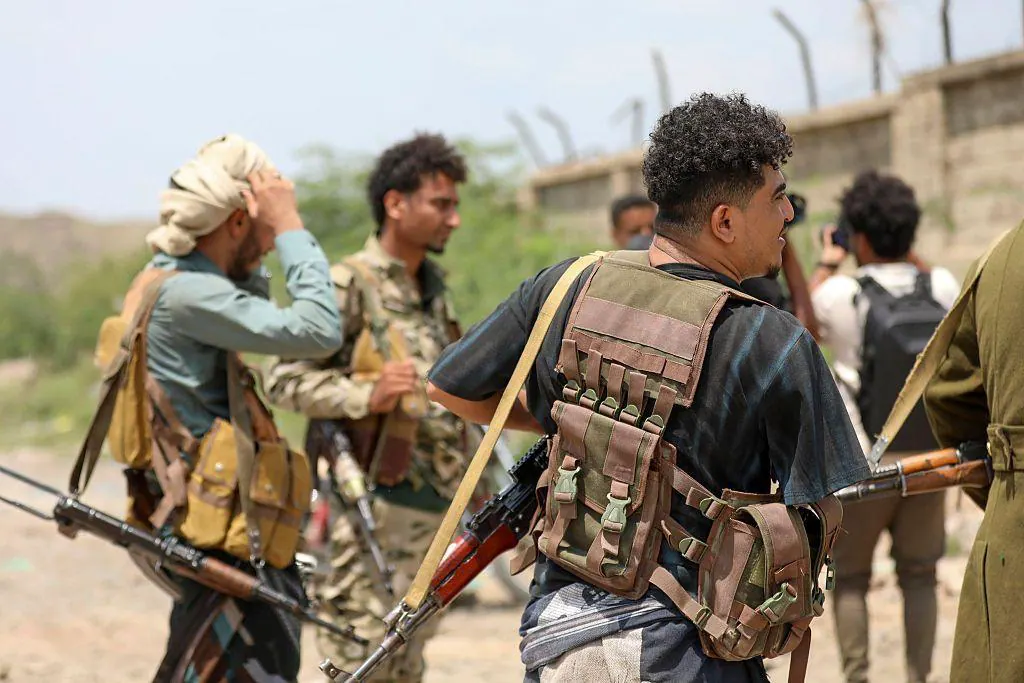
The Yemeni government, led by President Rashad Al-Alimi, has declared the start of a new military phase against Houthi rebels. Al-Alimi announced the beginning of military operations to regain control of rebel-held areas and restore state authority. He emphasized that the government has exhausted all peaceful means and that the military will now take action to liberate the country from what he described as "Houthi terrorist militia."
The announcement comes as several Yemeni fronts have seen an escalation of violence, raising questions about the government's ability to translate its military mobilization into a broad operation that can change the country's control map. The government's military strategy involves coordination between various military formations and securing supply lines. The military also needs to ensure that it can maintain control over areas it recovers and provide basic services to the local population.
The conflict has significant implications for the country's future, with the Houthis controlling large areas, including the capital Sana'a and the northern province of Saada. The government's ability to regain control of these areas will depend on its military strategy and the level of support it receives from its allies. The international community, including Saudi Arabia, has expressed support for the Yemeni government's efforts to restore stability and security in the country.
The military operations have already led to clashes in several areas, including the provinces of Taiz and Lahj. The Yemeni military has reported significant gains, including the recapture of several villages and the killing of hundreds of Houthi fighters. However, the Houthis have also launched retaliatory attacks, including a missile strike on a Saudi Aramco facility in Riyadh.
The conflict has significant humanitarian implications, with millions of Yemenis facing severe economic and humanitarian challenges. The escalation of violence is likely to exacerbate these challenges, with many civilians facing difficulties accessing basic services, including food and healthcare. The international community has called for a peaceful resolution to the conflict, but the government's military campaign is likely to continue in the coming weeks.
The Yemeni government's military campaign has several key objectives, including the recapture of rebel-held areas and the restoration of state authority. The government has also emphasized the need to protect the country's maritime routes, including the Bab al-Mandab strait, which is a critical waterway for international trade. The conflict is likely to have significant implications for regional and international security.
The success of the government's military campaign will depend on several factors, including its ability to coordinate its military efforts and secure support from its allies. The government will also need to address the humanitarian challenges facing the country and provide basic services to the local population. The conflict is likely to continue in the coming weeks, with significant implications for the country's future and regional stability.
Key points
- The Yemeni government has launched a new military phase against Houthi rebels, aiming to regain control of rebel-held areas and restore state authority.
- The conflict has significant humanitarian implications, with millions of Yemenis facing severe economic and humanitarian challenges.
- The government's military campaign has several key objectives, including the recapture of rebel-held areas and the restoration of state authority.