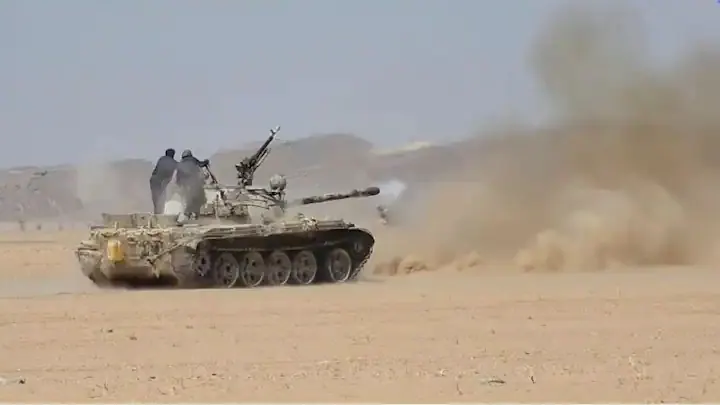
The ongoing conflict in Yemen has resulted in a significant increase in casualties, with the latest situation report indicating that 809 new casualties were recorded between 19 and 26 September 2026, including 164 deaths and 645 injuries. This brings the cumulative total since 6 August to 4,481, including 838 deaths. The death toll represents 20 percent of newly reported casualties, with the conflict showing no signs of abating.
The Health Emergency Operation Centre (HEOC) register reported that Lahj remains the heaviest front, with Al-Madharibah wa Ras Al-Arah and the Bab Al-Mandab coast accounting for the largest daily burden on both days for which detailed field reports are available. Marib and Taiz were also heavily affected, with 47 casualties on 21 September, including 18 deaths, and 34 on 26 September. The situation on the ground remains dire, with civilians bearing the brunt of the conflict.
The displacement crisis in Yemen continues to worsen, with registered displacement growing by more than half in eight days. The Executive Unit for IDPs consolidated report of 24 September registers 27,413 displaced families, or 180,513 people, across ten governorates, up from 17,852 families, or 122,297 people, on 15 September. Marib and Al-Dhale’e have been added as governorates of arrival, while Aden has more than tripled its caseload to 3,741 families.
The Rapid Response Mechanism (RRM) registration has reached its highest daily levels, with 1,315 households registered on 21 September and 1,470 two days later on 23 September 2026. The mechanism has reached 15,197 households, or 81,140 people, since 1 August. However, kit stock-outs meant no households could be assisted in Taiz or Lahj on 24 September, highlighting the challenges faced by humanitarian responders.
The risk of outbreaks, including cholera, measles, malaria, and dengue, is rising among displaced families, who face disrupted maternal, mental health, and chronic care. Two IDP sites in Aden have reported cholera alerts, prompting the World Health Organization (WHO) and the Ministry of Public Health and Population (MoPHP) to activate rapid response teams for active surveillance. Suspected cholera cases have reached 7,784 by week 38.
The health system in Yemen is under strain, with comprehensive emergency obstetric and newborn care (CEmONC) temporarily suspended in two hospitals in Marib and Ras Al-Arah as theatres and staff are redirected to war wounded. Patients are being referred to the nearest functioning hospitals, while fewer facilities are reporting in Marib, Taiz, Ad Dali’, and Aden, where only about 60 percent were fully functional before the escalation.
The WHO has strengthened its pipeline, dispatching two trucks carrying 258 Interagency Emergency Health Kits (IEHK) and Trauma and Emergency Surgery kits (TESK) valued at US$ 184,082 and weighing 8.9 Metric tons from the Dubai hub on 22 September. The organization has also secured funding for surgical and trauma supplies, including a US$ 517,109 procurement package bankrolled through the Central Emergency Response Fund (CERF).
Key points
- The conflict in Yemen has resulted in over 840 deaths and 4480 serious injuries.
- Displacement in Yemen has grown rapidly, with over 27,413 displaced families registered across ten governorates.
- The risk of outbreaks, including cholera and measles, is rising among displaced families in Yemen.