The Connecting Youth to Gainful Entrepreneurship (Y-Connect) project, funded by the Dutch embassy and implemented by AVSI Foundation, has concluded in Isingiro, Uganda. The two-year initiative targeted 1,700 young refugees and members of host communities, providing training in practical skills, access to financial services, and business development support. The project aimed to help participants transition from subsistence activities to enterprises capable of generating dependable incomes.
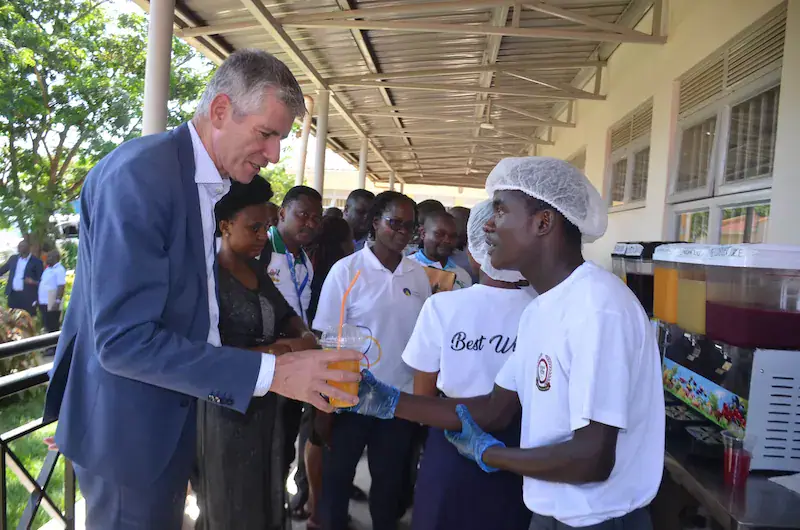
The project supported young people in various business skills, including poultry farming, piggery, horticulture, meat processing, baking, and juice production. According to AVSI Foundation country representative John Makoha, young refugees are increasingly moving away from dependence on irregular casual labor towards self-employment. The initiative also supported 43 active Village Savings and Loans Associations, bringing together over 1,000 young people to save collectively and access loans.
Bouwe-Jan Smeding, deputy ambassador of the Kingdom of the Netherlands to Uganda, expressed concerns that agricultural projects often focus on short-term gains rather than equipping beneficiaries to manage sustainable enterprises. He emphasized the need for development partners to support the government and facilitate a transition towards sustainable development. Smeding argued that numerous organizations implementing small projects in the same communities over short periods can be counterproductive.
Despite the project's achievements, concerns remain about the sustainability of the businesses established. Project manager Golden Tayebwa acknowledged that many supported enterprises remain too young to operate without further guidance, investment, and mentorship. The project has handed responsibility for sustaining its gains to the Office of the Prime Minister and district authorities.
Local leaders have praised the project's impact, with Isingiro district agriculture officer Julius Mulumba noting that Y-Connect complemented government programs by providing skills and resources that public agencies cannot always deliver. Cecilia Kambabazi, the Office of the Prime Minister's livelihoods officer in Nakivale, highlighted the role of local leadership and settlement managers in ensuring support reached intended beneficiaries.
The next challenge for the young entrepreneurs is turning early success into lasting businesses. Tayebwa encouraged them to face the harder parts of building sustainable enterprises, emphasizing that a business is not weak because it is small, but because it is growing. The Netherlands remains committed to supporting Uganda's development, but future interventions should prioritize lasting economic transformation.
As the project comes to a close, stakeholders are reflecting on the lessons learned and the way forward. The experience of Y-Connect highlights the importance of coordination and alignment with government priorities in development interventions. The project's legacy will depend on the ability of its beneficiaries to sustain and grow their businesses, and on the continued support of development partners.
Key points
- The project's sustainability is uncertain due to the short-term nature of many development interventions.
- The initiative empowered young refugees and members of host communities to transition from subsistence activities to enterprises.
- Development partners are urged to prioritize lasting economic transformation in their interventions.
Reporting sources
- Y-Connect ends, can youth businesses survive? · The Observer