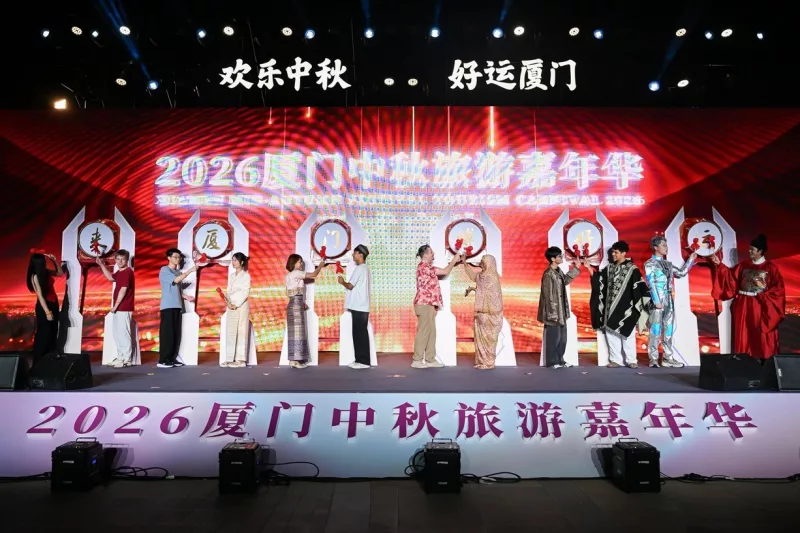
Xiamen, a coastal city in China, is hosting a major cultural event that showcases its traditional heritage. The 2026 Xiamen Mid-Autumn Tourism Carnival, running until October 6, combines festivities, folk performances, and modern tourism experiences. This carnival is part of a wider campaign to promote intangible cultural heritage and expose international visitors to Chinese traditions. The event features traditional practices, including Bo Bing, a dice game strongly associated with Xiamen and the southern Fujian region.
The carnival is one of the activities under Xiamen's 'Intangible Cultural Heritage Throughout the City, All Year Round' promotional campaign. This initiative allows residents and foreign visitors to experience traditional practices directly. Bo Bing, a traditional game played during the Mid-Autumn Festival, involves throwing six dice to compete for different ranks, with prizes such as mooncakes. Xiamen is using this game to demonstrate how a traditional practice can be presented to contemporary and international audiences without losing its festive character.
This year's carnival is themed 'Joyful Mid-Autumn Festival, Lucky Xiamen', with the slogan 'Come to Xiamen and Try Your Luck'. The celebrations will be experienced at metro stations, cruises, tourist attractions, and commercial districts through a specialized Bo Bing map. The aim is to turn the city into an open cultural venue, allowing visitors to encounter traditional practices as they explore Xiamen. The opening ceremony featured a cultural and tourism promotion show that combined intangible cultural heritage and folk traditions with different art forms and scenes from everyday life.
The UNESCO meeting, scheduled to take place in Xiamen, gives added significance to the city's efforts to put its traditions in the spotlight. For China, safeguarding intangible cultural heritage involves not only protecting traditional practices but also finding ways to keep them relevant to contemporary society. Xiamen's approach illustrates this through a festival that combines cultural preservation, tourism, and public participation. The city is incorporating heritage into tourism routes, entertainment, commercial spaces, and online activities.
An online public co-creation campaign accompanying the carnival includes a RMB10,000 cash prize pool and invites people around the world to share their wishes for good fortune during the Mid-Autumn Festival. The programme provides another channel through which Xiamen is connecting local traditions with international audiences. For Kenyan audiences, the Xiamen experience offers a useful example of how cultural heritage can be linked to tourism and international engagement.
Kenya, like China, has a wide range of traditional practices, crafts, music, dances, and festivals that form part of its cultural identity and tourism appeal. The uniqueness of the Xiamen approach is that such traditions are made more visible by taking them into public spaces and encouraging visitors to participate rather than simply observe. Lamu, a Kenyan town, can borrow heavily from Xiamen's experience by virtue of their similarities.
As the celebrations continue through October 6, visitors will be able to experience Bo Bing, folk performances, and other cultural activities while exploring the city. For Xiamen, the message is that safeguarding heritage does not necessarily mean keeping traditions in the past. By putting them into tourism, public spaces, and international cultural exchanges, the city is seeking to give its traditional culture a new audience at home and abroad. The UNESCO gathering will bring international attention to intangible cultural heritage and the efforts being made to safeguard traditions in different parts of the world.
Key points
- Xiamen's approach to showcasing intangible cultural heritage through tourism and public participation can serve as a model for other countries, including Kenya.
- The city's efforts to incorporate traditional practices into modern life and tourism experiences can help keep cultural heritage relevant and accessible to new audiences.
- The UNESCO meeting in Xiamen highlights the importance of safeguarding intangible cultural heritage and promoting cultural diversity worldwide.