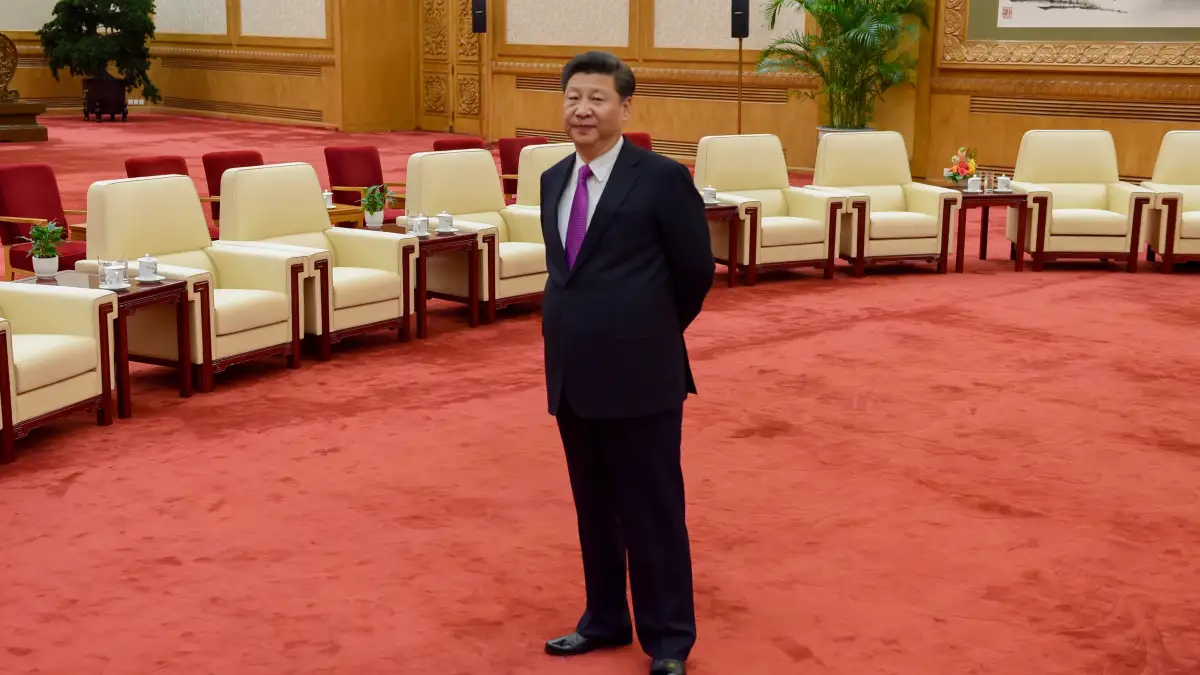
On September 30, Chinese President Xi Jinping called for advancing the "great cause of national reunification" with Taiwan, marking a significant statement five days after his state visit to Washington. Speaking at the Grand Palace of the People in Beijing, Xi addressed approximately 800 guests gathered to commemorate the 77th anniversary of the founding of the People's Republic of China. He emphasized the need to combat forces supporting Taiwan's independence and reject external interference.
Xi Jinping's remarks come after a summit with US President Donald Trump, which extended a temporary truce between the two powers but failed to resolve their differences on the Taiwan issue. According to a report published by China.org.cn, Xi urged deeper exchanges and cooperation between the two sides of the strait. He stressed the importance of resolutely fighting against Taiwanese separatists and promoting peaceful development in relations.
In his address, Xi Jinping reiterated the principle of Hong Kong and Macao being administered by their residents and promised the central government's support for their integration into the country's development. He expressed pride in China's achievements and confidence in the prospects of Chinese modernization. The Chinese leader also emphasized that the nation's rejuvenation is unstoppable, and success will ultimately belong to the Communist Party of China, the Chinese people, and the People's Republic of China.
The recent summit in Washington between Xi Jinping and Donald Trump provides context for Xi's statement. During their meeting from September 23 to 25, the two leaders discussed trade, artificial intelligence, Iran, and fentanyl. Xi reportedly requested that Trump not recognize Taiwan's independence, aligning with his long-held convictions. The two leaders are scheduled to meet again in November at the APEC summit in Shenzhen and in December at the G20 in Miami.
Tensions between the US and China remain, particularly regarding arms sales to Taiwan. In January, Taiwan announced a $14 billion purchase of US equipment, which was put on hold by Washington in May following Trump's visit to Beijing. The US president described the deal as a "very good bargaining chip" against China, sparking concerns in Taipei about the potential for a security-related trade-off.
Despite these concerns, US officials have assured that their policy towards Taiwan has not changed following the September summit. The US has historically maintained a complex relationship with Taiwan, balancing its diplomatic recognition of China with a commitment to providing defensive support to the island. The situation remains sensitive, with both China and the US maintaining their positions on Taiwan's status.
As China and the US continue to navigate their complex relationship, Xi Jinping's call for reunification with Taiwan underscores the ongoing tensions in the region. The Chinese leader's emphasis on national unity and rejection of external interference reflects Beijing's long-standing concerns about Taiwan's status. The international community will be watching closely as China and the US engage in future discussions, particularly with regards to Taiwan and regional security.
Key points
- Xi Jinping calls for advancing national reunification with Taiwan
- The Chinese leader rejects external interference in Taiwan's affairs
- US-China tensions remain over arms sales to Taiwan and the island's status