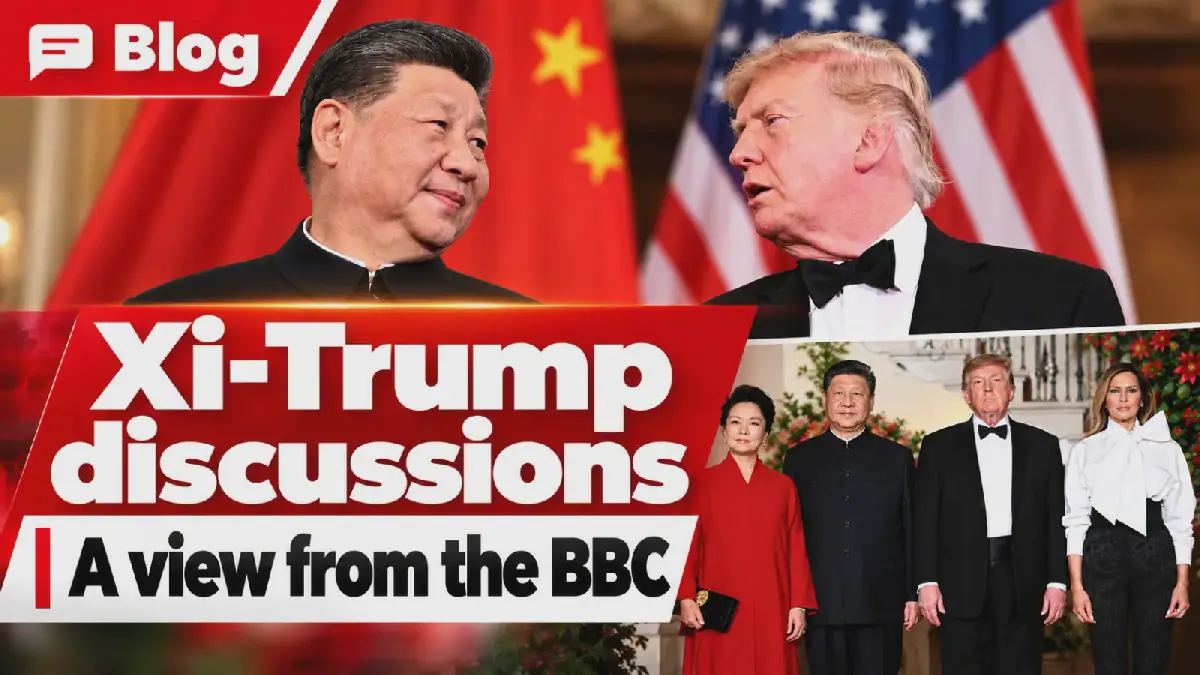
Chinese President Xi Jinping recently met with US President Donald Trump in a highly publicized summit. According to sources, Xi's primary goal was to persuade Trump to ease trade restrictions and allow China greater access to advanced US technology. The meeting came as China faces significant economic challenges, including high youth unemployment and slumping property prices. Despite the pomp and ceremony, the two leaders failed to reach a comprehensive agreement on key issues. The summit's outcome has significant implications for global trade and geopolitics.
One of the key areas of discussion was the ongoing trade war between the US and China. The two countries had previously agreed to a temporary truce, which was set to expire in November. The truce was extended by a few months to January, but China had hoped for a longer-term agreement. The US is seeking concessions from China on issues such as tariffs, rare earth supplies, and access to advanced technology. China, on the other hand, is keen to protect its exports from debilitating US tariffs. The trade tensions have significant implications for the global economy.
The issue of Taiwan was also a major point of contention during the summit. Xi reiterated China's opposition to US arms sales to Taiwan, which he views as a red line. The US is bound by law to provide Taiwan with the means to defend itself, but Trump has previously suggested that US support for Taiwan could be used as a bargaining chip. Xi warned Trump that mishandling the issue could lead to conflict between the two countries. The US has yet to respond to Xi's comments on Taiwan.
Artificial intelligence (AI) was another topic discussed during the summit. However, it is unclear whether the two leaders reached any concrete agreements on AI safeguards. The issue has gained significant attention in recent weeks, with some experts warning of the potential risks of AI development. The US and China have competing interests in the development of AI, and any agreement on safeguards could have significant implications for the industry.
In a symbolic gesture, Xi gifted two pandas, Ping Ping and Fu Shuang, to the US, which will arrive in Atlanta in a few days. The pandas are part of China's panda diplomacy efforts, which aim to promote friendly relations with other countries. The gift was first announced in April, but the exact date of their arrival was not specified until now. The pandas are seen as a symbol of friendship between the two countries.
The summit was marked by significant pageantry, with Trump rolling out the red carpet for Xi. The two leaders had a personal greeting at the airport, and a state banquet was held in Xi's honor. The lavish welcome was seen as a positive development by those watching from China, and it helped to cement Xi's image as Trump's equal. The two leaders also discussed other issues, including trade and economic cooperation.
Despite the warm words and pageantry, the competition between the US and China remains fierce. Xi's primary goal is to secure China's place as a superpower alongside the US, and he is focused on protecting China's interests. The two countries have significant differences on issues such as trade, technology, and Taiwan, and it remains to be seen how their relationship will evolve in the coming months. The outcome of the summit has significant implications for global geopolitics and trade.
Key points
- The US and China have agreed to extend a temporary trade truce to January.
- Xi Jinping and Donald Trump discussed artificial intelligence, but no concrete agreements were reached.
- The two leaders also discussed the issue of Taiwan, with Xi reiterating China's opposition to US arms sales to the island.
Reporting sources
- [Blog] Xi-Trump discussions: A view from the BBC · Le Défi Plus