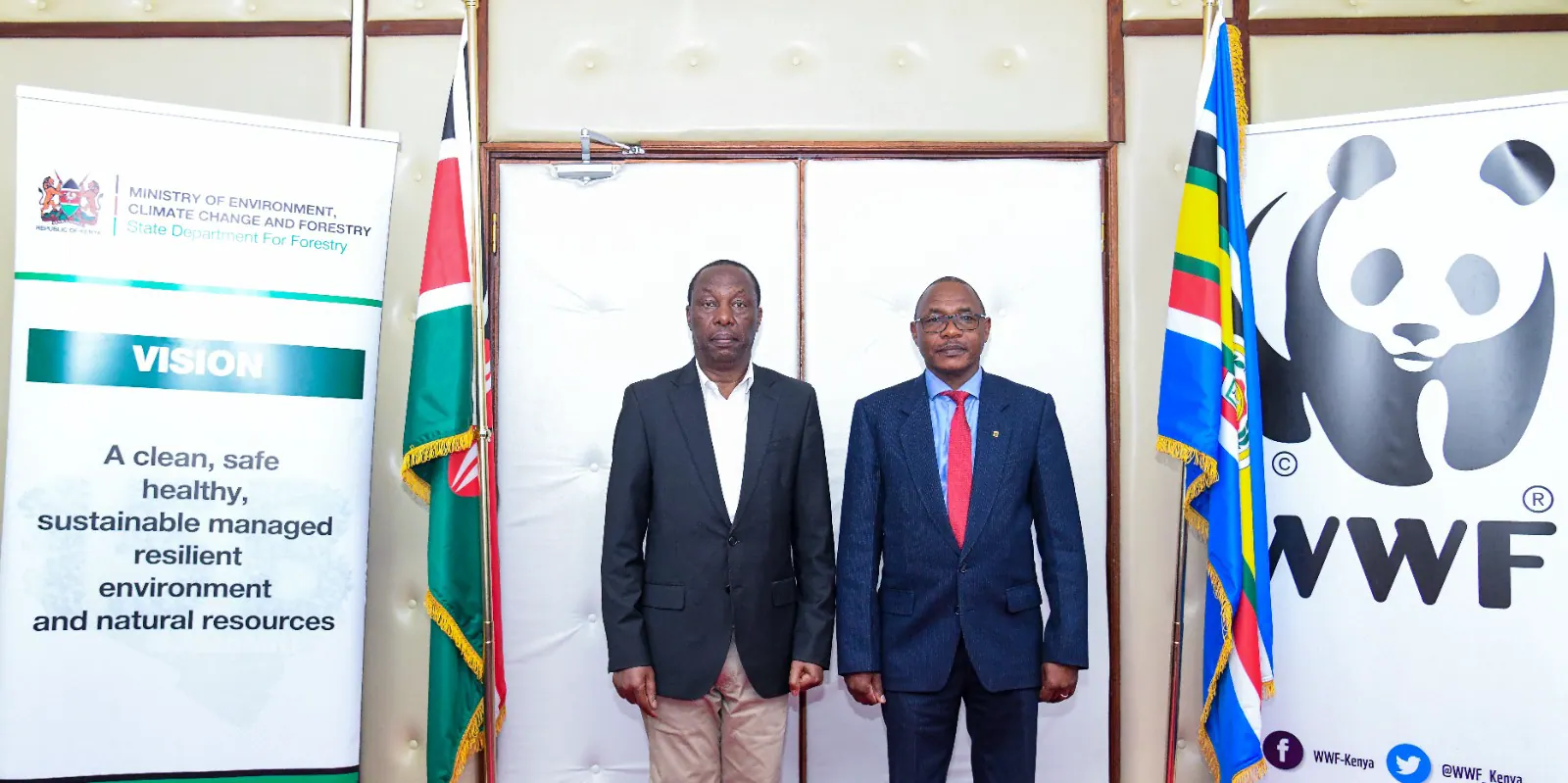
The World Wide Fund for Nature-Kenya (WWF-Kenya) and the State Department for Forestry have forged a five-year strategic partnership to drive Kenya's 15 Billion Trees Initiative. This initiative aims to grow 15 billion trees by 2032 as part of efforts to reverse environmental degradation and reduce greenhouse gas emissions. The partnership combines government coordination with WWF-Kenya's technical expertise, resources, and community-based conservation experience.
Principal Secretary for Forestry Gitonga Mugambi emphasized the need for collaboration between government, the private sector, communities, and non-state actors to achieve Kenya's restoration ambitions. The initiative is anchored in the National Landscape and Ecosystem Restoration Strategy (2023–2032), which provides a framework for restoring forests, water towers, rangelands, wetlands, and other ecosystems. The government is using the JazaMiti platform to track tree-growing progress across all 47 counties.
Under the agreement, WWF-Kenya will provide technical, advocacy, and communication support to the 15 Billion Trees Secretariat. The organization will work with public and private sector partners to replicate successful landscape restoration models in other priority areas. One such model is the Kaptagat Integrated Conservation Programme, implemented since 2020, which has restored over 2,700 hectares of forestland and supported the construction of dams providing clean water to 15,000 farmers.
The Kaptagat programme has also created 2,000 direct jobs and provided community farmers with cross-breed heifers, beehives, and high-value cash crops. WWF-Kenya CEO Jackson Kiplagat noted that the programme demonstrates the importance of linking environmental restoration to household livelihoods. The organization's approach focuses on four pillars: household income, clean energy, access to clean water, and healthy landscapes.
WWF-Kenya will continue implementing its #KeepKenyaBreathing platform, launched in 2018 to mobilize citizens, schools, and corporates to participate in tree growing. Over 3.06 million seedlings grown by citizens and corporates have been mapped through the platform across at least 25 counties. The organization aims to mobilize public and private resources to grow one billion trees across its priority landscapes.
The partnership marks a shift towards long-term landscape management, community participation, and measurable tree survival. Both parties called for greater involvement of corporates, communities, and individual citizens, with WWF-Kenya urging partners to move beyond one-off tree-planting exercises and support landscapes until restoration efforts are established. This approach aims to ensure the survival and maturity of the trees being planted.
The 15 Billion Trees Initiative is a critical component of Kenya's efforts to address environmental degradation and climate change. With the support of WWF-Kenya and other partners, the government aims to restore 10.6 million hectares of degraded landscapes and achieve significant reductions in greenhouse gas emissions. The partnership is expected to have a positive impact on the environment and local communities.
Key points
- WWF-Kenya and the State Department for Forestry have partnered to drive the 15 Billion Trees Initiative, aiming to grow 15 billion trees by 2032.
- The partnership will focus on long-term landscape management, community participation, and measurable tree survival.
- The initiative aims to restore 10.6 million hectares of degraded landscapes and reduce greenhouse gas emissions.