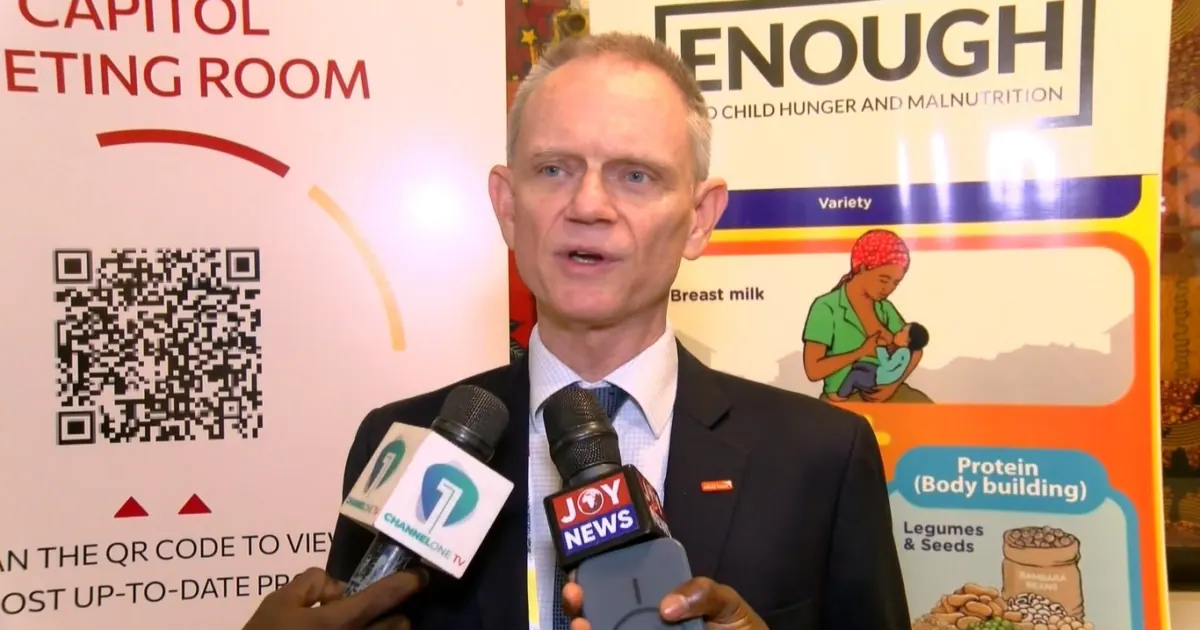
World Vision is urging governments and development partners to prioritize the prevention of child malnutrition in West Africa. The humanitarian organization emphasizes that children should have access to nutritious meals from the earliest stages of life, rather than waiting until malnutrition has taken hold. This call was made at the 7th Global Conference of the Micronutrient Forum 2026.
According to World Vision's Regional Leader for West Africa, Carla Denizard, more than 14.4 million children under five in the region are currently affected by malnutrition. World Vision says this alarming figure should strengthen efforts to ensure that children have access to nutritious food from the earliest stages of life. The organization's Global Director for Health and Nutrition, Dan Irvine, notes that treating severe malnutrition saves lives, but waiting until children reach that stage means intervention has come too late.
Dan Irvine emphasizes that prevention begins with ensuring that children and families can consistently access nutritious diets, particularly through foods available within their own communities. He notes that many communities already have access to nutritious food resources but require the right support to turn those resources into balanced and healthy meals for children and families.
Carla Denizard highlights Ghana's school feeding programme as an important platform that could deliver even greater benefits if more of the food supplied to schools were sourced directly from local farmers. She suggests that connecting school meals with local agricultural production could strengthen food security, create livelihoods, and improve the quality of nutrition available to children.
Denizard explains that integrating local food production with school meals would allow farmers and mothers involved in vegetable production to benefit economically while contributing to healthier meals for children. This approach would improve the livelihoods of community members while enhancing the nutrition of children.
World Vision's call for stronger prevention of child malnutrition is part of a broader conversation around child nutrition. The organization emphasizes that the conversation must go beyond simply ensuring that children receive treatment for malnutrition. Instead, it must focus on preventing malnutrition in the first place.
World Vision's efforts to address child malnutrition in West Africa include supporting local communities to improve food security and nutrition. The organization's work in this area aims to reduce the number of children affected by malnutrition and improve the overall health and well-being of communities in the region.
Key points
- World Vision urges governments and development partners to prioritize prevention of child malnutrition in West Africa.
- More than 14.4 million children under five in West Africa are currently affected by malnutrition.
- World Vision suggests integrating local food production with school meals to improve nutrition and create livelihoods.