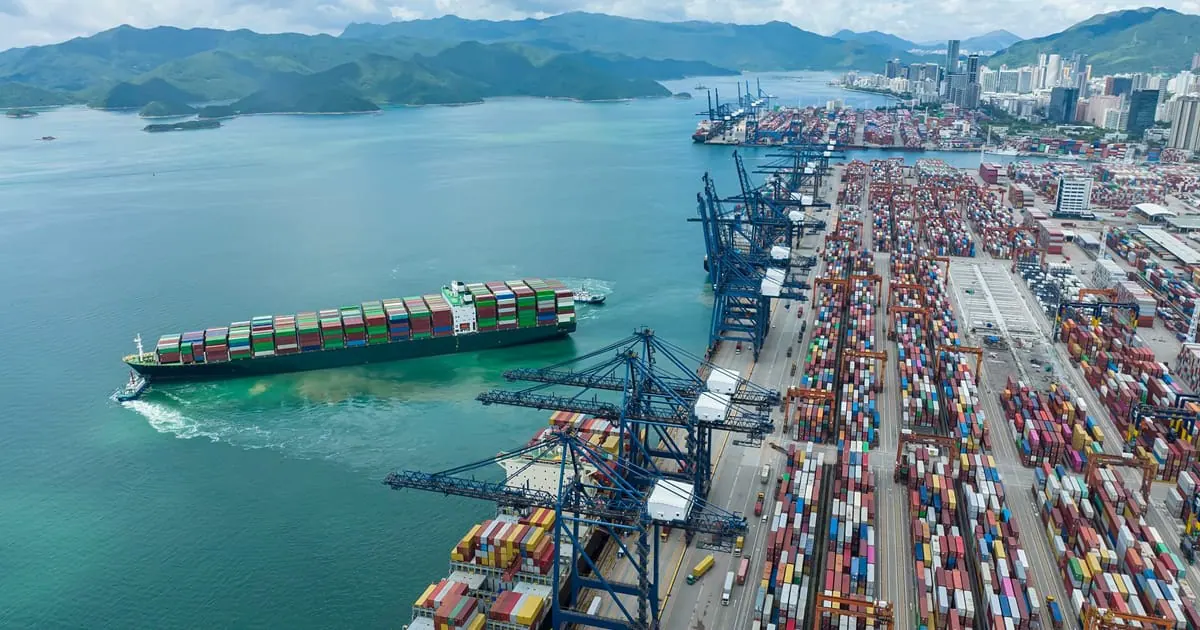
The International Monetary Fund (IMF) has released its World Economic Outlook (WEO) for October 2026, projecting a slowdown in world trade volume growth. According to the IMF, world trade volume growth is expected to decline from 5.0 percent in 2025 to 4.6 percent in 2026. This slowdown is attributed to various factors, including the impact of tariffs and the gradual adjustment of trade linkages and production chains.
The IMF also notes that global imbalances are projected to decline only modestly over the medium term. Despite this, global current account balances increased further in 2025, reaching about 3.8 percent of world GDP. This upward trend, observed since the pandemic, has reversed the decline following the global financial crisis. The widening of global current account balances was driven primarily by a sharp increase in China’s surplus.
China’s surplus increased to about 0.6 percent of world GDP, which is equivalent to 3.7 percent of China’s GDP. Several Asian economies also recorded larger surpluses, while the euro area surplus narrowed and oil exporters’ surpluses declined. The United States remained the world’s largest deficit economy, with a current account deficit of about 1.0 percent of world GDP.
Early 2026 trade data indicate that global imbalances are expected to increase slightly this year and remain elevated in 2027. The IMF projects further increases in trade surpluses in China and other Asian exporters, as well as weaker balances in the United States and the euro area. Persistent domestic saving-investment distortions in major economies continue to shape global imbalances.
The IMF attributes the persistence of global imbalances to various factors, including expansionary fiscal policy in some economies with current account surpluses. This is expected to contribute to the projected cyclical decline in global imbalances. However, the surge in technology-driven business investment is expected to keep attracting capital to the United States and sustain large trade surpluses in several Asian economies.
The US current account deficit is expected to remain wider than that observed in the decade preceding the COVID-19 pandemic. This is due to sustained large fiscal deficits in the United States and limited rebalancing to domestic consumption in China. These two countries account for about 40 percent of global current account balances.
The IMF’s projections suggest that stronger productivity growth in the United States could enhance US competitiveness in technology-related services and improve the country’s trade balance. However, positive wealth effects would boost domestic demand, complement capital inflows driven by higher returns, and keep the US current account deficit significant.
Key points
- World trade volume growth is projected to slow from 5.0% in 2025 to 4.6% in 2026.
- Global imbalances are projected to decline only modestly over the medium term.
- The US current account deficit is expected to remain wider than that observed in the decade preceding the COVID-19 pandemic.