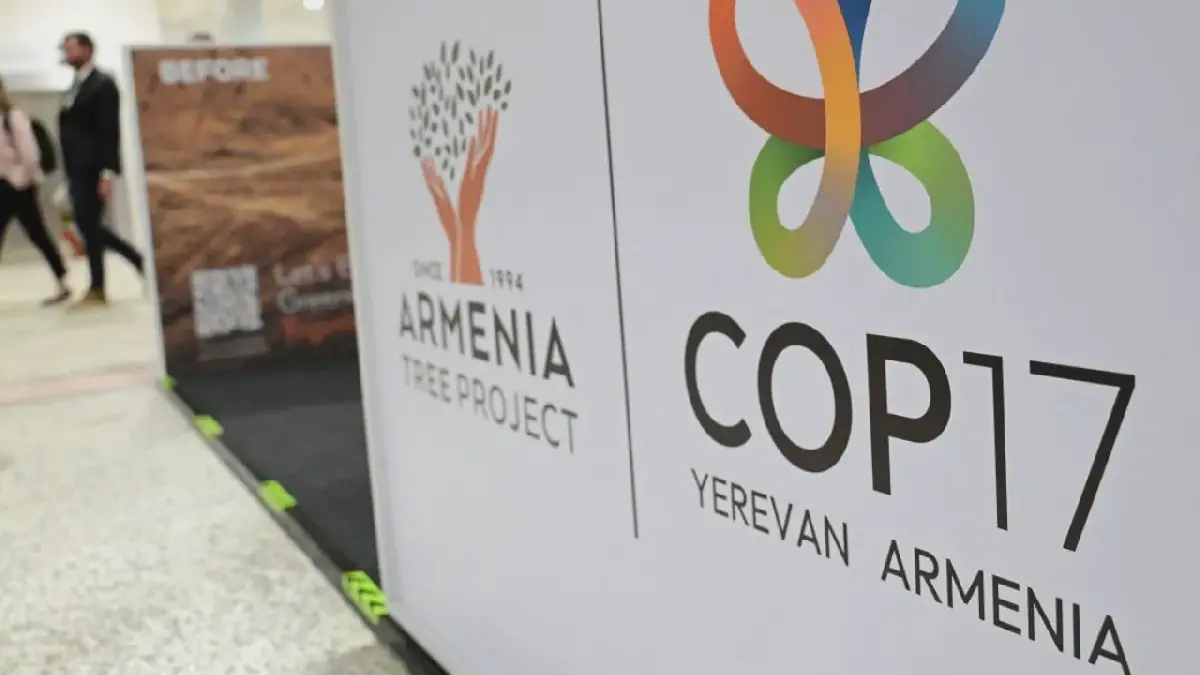
The world has made significant progress in restoring nature, with 252 million hectares of land and water currently being restored, according to a report by the United Nations. This represents the largest restoration effort ever recorded, equivalent in size to a territory like Algeria or Argentina. The report was published during the COP17 biodiversity conference in Armenia, where countries are trying to rectify their lagging commitments to biodiversity.
The restoration efforts, recorded in 149 countries, have primarily focused on terrestrial areas, with 232 million hectares restored, compared to 11 million hectares for inland waters and 5.7 million hectares for marine and coastal waters. While progress has been made, the report notes that it remains insufficient to meet the 2030 global targets. The report's authors highlight that restoration efforts in freshwater and marine ecosystems are lagging, with these ecosystems deteriorating at an alarming rate.
The report is part of the UN's Decade of Ecosystem Restoration, which runs from 2021 to 2030, and an international agreement adopted in 2022, known as the Kunming-Montreal Agreement. This agreement aims to protect 30% of terrestrial and marine areas by the end of the decade. Countries have committed to making efforts to halt biodiversity loss and protect the planet through restoration and other measures.
The report also notes that the number of jobs dedicated to restoration has increased, with one million jobs created, and an objective of reaching 32 million jobs by 2030. However, the report emphasizes that the pace of restoration efforts must triple to reach the target of one billion hectares, and financing will need to increase significantly, particularly from the private sector.
According to the report, China is leading the way in terrestrial restoration, with 137 million hectares restored, followed by Mongolia, Kazakhstan, and Ethiopia. The report's authors stress that the progress made so far is insufficient, and countries must accelerate their efforts to meet the 2030 targets.
Doreen Robinson, deputy director of the Ecosystem Division at the UN Environment Programme (UNEP), welcomed the report's findings, saying it represents the largest restoration effort ever recorded. She emphasized that the report highlights the need for increased efforts and financing to meet the 2030 targets.
The report's findings have significant implications for the future of biodiversity and ecosystem restoration. With the COP17 conference ongoing, countries are under pressure to increase their commitments to biodiversity and restoration efforts. The report provides a critical baseline for measuring progress and highlights the need for urgent action to protect the planet's ecosystems.
Key points
- The world has restored 252 million hectares of nature, a new record.
- The report highlights that restoration efforts must triple to reach the 2030 targets.
- China is leading the way in terrestrial restoration, with 137 million hectares restored.