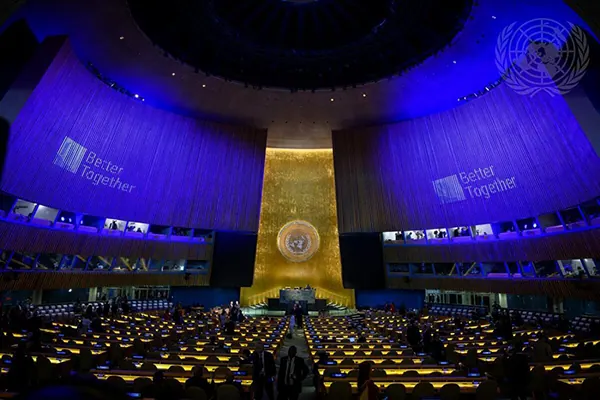
World leaders gathered at the United Nations General Assembly High-level Meeting on Pandemic Prevention, Preparedness and Response (PPPR) in New York, emphasizing the need for sustained investment in pandemic prevention and preparedness. The meeting reviewed progress made since the first high-level meeting in 2023, which was convened in response to the COVID-19 pandemic. The World Health Organisation (WHO) reported that countries recognized progress made over the past three years, including the adoption of the WHO Pandemic Agreement and amendments to the International Health Regulations (2005).
WHO Director-General Tedros Ghebreyesus stressed that countries must continue investing in stronger health systems, local and national capacities, and equitable access to vaccines, medicines, diagnostics, and other health tools. He noted that the COVID-19 pandemic exposed and exacerbated the fault lines of global health security, teaching the world painful lessons. The political commitments made at the meeting included calls for concrete, measurable, and urgent action to strengthen health systems and expand equitable access to health products and resources.
Countries also called for the completion of negotiations on an annex to the WHO Pandemic Agreement that would establish a Pathogen Access and Benefit-Sharing (PABS) system. The proposed system aims to facilitate the timely sharing of pathogens with pandemic potential and ensure that benefits arising from their use are shared equitably. WHO said adoption of the annex at the World Health Assembly in May 2027 is necessary for member states to begin national consideration of ratifying the Pandemic Agreement.
United Nations Deputy Secretary-General Amina Mohammed urged countries to accelerate the negotiations, emphasizing that the Pathogen Access and Benefit Sharing System is critical to unlocking the full potential of the WHO Pandemic Agreement. The COVID-19 pandemic was linked to more than 20 million excess deaths between 2020 and 2023 and wiped more than $10 trillion from the global economy.
The meeting stressed that pandemic preparedness should not be treated solely as a health-sector responsibility, but rather as a whole-of-government and whole-of-society approach involving communities and other sectors. The political declaration highlighted the One Health approach, which recognizes the links between human, animal, and environmental health.
The President of the 81st UN General Assembly, Khalilur Rahman, emphasized that international cooperation is necessary to prepare for future pandemics, including through equitable access to vaccines, diagnostics, and other essential medical supplies. He noted that the world has the knowledge, tools, science, and expertise, as well as the hard lessons of COVID-19.
The meeting's participants stressed that pandemic prevention, preparedness, and response should remain a political priority between health emergencies, rather than becoming a focus only when outbreaks occur. The call for sustained action aims to protect countries from future outbreaks and ensure that progress made since COVID-19 is not lost.
Key points
- WHO Director-General Tedros Ghebreyesus emphasized the need for continued investment in stronger health systems and equitable access to health products and resources.
- Countries called for the completion of negotiations on an annex to the WHO Pandemic Agreement to establish a Pathogen Access and Benefit-Sharing system.
- The meeting stressed the importance of a whole-of-government and whole-of-society approach to pandemic preparedness, involving communities and other sectors.