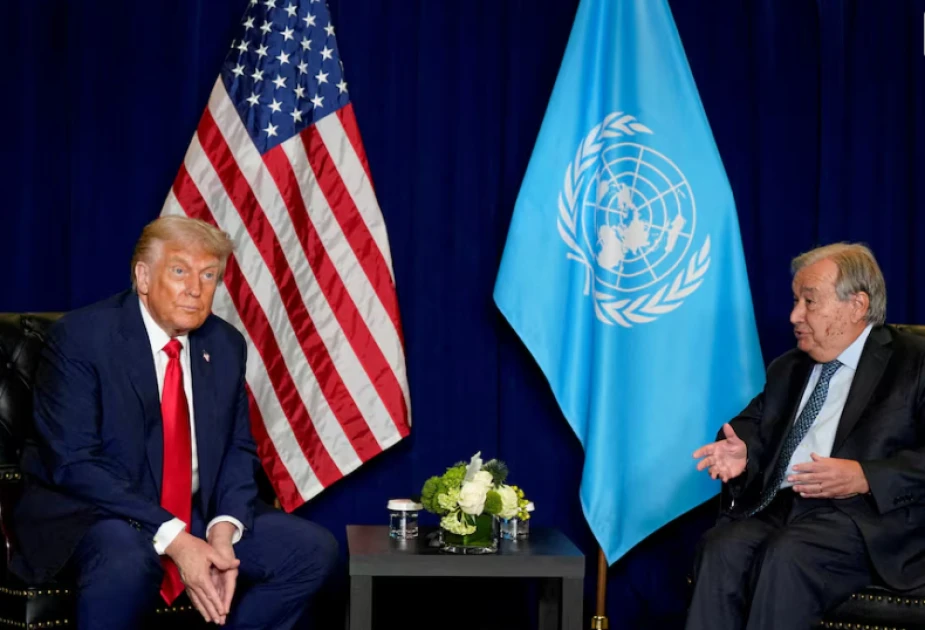
World leaders are converging on New York for the UN General Assembly, with the post-World War Two order facing unprecedented strain. The UN itself is struggling to remain relevant, weathering attacks from US President Donald Trump, who has slashed America's contributions and withdrawn from numerous UN bodies. The gathering will focus on pressing global issues, including conflicts in the Middle East and Ukraine, as well as the risks associated with artificial intelligence.
The UN General Assembly will bring together nearly 130 heads of state, including a return by President Trump to the rostrum for a second year running. Chinese leader Xi Jinping, who last addressed the assembly via video in 2021, will skip the event in favor of one-on-one talks with Trump in Washington. This has sparked debate about the UN's relevance in addressing global crises. The 15-member UN Security Council is expected to hold high-level meetings on Ukraine, AI, and the Middle East.
The UN is facing a crisis of morale and finance, compounded by questions about its next leader. Secretary-General Antonio Guterres completes his term at the end of 2026, with no clear frontrunner in the race to replace him. According to Richard Gowan of the International Crisis Group, the UN is "stuck in an open-ended crisis" and may not be in emergency care, but it seems to be trapped in a trauma center for the foreseeable future.
The US has avoided losing its vote at the assembly by paying $725 million in contributions to the regular budget. However, it still owes the organization over a billion dollars and makes ongoing demands for cuts and reforms. The assembly will also address growing concerns about AI risks, with Guterres calling for global governance of the technology and warning that it could soon improve on its own and escape human control.
The Middle East will be a key focus of discussions, with the US-Israeli war on Iran driving global inflation and destabilizing the region. Recent gains by Houthi militants threaten shipping in the vital Bab el-Mandeb Strait and could further spike energy prices. Guterres has emphasized the need for a peaceful solution, while Iranian President Masoud Pezeshkian and Israeli Prime Minister Benjamin Netanyahu are set to address the assembly.
The conflict in Ukraine will also be on the agenda, with Ukrainian President Volodymyr Zelenskiy and Russian Foreign Minister Sergei Lavrov set to address the assembly. Zelenskiy is likely to seek to shore up Ukraine's position ahead of what is expected to be another tough winter. The Security Council has been unable to take action to end the conflict due to Russia's veto power.
The UN General Assembly will also address issues of food security and energy prices, with Guterres highlighting the impact of the war in Ukraine on civilians and global markets. The assembly will seek to find ways to allow Ukrainian exports and Russian exports of food, fertilizers, and energy to take place safely through the Black Sea.
Key points
- The UN is struggling to remain relevant amid global crises and attacks from US President Donald Trump.
- The assembly will focus on pressing global issues, including conflicts in the Middle East and Ukraine, as well as AI risks.
- The UN is facing a crisis of morale and finance, compounded by questions about its next leader.