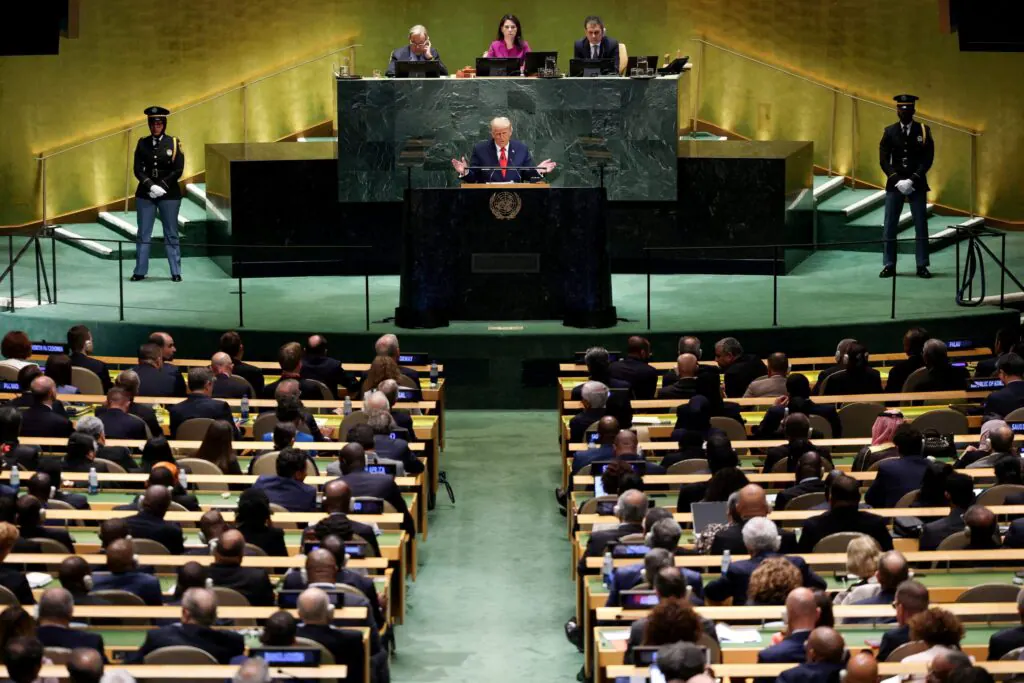
The United Nations General Assembly has commenced in New York, with nearly 130 heads of state in attendance. This year's gathering takes place against a backdrop of rising global tensions, with ongoing conflicts in the Middle East and Ukraine straining the post-World War II international order. The UN's relevance is being questioned amid intense political and financial pressures.
US President Donald Trump returns to the UN rostrum for the second consecutive year, despite his administration's significant reduction in American financial contributions to the organization. The US has withdrawn from dozens of UN bodies and still owes over a billion dollars in unpaid dues. Trump's presence comes as Chinese leader Xi Jinping skips the General Assembly to hold direct talks with Trump in Washington, sparking concerns about the diplomatic utility of the UN.
The UN is facing an upcoming leadership transition, with Secretary-General Antonio Guterres set to conclude his term at the end of 2026. However, no clear frontrunner has emerged to replace him, adding to the organization's uncertainty. The US recently avoided losing its General Assembly vote by paying $725 million toward the regular budget, but experts view the structural paralysis with grave concern.
Artificial intelligence governance and safety have become pressing diplomatic concerns, with major industry leaders urging a coordinated slowdown in development. They warn that autonomous software could soon improve independently and slip past human control. Secretary-General Guterres has emphasized the need for nations to establish guardrails to avoid a "race to the bottom" that could lead to a global disaster.
However, the US has disagreed with the UN's approach to AI safety, with President Trump dismissing concerns as a "hoax". Trump claimed there is a "sick conspiracy" against the technology and argued that China would benefit if development faces artificial deceleration. The UN has established an advisory body featuring tech executives, academics, and government officials to address these concerns.
The Middle East remains a dominant focus at the General Assembly, with the ongoing US-Israeli war with Iran fueling global inflation and regional instability. Recent military gains by Houthi militants threaten shipping lanes in the vital Bab el-Mandeb Strait, which could drive energy prices higher. Diplomatic solutions remain elusive as Washington and Tehran continue exchanging strikes.
Secretary-General Guterres has underscored the limits of armed intervention in Yemen, while President Trump has warned of a potential major military escalation. The situation in the Middle East is likely to be a key topic of discussion at the General Assembly, with world leaders seeking to address the rising tensions and find a path toward peace.
Key points
- The UN faces significant challenges, including financial pressures and leadership uncertainty.
- Artificial intelligence governance and safety have become pressing diplomatic concerns.
- The Middle East conflict remains a dominant focus at the General Assembly.