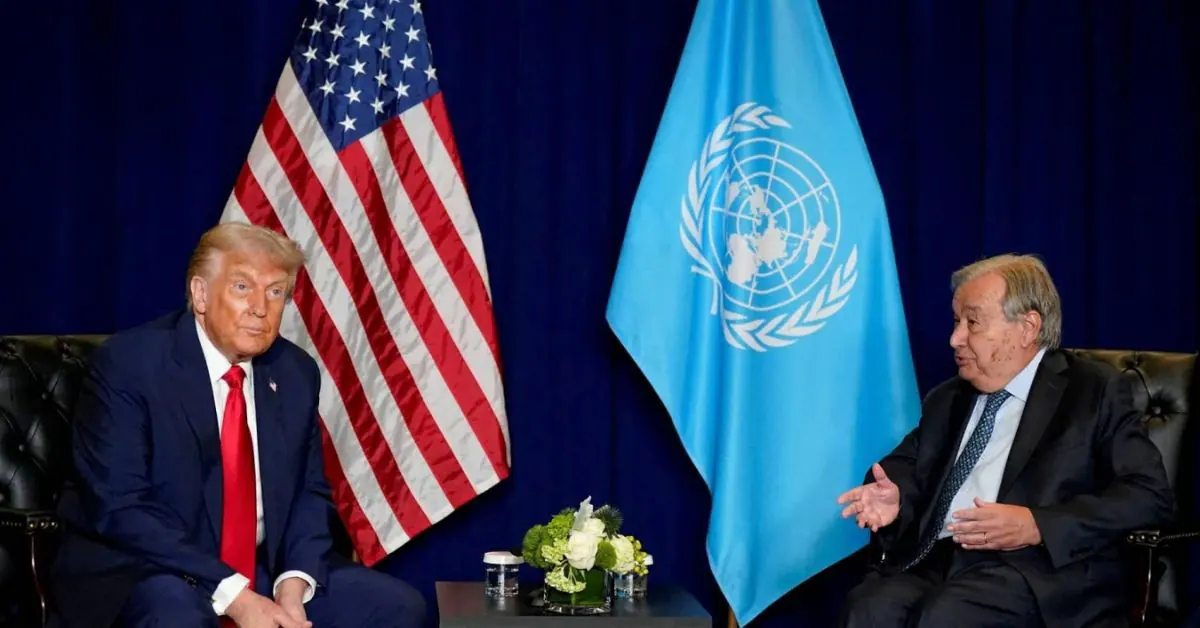
World leaders are gathering for the United Nations General Assembly in New York, with around 130 heads of state and government in attendance. The meetings take place as the international system established after World War II faces increasing pressure, while the UN struggles to maintain its role and influence. US President Donald Trump, who has reduced US contributions and withdrawn from numerous UN organizations, is set to attend for the second year in a row.
Chinese President Xi Jinping is absent from the New York meetings, instead opting for bilateral talks with Trump in Washington on Thursday. In 2021, Xi participated in the General Assembly via video link, sparking discussions about the UN's ability to address global crises. The upcoming succession of UN Secretary-General António Guterres, whose term ends in 2026, adds to the uncertainty, with no clear frontrunner for the position.
The UN General Assembly agenda includes discussions on the Russian war in Ukraine, which has been ongoing for over four years. Ukrainian President Volodymyr Zelenskyy and Russian Foreign Minister Sergey Lavrov are set to deliver speeches. Zelenskyy is likely to seek to strengthen Ukraine's position ahead of another challenging winter, while the Security Council has been unable to take action due to Russia's veto power.
The Middle East conflict is also on the agenda, with Iranian President Masoud Pezeshkian and Israeli Prime Minister Benjamin Netanyahu scheduled to deliver speeches. Netanyahu faces allegations of war crimes and crimes against humanity in Gaza from the International Criminal Court. Meanwhile, Palestinian President Mahmoud Abbas will not attend the General Assembly in person for the second year in a row due to US visa issues.
The issue of artificial intelligence is a significant topic for discussion, as the UN explores its implications and potential risks. The Security Council may hold high-level meetings on Ukraine, artificial intelligence, and the Middle East, including talks with Arab leaders. These discussions take place as the global community seeks to address the challenges posed by emerging technologies.
The UN's role and influence are being questioned, particularly in light of Trump's criticisms and the organization's financial challenges. The US has reduced its contributions to the UN, and Trump's absence from several UN bodies has raised concerns about the country's commitment to multilateralism. As the international system faces growing pressures, the UN's ability to address global crises will be closely watched.
The General Assembly has already made some decisions, including allowing Abbas to deliver his speech via video link. The meetings will also address other pressing global issues, as leaders seek to find solutions to the world's most pressing challenges. The outcome of these discussions will be closely monitored, as the international community looks for signs of progress and cooperation.
Key points
- The UN General Assembly is taking place amid growing global challenges and increasing pressure on the international system.
- Artificial intelligence, conflicts in the Middle East and Ukraine, and the role of the UN are key topics on the agenda.
- The succession of UN Secretary-General António Guterres and the organization's financial challenges add to the uncertainty surrounding the UN's future role and influence.