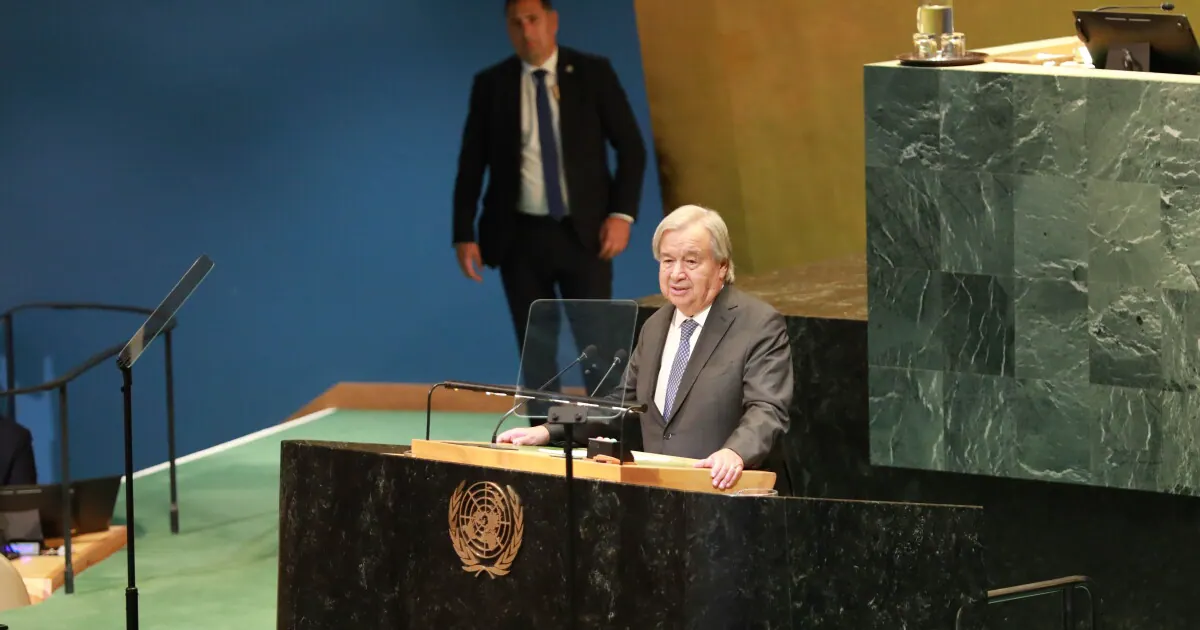
World leaders are gathering at the United Nations headquarters in New York this week, described by U.N. Secretary-General António Guterres as "an era of deep uncertainty." This is Guterres' final General Assembly high-level week, as his term ends at the end of the year. He will give opening remarks on Tuesday morning, followed by Brazilian President Luiz Inácio Lula da Silva, and then other leaders. The event runs through September 28.
Guterres will use his meetings with world leaders to push for de-escalation in the Middle East and freedom of navigation through key waterways. He is also advocating for a ceasefire in Ukraine, where Russia's full-scale invasion has been ongoing for over five years. However, U.N. watchers do not expect major breakthroughs on these issues. The packed schedule includes speeches from Iranian President Masoud Pezeshkian, Ukrainian President Volodymyr Zelenskyy, and Russian Foreign Minister Sergey Lavrov.
Iranian President Masoud Pezeshkian is set to address the U.N. on Wednesday, nearly seven months after the U.S. and Israel launched their war on Iran. The U.S. State Department says the Iranian delegation will be smaller than last year, with strict limits on their movements and purchases. It is unclear if any Iranian officials will meet with Trump administration officials. Guterres has been trying to negotiate an opening of the Strait of Hormuz for fertilizer, but those efforts have not gained traction.
Ukrainian President Volodymyr Zelenskyy will also speak on Wednesday, as his European allies try to rally support for the country heading into another winter of war. Russia uses its veto power on the U.N. Security Council to block any meaningful role for the U.N. Russian President Vladimir Putin has not attended the General Assembly for over a decade, and instead, Foreign Minister Sergey Lavrov will give an address on September 26.
The Trump administration has denied visas to Palestinian Authority President Mahmoud Abbas and his delegation for the second year in a row. The U.N. General Assembly voted overwhelmingly to criticize the move and allow Abbas to deliver his statement via video. Israeli Prime Minister Benjamin Netanyahu will defend his record on Iran and Gaza in his address on Thursday. New York City Mayor Zohran Mamdani had suggested that Netanyahu should be arrested for an International Criminal Court warrant, but the Trump administration dismissed that.
About 120 leaders and senior representatives are gathering at the United Nations, but some key players will be missing. The leaders of India, Germany, and South Africa will skip the event, sending senior representatives instead. China's Xi Jinping will also not attend, despite being expected at the White House on Thursday. This may create a "split-screen moment," according to Richard Gowan, director for global issues and institutions at the International Crisis Group.
The U.N. Security Council has held three straw polls on candidates to replace Secretary-General Guterres, but there is no consensus yet. Costa Rica's former Vice President Rebeca Grynspan and Guyana's former Foreign Minister Carolyn Rodrigues Birkett are among the front-runners. The next secretary-general is expected to come from Latin America, and many delegations are encouraging a woman to be appointed. The deadline for a new secretary-general is the end of the year, when Guterres' term ends.
Key points
- The U.N. General Assembly will feature speeches from world leaders on pressing global issues.
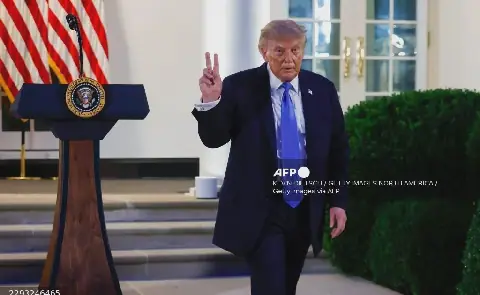
- The event will also see meetings between leaders, including President Trump and Venezuelan interim leader Delcy Rodríguez.
- The U.N. Security Council is searching for a new secretary-general to replace António Guterres, with a focus on a candidate from Latin America.