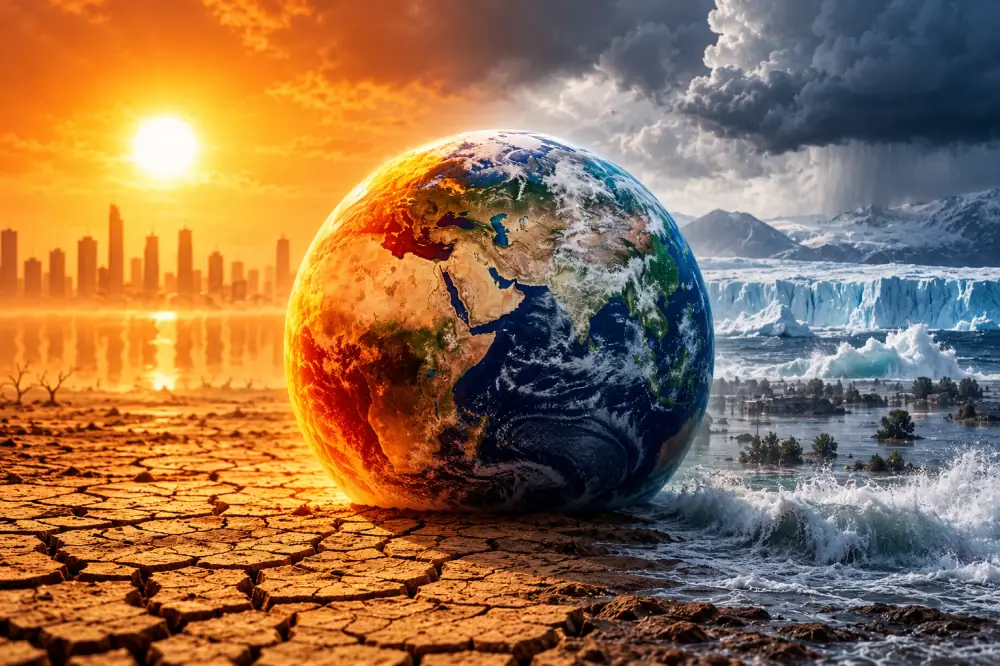
A recent international report has raised alarm bells about the world's failure to meet its climate goals, warning that global temperatures are likely to rise by 2.7°C by the end of the century. This projection is only a slight increase from last year's estimate of 2.6°C, indicating that governments are not doing enough to reduce greenhouse gas emissions. The report's findings are particularly concerning, as they suggest that the world is on track to exceed the 1.5°C threshold agreed upon by nations nearly a decade ago.
The consequences of such warming would be severe, with scientists warning of more frequent and intense natural disasters, including storms, droughts, heatwaves, and floods. These events would have devastating impacts on communities worldwide, particularly in regions that are already vulnerable. The report's authors emphasize that immediate action is needed to prevent these catastrophic outcomes, including a rapid transition to renewable energy sources and a reduction in fossil fuel use.
The report's release coincides with the United Nations Climate Conference in Antalya, Turkey, where world leaders are gathering to discuss climate action. The conference has been attended by representatives from nearly every country, except the United States. One of the key topics on the agenda is the need to accelerate the transition to cleaner energy sources and reduce dependence on fossil fuels.
UN Secretary-General António Guterres has urged governments to take immediate action to phase out fossil fuels, warning that the current climate crisis requires urgent and decisive action. He emphasized that the world cannot afford to delay, as the consequences of inaction would be catastrophic. The report's findings have also been echoed by climate activists, including Greta Thunberg, who has warned that the world is running out of time to prevent climate disaster.
While the report's findings are bleak, there are some positive trends that offer hope for reducing carbon emissions. Global investments in clean energy have doubled in recent years, and the use of electric vehicles is expanding rapidly. Additionally, deforestation in the Amazon rainforest has slowed significantly in recent years. However, these developments are not yet sufficient to meet the world's climate goals, and much more needs to be done to prevent catastrophic warming.
The report's authors have criticized governments for their slow response to the climate crisis, arguing that current policies are not ambitious enough to prevent catastrophic warming. They have also highlighted the need for greater action from major emitters, including the United States, Canada, and New Zealand. The report's findings have significant implications for global climate policy, emphasizing the need for immediate and drastic action to reduce greenhouse gas emissions.
The world's failure to meet its climate goals has significant implications for global stability and security. Rising temperatures and more frequent natural disasters would have devastating impacts on communities worldwide, particularly in regions that are already vulnerable. The report's authors emphasize that the world must act now to prevent these catastrophic outcomes, including a rapid transition to renewable energy sources and a reduction in fossil fuel use.
Key points
- Global temperatures are expected to rise by 2.7°C by the end of the century, exceeding the 1.5°C threshold agreed upon by nations.
- The report's authors are calling for a rapid transition to renewable energy sources and a reduction in fossil fuel use to prevent catastrophic warming.
- The world's failure to meet its climate goals has significant implications for global stability and security, with rising temperatures and more frequent natural disasters expected to have devastating impacts on communities worldwide.