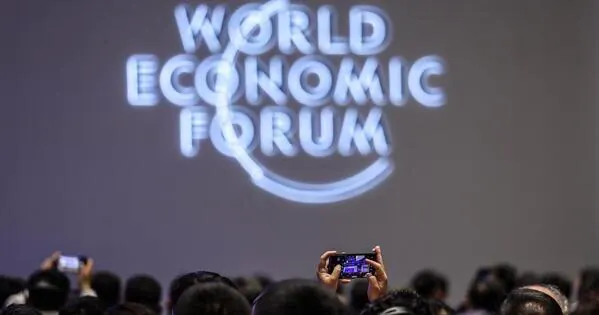
The World Economic Forum's Beijing office is marking its 20th anniversary, a milestone that holds deep personal significance for Founder Klaus Schwab. The office was established in 2006, but Schwab's connection to China dates back to 1979. That year, he invited Deng Xiaoping to the Davos Symposium, which led to China's first official participation in the event. A delegation of economists, led by Professor Qian Junrui, represented China at the symposium.
Schwab's journey with China began in the autumn of 1978, when he followed the country's first signs of reform and opening-up under Deng Xiaoping's leadership. Schwab was convinced that China was on the cusp of something historic and decided to build a long-term relationship with the country. In 1979, he traveled to China for the first time and led a delegation of 20 European chief executives. At that time, China's economy was largely isolated from global markets, and few anticipated the magnitude of its transformation.
Over the following decades, the World Economic Forum became a bridge connecting Chinese leaders, entrepreneurs, and scholars with their global counterparts. The Beijing office, established in 2006, gave this relationship a permanent institutional home. A year later, the Forum launched the Annual Meeting of the New Champions, also known as the Summer Davos, in China. This event has since become a premier platform for global leaders to discuss pressing issues.
Schwab has witnessed China's extraordinary transformation over the years. The country has become the world's second-largest economy, a central player in global manufacturing and trade, and a significant source of technological and scientific innovation. More than 800 million people have been lifted out of extreme poverty. Schwab recalls President Xi Jinping's participation in Davos in January 2017, where he emphasized the importance of openness and interdependence.
Today, China's international role is evolving, with the country seeking to contribute ideas and initiatives to the global governance debate. In May, Foreign Minister Wang Yi announced that China would host the Xiong'an World Governance Forum, focusing on themes such as sovereignty equality, international rule of law, and multilateralism. Schwab believes that the great global challenges of the Intelligent Age require mechanisms of cooperation that are more inclusive and responsive.
The World Economic Forum's engagement with China has been built on a long-term perspective, with Schwab recognizing the country's potential early on. He believes that the essential lesson of those years is about the future, not the past. The bridges built before they become indispensable are the ones that matter most, Schwab said, reflecting on his first visit to China in 1979.
As the World Economic Forum looks to the future, Schwab emphasized the importance of dialogue among different perspectives and interests in building a responsible global governance system. China will inevitably have an important voice in shaping that future, alongside other major powers, emerging economies, international organizations, business, and civil society. The Forum's 20th anniversary in Beijing is a testament to its commitment to fostering global cooperation and understanding.
Key points
- The World Economic Forum's Beijing office has been a key platform for global leaders to engage with China since its establishment in 2006.
- Klaus Schwab has been a long-time advocate for China's integration into the global economy, dating back to his first visit in 1979.
- The World Economic Forum has played a significant role in promoting international cooperation and understanding between China and the rest of the world.