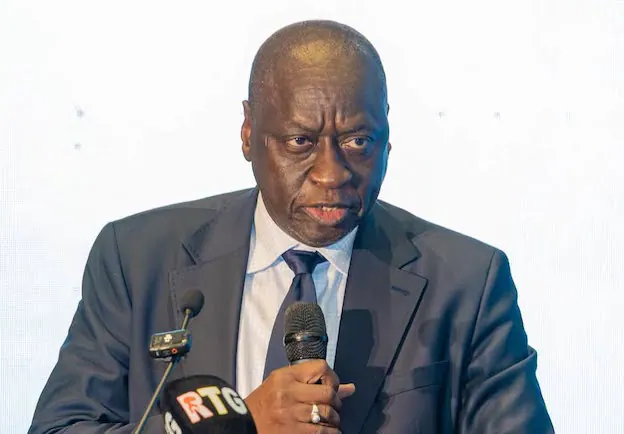
The World Bank has issued a warning to Guinea against falling prey to the "resource curse" as the country begins exporting iron from the Simandou mine. According to Ousmane Diagana, the World Bank's Vice President for West and Central Africa, the country must be lucid about the challenges it faces in transforming its natural resources into shared development. Diagana made these remarks during the launch of the new Country Partnership Framework (CPF) for 2027-2033.
Guinea is at a critical moment in its history, with the Simandou mine entering production and export phases. However, the World Bank cautions that the exploitation of natural resources does not automatically lead to a prosperous, diversified, and inclusive economy. The country's history and that of other resource-rich nations have shown that wealth from natural resources can be either a catalyst for development or a missed opportunity.
One of the major challenges Guinea faces is creating 1.5 million jobs by 2030. Current projections indicate that the country is not on track, with an average of 121,000 jobs created per year between 2021 and 2024. Diagana emphasized that the focus should not only be on how much mineral Guinea will export but also on how many jobs, businesses, skills, investments, and new economic opportunities Simandou will create for its citizens.
The World Bank has identified vulnerabilities that could lead to a fracture within Guinea's socio-economic fabric. Without targeted public policies, the country risks economic scission, creating a "Guinea of two speeds": a modern mining economy on one hand and an informal economy on the other. This could generate vulnerabilities for the population and undermine the country's development.
To overcome these challenges, the World Bank recommends a change in approach, focusing on employment as a central element of economic strategy rather than a byproduct of growth. This new model is based on four strategic levers: budgetary rigor and transparency, investment in human capital, unlocking the private sector, and territorial inclusion.
Diagana called for a collective pact for the future, bringing together the state, private sector, youth, and civil society. He emphasized that the World Bank is not only providing financing but also expertise and risk reduction instruments to support Guinea's development. The goal is to make the CPF a transformative tool for the country.
The World Bank's new Country Partnership Framework aims to support Guinea in achieving its development goals. By working together, the country can unlock the potential of its natural resources and create a more prosperous and inclusive economy for its citizens. The framework will guide the World Bank's support to Guinea over the next six years.
Key points
- World Bank warns Guinea against the risks of the "resource curse" as iron exports begin at Simandou.
- Guinea needs to create 1.5 million jobs by 2030 to address youth unemployment.
- World Bank recommends a change in approach, focusing on employment and private sector development to drive growth.