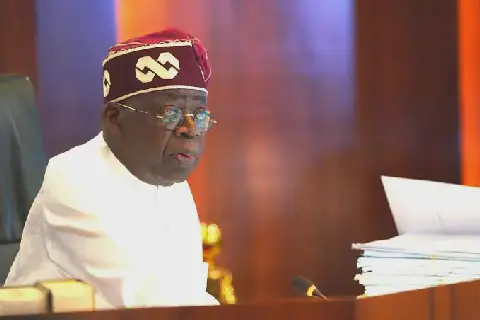
The World Bank's latest report on Nigeria's economy has highlighted several positive trends, including a growth rate of 4.2% in the first half of 2026, up from 3.9% in the same period in 2025. Despite the impact of the conflict in the Middle East, Nigeria's economy has shown resilience and is expected to continue growing. The report credits the economic reforms implemented by President Bola Tinubu's administration with raising Nigeria's revenues and stabilising the economy.
According to the World Bank report, Nigeria's poverty rate has stabilised for the first time since 2019, and it is expected to decline gradually as the Gross Domestic Product (GDP) grows faster than the population. The report also notes that inflation has fallen from 27.6% in January 2025 to 15.2% in December 2025, and is expected to ease to around 12% by 2028. The bank attributes this decline to the economic reforms and a decrease in global fuel prices.
The World Bank report also highlights Nigeria's improved external position, with the current account surplus rising to $12.0 billion, or 7.0% of GDP, in the first half of 2026, up from $8.6 billion in the same period in 2025. Gross external reserves have also increased from $45.5 billion at the end of 2025 to $53.8 billion at the end of August 2026. These improvements are attributed to the economic reforms and a more stable exchange rate.
The report notes that the economic reforms have had a positive impact on state governments, with 29 of the 36 states shifting their spending towards economic infrastructure. Real social spending per person has also increased in all but one state. Additionally, internally generated revenue has grown in real terms in 31 of 35 states, and 21 states have reduced their debt-to-GDP ratio between 2021 and 2025.
The World Bank projects that Nigeria's overall public debt is expected to fall from 40.0% of GDP in 2025 to 38.1% in 2026. The report also notes that the economic reforms have raised Nigeria's revenues by 69% in real terms between 2023 and 2025, with states being the largest beneficiaries. These funds have been used to increase capital spending, particularly in areas such as roads, agriculture, energy, and housing.
The report's findings have been welcomed by analysts, who see the economic reforms as a positive step towards stabilising the economy and creating fiscal space for governments to invest in the people. However, there is a need for the government to translate the macroeconomic gains to the microeconomic level to ensure better living standards for every household.
The World Bank's report underscores the need for the government to continue with the economic reforms and focus on inclusive growth. The Renewed Hope Agenda of President Bola Tinubu should stay the course of the reforms and redouble its focus on improving living standards for Nigerians. The state governments should use their higher revenues more prudently and prioritise projects that have a positive impact on the living standards of Nigerians and the health and education of the populace.
Key points
- Nigeria's economy grew 4.2% in the first half of 2026, with the World Bank projecting an average growth of 4.4% between 2026 and 2028.