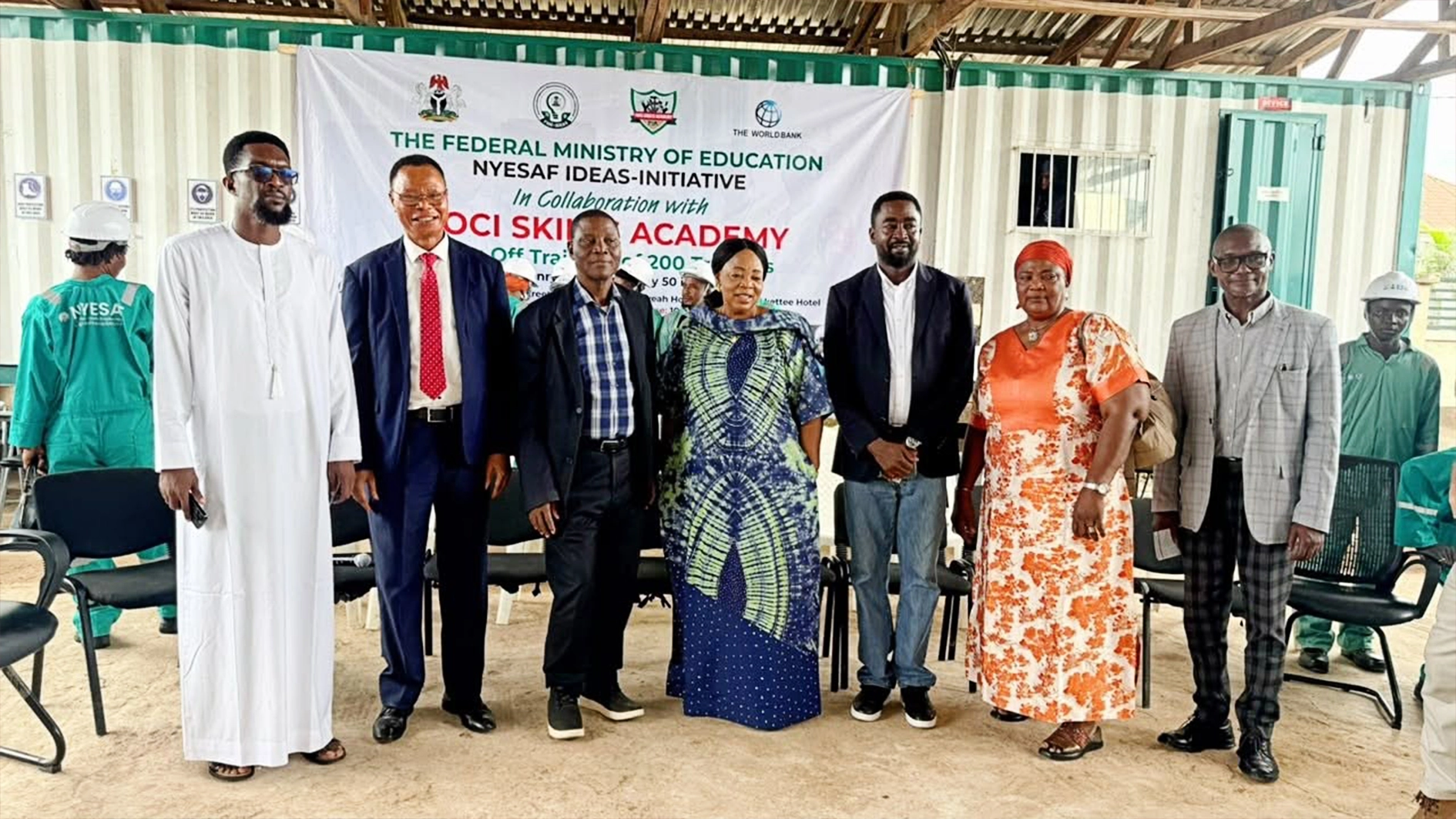
The Federal Government, in collaboration with the World Bank and New Horizons Systems Solutions, has commenced the third cohort of its training programme aimed at bridging the country's skills gap. The programme, IDEAS-TVET Initiative, focuses on training youths in technical and vocational skills to tackle unemployment. The latest beneficiaries are participating in the training in Hardware and Phone Repair, organised in Abuja by the Federal Ministry of Education, the World Bank, and New Horizons Systems Solutions.
The National Project Coordinator of the IDEAS Project, Mrs. Blessing Okwu, stated that the initiative was designed to provide young Nigerians with practical skills that would make them employable and enable them to generate income. The project's development objective is to equip participants with skills that could translate into employment, entrepreneurship, and improved livelihoods. Okwu emphasized that the reason for developing skills is for the employability of young Nigerians, enabling them to earn income and provide for themselves, their families, and communities.
The IDEAS Project was conceived by the Federal Government and implemented by the Federal Ministry of Education with support from the World Bank to strengthen technical, vocational education, and training (TVET) in Nigeria. Over the past four to five years, the project has recorded achievements in infrastructure development, equipment provision, human-capital development, and skills training across the country. Approximately 4,000 technical teachers and instructors have been upskilled under the project, while about 80,000 Nigerians are targeted for skills development through training service providers and consultants.
New Horizons Systems Solutions is a strategic partner of the project, providing training facilities, equipment, instructors, and other resources required to deliver the programme. Beneficiaries enrolled in the training will receive a monthly stipend of ₦30,000, subject to meeting the required attendance threshold. Participants are expected to maintain at least 60 per cent attendance, with the stipend paid directly into their accounts after attendance verification. They will also obtain recognised certification in their respective skills upon completion of the programme.
The training covers a broad range of occupational areas, including ICT, fashion design, agriculture, hospitality, construction, electrical installation, automotive trades, welding and fabrication, plumbing, solar installation, and other market-relevant skills. The programme also seeks to increase the participation of women and other groups traditionally under-represented in technical and professional occupations. The training phase will last six months, after which beneficiaries will be exposed to industry experience through internships and industrial attachments.
According to the MD/CEO of New Horizons Systems Solutions, Mr. Tim Akano, 1,200 participants are being trained in the third cohort, learning about 10 skills, including telephone repairs, laptops repairs, and electronics. The training is designed to help beneficiaries set up their own micro businesses and earn income to be financially independent. They will be given business packs at the end of the training. Akano appreciated the IDEAS Project for the partnership.
The initiative is not restricted by political affiliation, employment status, or whether a beneficiary works in the public or private sector. It is a partnership involving the Federal Government, development partners, and private organisations working together to strengthen Nigeria's skills-development ecosystem. The programme has been implemented in Nigeria for about five years, and the TVET initiative is being mainstreamed into the Federal Ministry of Education's budget.
Key points
- The Federal Government and World Bank aim to train 80,000 Nigerians under the IDEAS Project.
- The programme provides beneficiaries with a monthly stipend and recognised certification upon completion.
- The training covers a broad range of occupational areas, including ICT, fashion design, and construction.