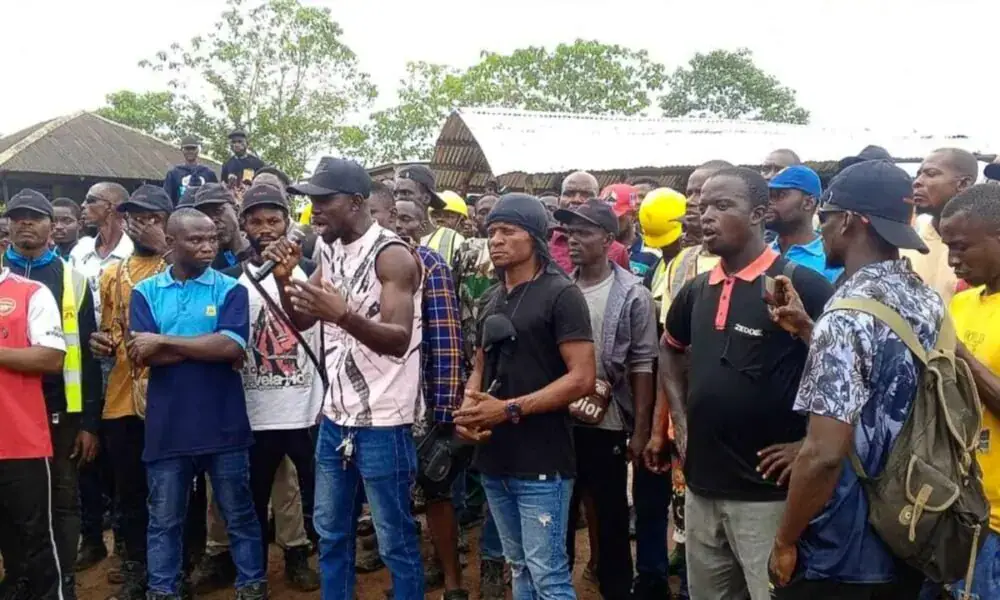
Workers handling Section 3B of Nigeria's Lagos-Calabar Coastal Highway project began protesting on Monday, demanding the removal of expatriate managers they accuse of unfair treatment. The workers claim they have faced salary cuts, unpaid entitlements, intimidation, and poor working conditions. They vowed to continue protesting until their complaints are addressed. Soldiers and security personnel were deployed to the site during the protest.
The protesters are demanding the reinstatement of Asuquo Ukpayang as Cross River Liaison Officer, a position he held until his removal. Ukpayang was reportedly opposed by expatriate managers because he represented Nigerian workers. Esikere Peter, a quality control and laboratory worker, stated that management had reduced paid working hours, resulting in salary losses for workers. He also alleged that some night shifts were not recorded, further reducing workers' pay.
Peter accused an unnamed project manager of arbitrary dismissals, intimidation, and threats. He claimed that some managers punished workers who requested materials needed for their jobs. The workers are calling for the removal of the project manager, site manager, and earth-moving supervisor, citing their unfair treatment. Stephen Oke, a trailer driver, also accused expatriate managers of disrespecting and intimidating Nigerian employees.
Local workers reportedly handle most tasks under harsh conditions but receive inadequate pay. Ana Matthew, who handles earth-moving operations and level checking, stated that workers endure harsh weather without adequate shelter. She also alleged that the company reduced their pay despite their day-and-night work schedules. Additionally, Matthew claimed that the company sold scrap materials previously shared among workers without their consent.
Some female workers have complained about the lack of separate restrooms for women, alleging that expatriate employees have access to multiple facilities. Ukpayang acknowledged the complaints about salary deductions, unpaid entitlements, and alleged unfair treatment. He stated that Mrs. Eyoanwan Otu, wife of the Cross River State governor, had previously raised concerns about workers' welfare with the company's management.
Ukpayang promised to engage the company's senior and local management, the Federal Controller of Works, and the Minister of Works to resolve the dispute. He urged the protesters to remain peaceful and nominate representatives for negotiations. However, the workers insisted that Ukpayang was the only person they wanted to represent them during the talks.
The Lagos-Calabar Coastal Highway is a federal infrastructure project designed to connect nine states in Nigeria. Efforts to obtain the company's response to the allegations proved unsuccessful, as its representatives did not answer calls or respond to messages sent to them. The workers' protest highlights the challenges faced by Nigerian workers on the project.
Key points
- Workers on Nigeria's Lagos-Calabar Coastal Highway project are protesting over alleged unfair treatment by expatriate managers.
- The protesters demand the removal of expatriate managers and improved working conditions.
- The dispute has been ongoing, with workers claiming they have faced salary cuts, unpaid entitlements, and intimidation.