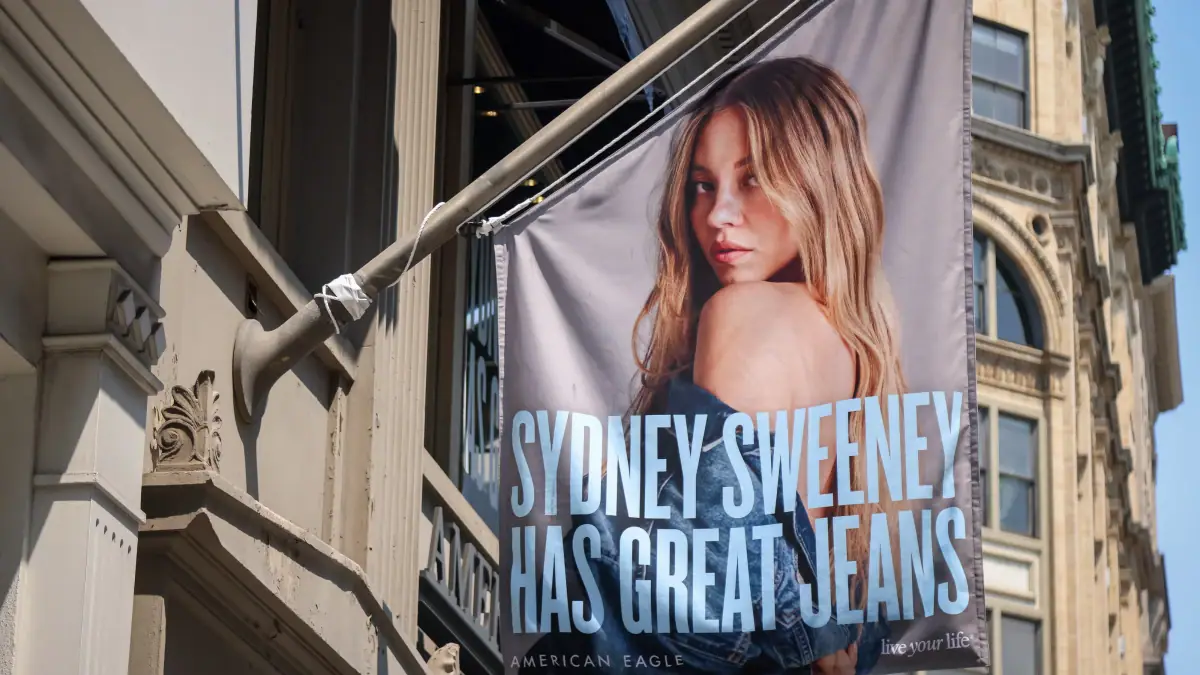
A single mother working at a garment factory in Pakistan, who asked to be referred to as S., has firsthand knowledge of the production line that makes Sydney Sweeney's American Eagle jeans. She has worked on similar denim styles and says the factory is "oppressively hot" with temperatures often reaching 106 F outside, and even hotter inside. S. is paid about $144 a month, a sum that supports her son and mother, but says she has to check the quality of 1,000 to 1,600 pieces of clothing a day, often without breaks.
S.'s experience is not isolated. Around 20 workers interviewed in Bangladesh and Pakistan, two of the world's biggest garment production hubs, described similar working conditions. They worked in five different factories, producing clothes for multiple brands, including Levi's, Massimo Dutti, The Gap, H&M, and American Eagle. The workers, who asked not to be identified by their full names, fear being fired or blacklisted if their comments are traced back to them.
Artistic Garment Industries, the company running S.'s factory, confirmed making clothes for American Eagle but denied pushing out workers who complain about working conditions. The company claims to have a robust complaints system and regularly checks temperatures inside its factories. American Eagle responded to questions, stating its commitment to protecting workers' health, safety, and rights, and taking concerns raised by workers seriously.
The issues faced by garment workers are not limited to American Eagle. Research by Jason Judd, executive director of the Global Labor Institute at Cornell University, found that extreme heat caused by climate change exacerbates working conditions in factories. Judd noted that temperatures inside factories can be four to six degrees hotter than outside due to ventilation problems and machinery heat.
Cara Schulte, a researcher at Climate Rights International, authored reports on the impacts of heat on garment workers. She stated that workers are under extreme pressure to reach production targets, often at the cost of their health. Schulte cited U.N. publications stating that factories in countries like Bangladesh and Pakistan are located in areas warming faster than the global average.
Some brands, like H&M, claim to prioritize fair payment to suppliers and exclude labor costs from price negotiations to ensure worker wages are not driven down. However, Schulte argues that garment workers are compelled to risk their health to survive, and that poverty forces them into these situations. A worker named R., who asked to be referred to as such, described working six days a week, 12 hours a day, for $140 a month, stitching 150 pieces of fabric per hour.
The experiences of S., R., and other garment workers highlight the need for greater awareness and action to address the harsh conditions faced by those making fast fashion. As consumers, understanding the human cost of cheap clothing can inform purchasing decisions and drive change. Key points include: many garment workers face low wages, extreme heat, and high production targets; climate change exacerbates working conditions; and brands must prioritize fair labor practices.
Key points
- Garment workers making American Eagle jeans face harsh conditions, including low wages and extreme heat.
- Climate change exacerbates working conditions in garment factories.
- Brands must prioritize fair labor practices to protect workers' health and rights.