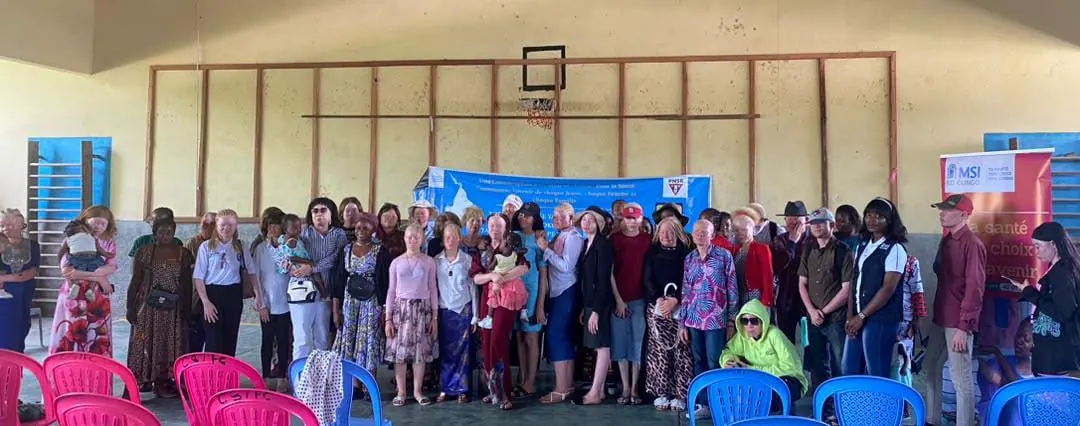
On October 1, 2026, women living with albinism in Kisangani, the capital of Tshopo province in northeastern Democratic Republic of the Congo, were sensitized on family planning and reproductive health. This awareness campaign was conducted by Marie Stopes, an organization that aims to improve access to reproductive health services. The event took place on the sidelines of the World Family Planning Day, highlighting the importance of family planning for women with albinism.
Dr. Thérèse Marie Mokaria, Coordinator of the National Reproductive Health Program/Tshopo, emphasized that women with albinism, like all women, can face unplanned pregnancies with severe consequences. The goal of this sensitization is to provide them with necessary information on family planning and contraception, enabling them to make informed choices about their reproductive health. She noted that the vulnerability of people with disabilities can complicate pregnancy and childcare, especially when financial resources are limited.
According to Dr. Mokaria, family planning can improve the health of mothers, young girls, children, and the entire family, while promoting women's empowerment and contribution to community development. Women with albinism often face social perceptions that limit their access to contraceptive methods. Dr. Véronique Lemba, one of the participants, welcomed this initiative, which responds to a recommendation made by her peers to facilitate access to family planning services.
Dr. Lemba praised Marie Stopes RDC for providing a mobile clinic that offered family planning services directly to beneficiaries on site. This initiative helps preserve the health of women with albinism and enables them to plan their births, recalling that they have the right to access family planning services like all women. The event demonstrated the importance of inclusive and accessible reproductive health services for women with disabilities.
The awareness campaign provided women with albinism with essential information on various family planning methods and reproductive health services. The participants were able to ask questions and receive guidance from healthcare professionals. This initiative is part of a broader effort to promote reproductive health and rights for all individuals, regardless of their abilities or disabilities.
The event was organized in collaboration with local authorities and healthcare providers, highlighting the importance of partnerships in promoting reproductive health services. The campaign aimed to address the specific needs of women with albinism, who often face unique challenges in accessing healthcare services. By providing accessible and inclusive services, Marie Stopes and its partners hope to improve the health and well-being of women with albinism in Kisangani.
The sensitization campaign for women with albinism in Kisangani is a step towards promoting their reproductive rights and improving their access to healthcare services. By providing essential information and services, organizations like Marie Stopes can empower women with albinism to make informed choices about their reproductive health and contribute to their overall well-being.
Key points
- Women with albinism in Kisangani were sensitized on family planning and reproductive health by Marie Stopes on October 1, 2026.
- The awareness campaign aimed to provide women with albinism with essential information on family planning and contraception, enabling them to make informed choices about their reproductive health.
- The initiative is part of a broader effort to promote reproductive health and rights for all individuals, regardless of their abilities or disabilities.