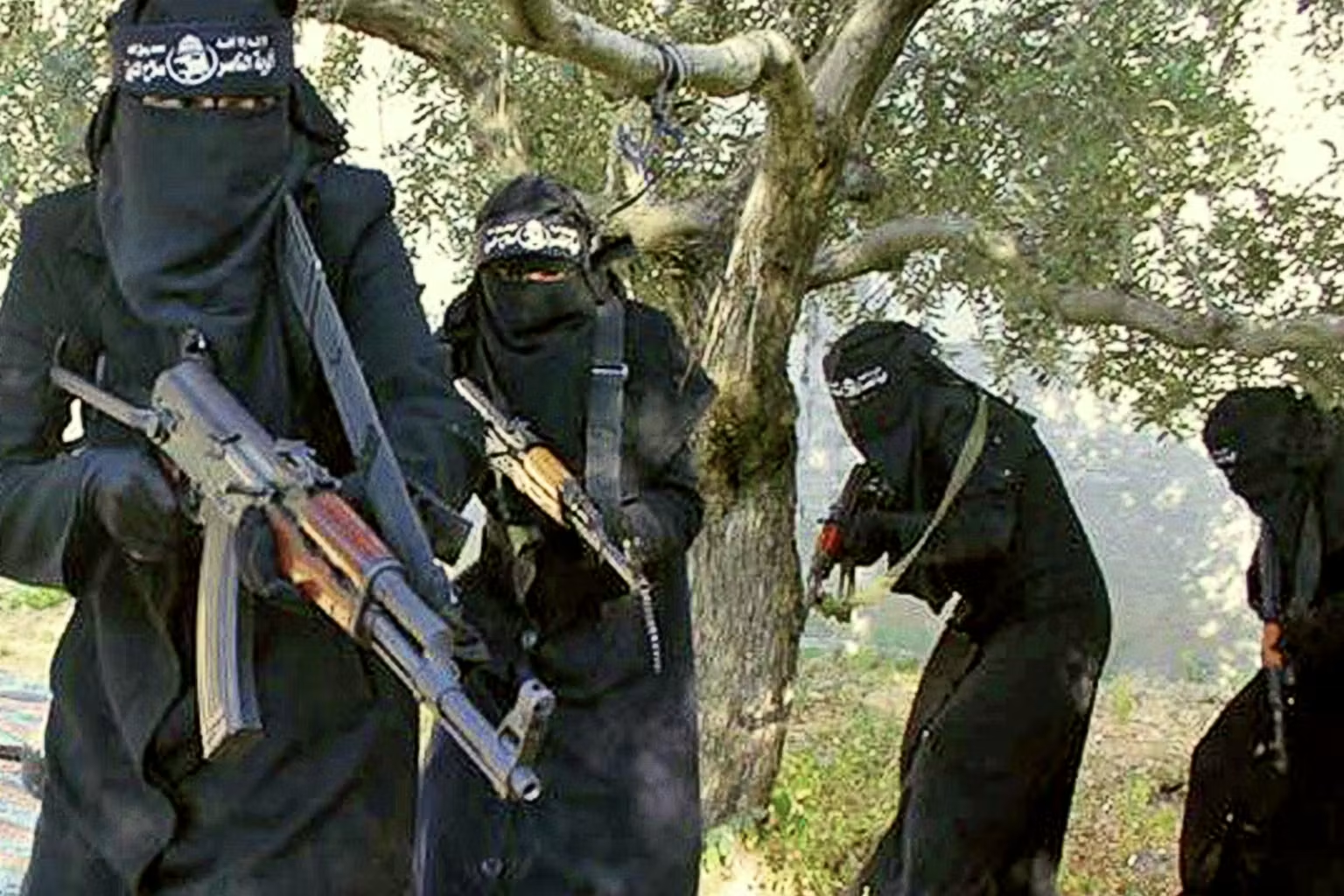
The US State Department has renewed a bounty of up to $5 million for information on Khadra Essa, a Somali-born Dutch national known as Umm Qaqa al-Somali. She is described as the chief sharia instructor of the all-female ISIS-NK battalion formed in Raqqa in 2016. According to the notice, Khadra received formal training in weapons, explosives, and suicide tactics, and taught extremist ideology that justified civilian attacks.
US authorities have also issued a separate reward for locating two American children allegedly taken by Khadra after their mother, an ISIS recruit, died in 2019. This case highlights the expanding role of women in jihadi groups. Khadra's battalion was part of a larger trend of women taking on more senior roles in these organizations.
Court records show that Allison Fluke-Ekren, a former Kansas resident, organized the Khatiba Nusaybah battalion, training over 100 women in rifles, grenades, and suicide belts. She was captured in Syria, transferred to FBI custody in 2022, and sentenced to 20 years in a Virginia federal court. This case demonstrates the growing involvement of women in jihadi groups and their increasing levels of responsibility.
In January 2024, the US Treasury designated Egyptian national Sarah Jamal Muhammad al-Sayyid for supporting ISIS through the Electronic Horizons Foundation. This cyber-security arm recruited members, procured web servers, and managed cryptocurrency logistics. The designation reflects the evolving nature of women's roles in jihadi groups, including their involvement in cyber-operations.
Researchers note that these cases illustrate a broader shift: women are moving from operational roles such as bomb carriers to formalized positions that involve training, recruitment, enforcement, financing, and cyber-operations within jihadist organizations. This trend is significant, as it marks a change in the way women are utilized in these groups.
Historically, women have long participated in violent movements, but traditionally they were limited to roles as bomb carriers or symbolic figures rather than commanders. The practice of using female suicide bombers expanded in the early 2000s across Palestinian, Iraqi, Jordanian, and Pakistani militant groups. Boko Haram, for example, accounted for over half of its suicide attackers being women between 2011 and 2017.
The evolving roles of women in jihadi groups are also reflected in the rhetoric of these organizations. Al-Shabaab's 2014 Swahili magazine highlighted female "leaders" and cited figures such as Aafia Siddiqui and Samantha Lewthwaite. This emerging rhetoric suggests that women can hold authority within these groups, even if formal command posts are rare.
Key points
- Women are taking on senior roles in jihadi groups, including trainers, recruiters, and cyber-support.
- The US has issued bounties and imposed sanctions to counter the growing involvement of women in these organizations.
- The trend reflects a broader shift in the way women are utilized in jihadist organizations, moving from operational roles to formalized positions.