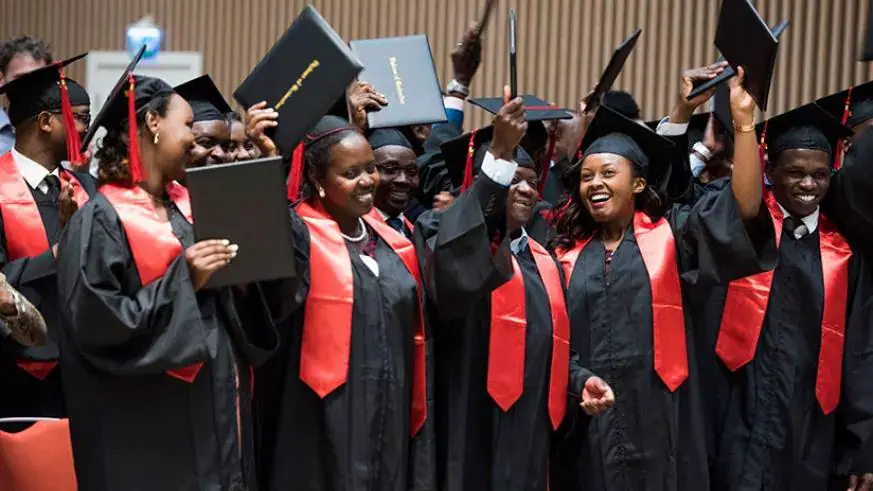
According to the National Institute of Statistics of Rwanda, women accounted for 51.8% of tertiary-level students in 2024, compared with 48.2% for men. This marks a reversal from 2017, when men made up 53.4% of tertiary students, while women accounted for 46.6%. The shift indicates a significant change in the country's higher education landscape.
The expansion of Rwanda's higher education system has contributed to the change in enrolment figures. The Ministry of Education's 2024/25 Education Statistical Yearbook reports 153,318 students enrolled in higher education institutions in the academic year ending July 2025, up from 130,474 the previous year. This growth has created more opportunities for women to pursue higher education.
The trend is also evident at the secondary level, where women accounted for 55.2% of students in 2024, compared with 44.8% for men. Improvements in women's literacy have also been recorded, with their literacy rate rising from 60.1% in 2006 to 73.6% in 2024. Although men still have a higher literacy rate of 78.4%, the gap is narrowing.
The increasing presence of women in tertiary education is expected to have a positive impact on their participation in high-skilled trade sectors. The report suggests that women may be in a stronger position to enter higher-value services and formal trade, including technical and managerial roles. This shift could contribute to gender parity in these sectors within five to ten years.
However, the report also highlights potential barriers that may limit women's transition from education into employment. These include occupational segregation, hiring discrimination, and unpaid care responsibilities. To address these challenges, the report recommends tracking the transition of male and female graduates into trade-related jobs and encouraging gender-responsive recruitment.
The report also suggests expanding mentorship and leadership opportunities for women to support their career advancement. By addressing these barriers and providing more support for women, Rwanda can harness the benefits of its growing female student population and promote greater gender equality in the workforce.
The change in enrolment figures and improvements in women's literacy and education outcomes are significant developments for Rwanda's education sector. As the country continues to invest in its higher education system, it is likely that women will play an increasingly important role in shaping its economic and social future.
Key points
- Women now make up 51.8% of students enrolled in Rwanda's tertiary education institutions, overtaking men for the first time.
- The expansion of Rwanda's higher education system has contributed to the change in enrolment figures, with 153,318 students enrolled in 2024/25, up from 130,474 the previous year.
- The increasing presence of women in tertiary education is expected to have a positive impact on their participation in high-skilled trade sectors, potentially contributing to gender parity within five to ten years.