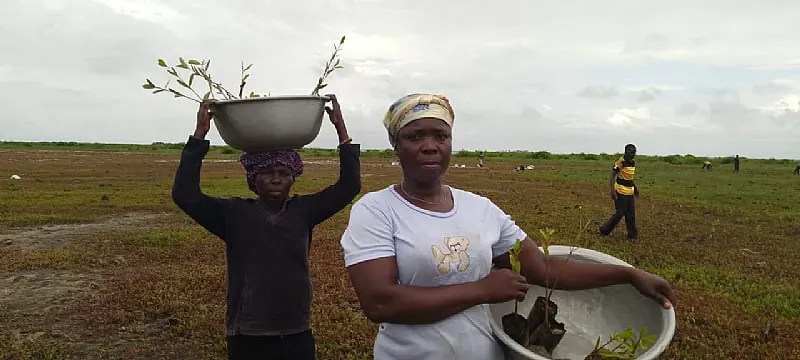
In rural Ghana, as in many African communities, women play a crucial role in managing natural resources. They are often responsible for fetching water, gathering food from forests and mangroves, and harvesting fruits and nuts from trees. Despite their significant involvement, women are frequently left out of planning and decision-making processes for climate projects. However, experts argue that including women in these processes is essential for the success of nature-based climate solutions.
The International Union for Conservation of Nature (IUCN) defines nature-based solutions (NbS) as actions that protect, sustainably manage, and restore natural and modified ecosystems to address societal challenges. These solutions aim to provide benefits for both people and biodiversity. In Ghana and other African countries, NbS can help mitigate the impacts of climate change, such as droughts, floods, and shifting rainfall patterns. Women's involvement in NbS is critical, as they bring unique knowledge and perspectives to the table.
Women's knowledge and expertise can improve NbS projects at every stage, from identification of problems to monitoring and evaluation. By involving women, projects can better address issues such as water quality concerns, decline in medicinal plants, and sustainable harvesting practices. Moreover, women's participation can ensure that projects are designed and implemented in a way that suits the needs of all community members. This, in turn, can lead to more effective and sustainable solutions.
In Ghana, as in other countries, women face significant barriers to participating in NbS projects. These barriers include limited access to land, water, finance, and technology, as well as social norms that restrict their voice in household and community decisions. Additionally, women often have heavy childcare and household duties, which can leave them with little time to participate in projects with no quick returns. Addressing these barriers is essential to ensuring that women can contribute to and benefit from NbS.
The benefits of involving women in NbS are numerous. When women participate, the benefits can extend to the entire community, including increased income from sustainable farming and agroforestry, improved food and nutrition, and stronger conservation of soil, water, and biodiversity. Furthermore, women's participation can help preserve traditional knowledge and pass skills to the next generation. In Ghana, as in other African countries, giving rural women equal access to resources, education, and markets could significantly raise agricultural output and reduce hunger.
Several countries have made progress in implementing gender-responsive NbS. For example, in Nepal, an IUCN-funded community reforestation project gave women decision-making roles and training in nursery management and afforestation. In Jordan, a UN Women-funded project set up water user associations in which women were encouraged to join as members and leaders. Similarly, in Uganda, the Women Empowerment in Sustainable Land Management (WESLAM) project supports women in beekeeping and mushroom cultivation.
To ensure the success of NbS in Ghana, it is essential to address the barriers that prevent women from participating. This includes providing access to education, training, and resources, as well as promoting social norms that support women's involvement in decision-making. By doing so, Ghana can harness the knowledge and expertise of women to develop effective and sustainable nature-based climate solutions.
Key points
- Women's involvement is crucial for the success of nature-based climate solutions.
- Women face significant barriers to participating in NbS projects, including limited access to resources and social norms that restrict their involvement.
- Involving women in NbS can lead to numerous benefits, including increased income, improved food and nutrition, and stronger conservation of natural resources.