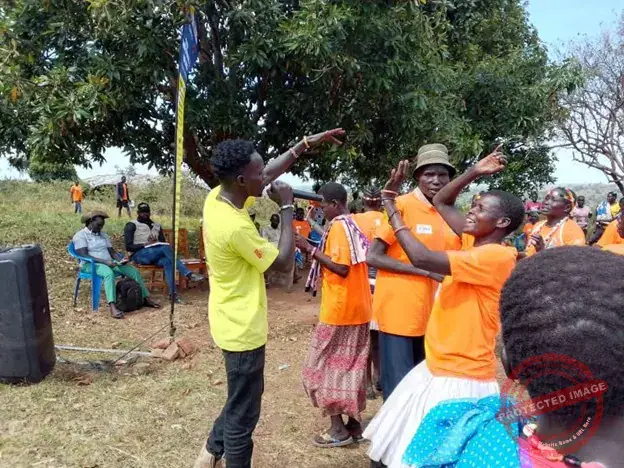
Women in Budi County, Eastern Equatoria State, are facing threats and pressure to remain silent when they speak out against gender-based violence. Mandelena Dudu, a member of the Budi Women Association, stated that women who challenge violence are often accused of undermining cultural traditions. This leaves harmful practices hidden and makes it harder for survivors to seek support. Dudu emphasized that women who speak out are sometimes threatened into silence because some men believe that challenging gender-based violence undermines cultural norms.
Dudu further explained that women in Budi continue to face discrimination, underrepresentation, and pressure to remain silent, even during public discussions. She noted that violence against women remains high, and women continue to be undervalued and underrepresented. According to Dudu, women's voices are crucial in addressing gender-based violence, but they are often silenced due to cultural and societal pressures.
Women leaders are now calling for greater involvement of men and boys in efforts to end gender-based violence. Davidca Ikai, Chairperson of the Women-Led Network in Eastern Equatoria, emphasized that the responsibility cannot be left to women and civil society organizations alone. Ikai stated that men and boys must be actively involved in challenging violence and harmful attitudes. She believes that men, as gatekeepers, need to understand the importance of this issue.
Ikai also noted that gender-based violence affects both women and men, including boys who may suffer in silence. She called for collective efforts to break the silence surrounding gender-based violence. By engaging men and boys, Ikai believes that the issue can be addressed more effectively, and survivors can receive the support they need.
The National Ministry of Gender, Child and Social Welfare has taken steps to improve access to justice for survivors of gender-based violence. Ministry representative Suzan Flex Loro announced that judges have recently been assigned to gender-based violence courts in four states. This move aims to address delays caused by mobile courts, which sometimes took several months to return to communities.
Loro explained that the appointment of resident judges is one of the measures being introduced to improve the response to gender-based violence cases. Previously, mobile courts traveled from Juba to different parts of the country, sometimes taking six months to return to locations where they had handled cases. The ministry hopes that this change will help survivors receive justice more efficiently.
The discussion on gender-based violence also examined the links between this issue and the Women, Peace and Security agenda. The involvement of men and boys, as well as the appointment of resident judges, are seen as crucial steps towards addressing gender-based violence and promoting peace and security in South Sudan.
Key points
- Women in Budi County face threats and pressure to remain silent when speaking out against gender-based violence.
- Men and boys must be actively involved in challenging violence and harmful attitudes to effectively address gender-based violence.
- The National Ministry of Gender, Child and Social Welfare has appointed judges to gender-based violence courts in four states to improve access to justice for survivors.