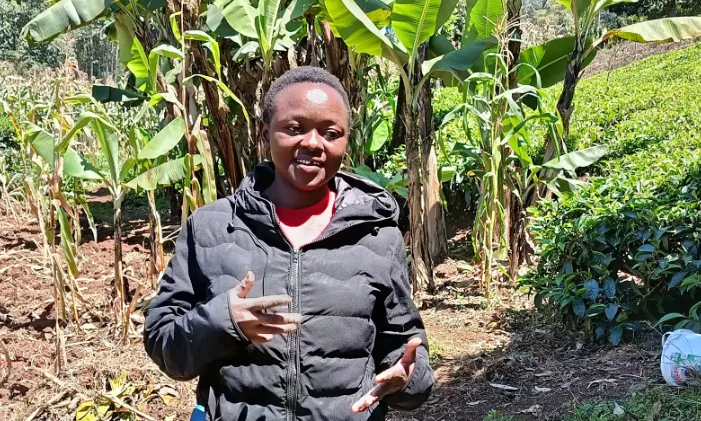
In Kenya, women farmers are transforming the livestock farming sector by adopting alternative feeds such as Azolla and Black Soldier Fly larvae. This shift aims to reduce costs and overcome the challenges of limited access to land and finances. The Food and Agriculture Organization of the United Nations (FAO) has recognized the importance of women in agriculture, designating 2026 as the International Year of the Woman Farmer. This initiative seeks to acknowledge women's contributions to agri-food systems and address the obstacles that hinder their participation.
Agnes Gathondu, a fish and poultry farmer from Nyeri County, is one of the women leading this change. She began Azolla farming in 2021 as a response to the high cost of commercial feeds. Azolla, a fast-growing aquatic plant rich in protein, is used as a supplementary feed for livestock, fish, and poultry. By incorporating Azolla into her farming, Gathondu has reduced her production costs by about 40 percent. She now sells Azolla planting material to other farmers, introducing 120 women to this technology.
Another woman making a significant impact in the sector is Winnie Wambui Githinji, who focuses on Black Soldier Fly (BSF) farming. BSF larvae are a protein-rich feed source for poultry, pigs, and fish. Githinji's approach involves using organic waste to rear BSF larvae, converting waste into a valuable agricultural resource. This method not only provides an alternative feed but also creates a business opportunity for women to participate in livestock production without needing large tracts of land or substantial capital.
Githinji's BSF farming enterprise is designed to be accessible to women, requiring minimal land and infrastructure. However, she notes that as the enterprise grows, land and infrastructure become increasingly important for sorting, processing, waste treatment, and other forms of value addition. Githinji emphasizes that technology can reduce some barriers but does not automatically remove the structural barriers that have historically limited women's participation in agriculture.
The importance of addressing these structural barriers is reflected in global agricultural research. CGIAR's gender equality and inclusion accelerator seeks to move beyond simply counting the number of women who receive or adopt new technologies. Instead, it focuses on generating evidence about what works for women farmers, amplifying their voices, and showcasing gender-responsive innovations. The accelerator's 2026 theme, "Empowered women. Investable innovations. Transforming agri-food systems," highlights the need for innovations to become pathways to greater economic opportunity and decision-making for women.
For women like Gathondu and Githinji, the adoption of alternative feeds has not only reduced costs but also provided a sense of empowerment and independence. Gathondu no longer relies on her father for finances, and Githinji has created a business opportunity that allows women to participate in livestock production. As the agricultural sector continues to evolve, it is essential to recognize the critical role that women play and to address the challenges that they face.
The experiences of Gathondu and Githinji illustrate the potential of alternative feeds to transform the livestock farming sector in Kenya. By adopting innovative approaches and technologies, women farmers can overcome traditional barriers and contribute significantly to the sector. As the International Year of the Woman Farmer continues, it is essential to support and amplify the voices of women like Gathondu and Githinji, who are rewriting the rules of livestock farming in Kenya.
Key points
- Women farmers in Kenya are adopting alternative feeds such as Azolla and Black Soldier Fly larvae to reduce costs and challenge traditional barriers in livestock farming.