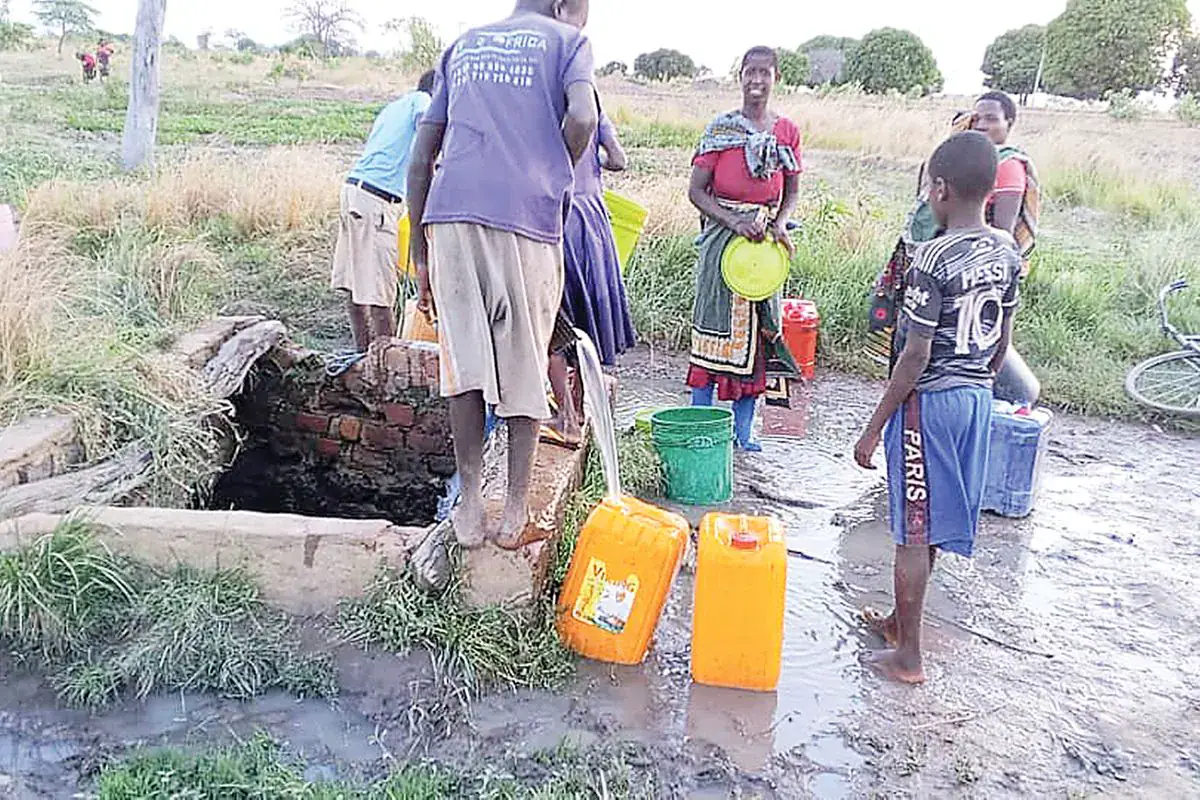
In Uyui District, Tabora Region, Tanzania, women and children start their day as early as 5am to search for water, walking between 3 to 5 kilometres to access water from natural valleys and improved wells. This daily journey consumes a significant part of the morning, leaving them to attend to other domestic responsibilities, farming, and business activities only after securing water. Many residents have to make multiple trips, returning to the sources again in the evening.
The water shortage in Uyui is a longstanding issue, with some residents recalling that the problem has persisted for decades. Charles Masanja, a resident of Ufuluma Ward, notes that the area has never received clean and safe water services since Tanzania gained independence. The reliance on unimproved water sources is a significant challenge, with 78.3 percent of households in Uyui depending on such sources, according to the 2022 Population and Housing Census.
The National Bureau of Statistics report shows that Uyui has one of the highest dependencies on unimproved water sources in the region. In comparison, 70.5 percent of households in Urambo, 70.8 percent in Sikonge, 65.7 percent in Kaliua, and 54.3 percent in Igunga relied on unimproved water sources. The difference between Uyui and Tabora Municipality, where only 14.8 percent of households rely on unimproved sources, is 63.5 percentage points.
Residents, like Francisco Dashoni, say that his family walks approximately five kilometres to collect water from a natural valley, which they transport home using a bicycle. Mwalu Lubinza, another resident, shares a similar experience, waking up early every day to collect water from a valley about four kilometres from her home. The situation highlights the need for improved access to clean and safe water in the district.
The World Health Organisation emphasises the need to control contamination and manage health risks throughout the water supply chain. The organisation's drinking-water quality guidelines stress the importance of assessing and managing water safety risks, conducting sanitary inspections of water sources and supply systems, and strengthening independent water quality monitoring.
Existing policy and legal provisions aim to improve access to safe and affordable water, particularly in rural areas. The National Water Policy of 2002 and the Water Supply and Sanitation Act No. 5 of 2019 provide a framework for the management and development of water supply and sanitation services in the country. However, the implementation of these policies and laws seems to be inadequate, with some residents questioning the distribution of water infrastructure investments across the district.
Village and hamlet leaders in some areas raise concerns about the distribution of water projects, claiming that many of the water projects being implemented in Tabora Region benefit neighbouring districts, while Uyui continues to lag behind. The concerns raise questions about whether existing investment and planning adequately reflect the needs of communities facing persistent water shortages.
Key points
- Women and children in Uyui District walk up to 5km daily to access water from natural valleys and improved wells.
- 78.3 percent of households in Uyui rely on unimproved sources of drinking water.
- The water shortage in Uyui is a longstanding issue, with some residents recalling that the problem has persisted for decades.