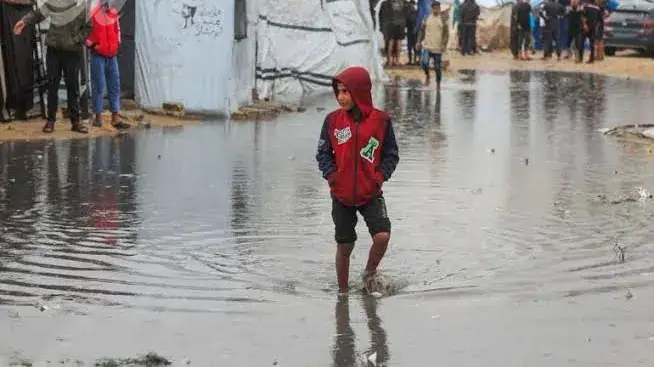
As winter approaches, approximately 950,000 displaced people in the Gaza Strip are at risk of flooding due to the destruction of infrastructure, sewage networks, and stormwater drainage systems. The ongoing conflict and restrictions on aid have exacerbated the deterioration of health conditions, leaving hundreds of thousands vulnerable to diseases and epidemics in camps lacking basic protection.
According to Reinhilde Van De Veurdt, representative of the World Health Organization in the occupied Palestinian territories, around 400,000 displaced individuals reside in high-risk areas prone to flooding. She warned that recent rainfall has revealed the extent of the catastrophe awaiting the sector in the coming months, despite winter not having officially begun yet.
The WHO representative emphasized that the organization has witnessed families whose tents were swept away by floodwaters, leaving thousands of Palestinians with only inadequate shelters. She cautioned that the worst is yet to come, as the mixing of sewage, waste, and contaminated water with sleeping areas, food preparation, and childcare within flooded camps significantly increases the risk of disease transmission.
The health situation in Gaza is further complicated by a surge in acute respiratory infections, with approximately 33,000 additional cases reported compared to the same period last year. These infections account for 11% of total medical consultations, even before the onset of winter, which is expected to put additional pressure on already overburdened healthcare facilities.
A total of nine healthcare facilities have suffered varying degrees of damage, while rainfall is hindering the movement of medical teams and patients. The healthcare system, operating at maximum capacity, faces a severe shortage of fuel, medicine, and medical supplies. The WHO representative stressed the urgent need for essential supplies, including durable tents, plastic sheets, and equipment for providing clean water and managing waste.
The destruction of Gaza's infrastructure, including 90% of its sewage and stormwater drainage systems, has left displaced families extremely vulnerable to flooding and the accumulation of contaminated water with each rainfall. Since October 2023, Israel's ongoing conflict has resulted in over 74,000 fatalities and more than 175,000 injuries, mostly among children and women, and widespread destruction of basic life necessities.
The situation is expected to worsen as the fourth consecutive winter sets in, with the healthcare system facing another critical test. The WHO representative called for the immediate allowance of medical equipment, spare parts, generators, and fuel to be brought into Gaza, warning that the consequences of inaction will be severe.
Key points
- Nearly 1 million displaced people in Gaza are at risk of flooding and related health issues this winter.
- The area's infrastructure and healthcare systems are severely damaged, exacerbating the risk of disease transmission.
- Urgent humanitarian aid, including essential medical supplies and equipment, is needed to mitigate the crisis.
Reporting sources
- Établissement de la Radiodiffusion-Télévision Tunisienne · Établissement de la Radiodiffusion-Télévision Tunisienne