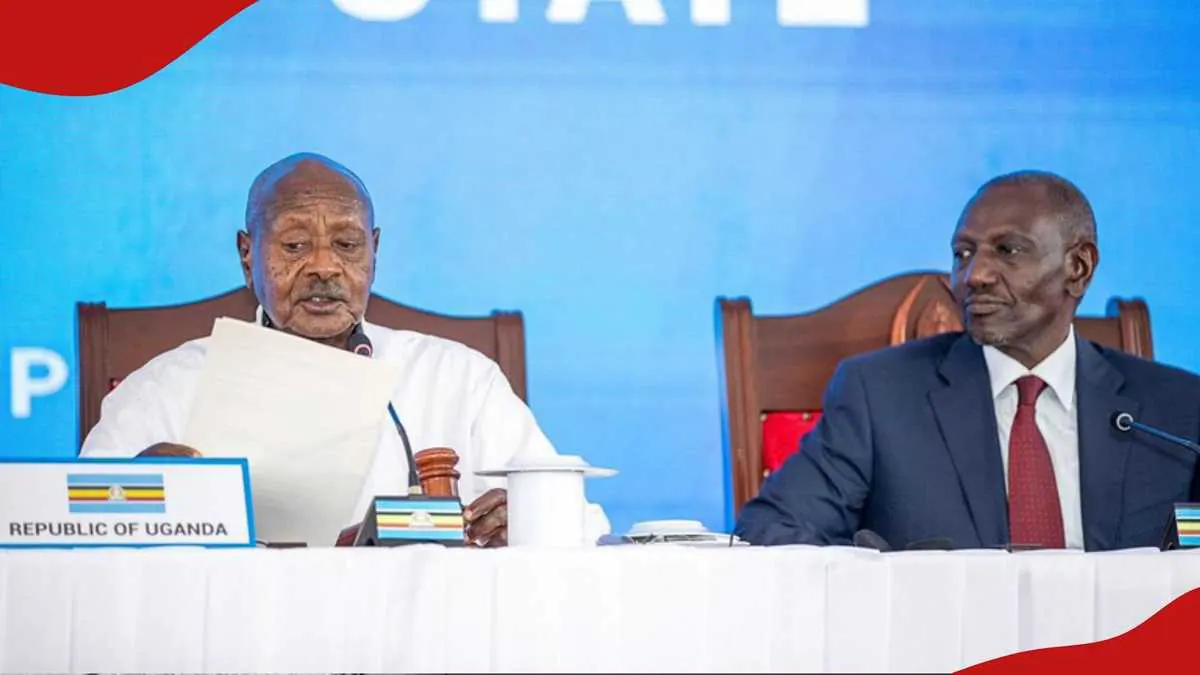
On September 21, 2026, Kenyan President William Ruto addressed concerns raised by Ugandan counterpart Yoweri Museveni regarding Kenya's fuel importation framework. Museveni had suggested that Uganda previously purchased petroleum products through Kenyan intermediaries rather than directly from refiners and bulk suppliers. Ruto firmly defended Kenya's model, stating it is among the most cost-effective on the continent. He emphasized that the current system cuts out brokers, dealing directly with petroleum producers.
Ruto's comments come after Museveni questioned the authenticity of Kenya's government-to-government arrangement, citing the involvement of traders. The Kenyan president recalled the circumstances leading to the policy shift, noting that fuel stations had run dry shortly after he took office due to a dollar shortage. Oil marketers were among the first groups to approach him, prompting him to overhaul the importation structure. This change has attracted interest from other African governments, including Malawi and Burundi.
The revised model has been framed as a regional benchmark by Ruto, who claimed Kenya's approach is superior to Uganda's. He issued a challenge to critics, asking them to compare the landed cost of petrol arriving in Kenya with that of neighboring Uganda. Ruto stated that Kenya's fuel products arrive in Mombasa cheaper than those going to other countries. He asserted that facts support his administration's approach.
Ruto's defense of Kenya's fuel deal comes after Museveni's claim that a Kenyan senator had alerted him to the middlemen problem. The issue resurfaced when a separate group questioned why Uganda was not dealing directly with refiners. Ruto's administration has been under scrutiny for its fuel importation framework, with some questioning the involvement of intermediaries.
The Kenyan president emphasized that his government deals directly with producers, cutting out brokers. This approach was necessitated by the shortage of dollars that led to fuel shortages shortly after Ruto took office in 2022. The policy shift has been touted as a success, with other countries expressing interest in adopting a similar model.
Ruto's remarks were made at a forum on September 21, 2026, where he addressed criticism of Kenya's fuel importation framework. He described the current model as a cost-effective approach that has attracted interest from other African governments. The president's comments are seen as a response to Museveni's concerns, which sparked a public debate on the fuel importation framework.
The fuel importation framework has been a subject of controversy, with some questioning the involvement of intermediaries. Ruto's administration has maintained that its model is the most cost-effective and has attracted interest from other countries. The president's challenge to critics to compare the landed cost of petrol in Kenya and Uganda remains a key point of contention.
Key points
- Kenya's President William Ruto defends government-to-government fuel importation deal against criticism from Uganda's Yoweri Museveni
- Ruto claims Kenya's model cuts out brokers, dealing directly with petroleum producers
- The president challenges critics to compare the landed cost of petrol arriving in Kenya and Uganda