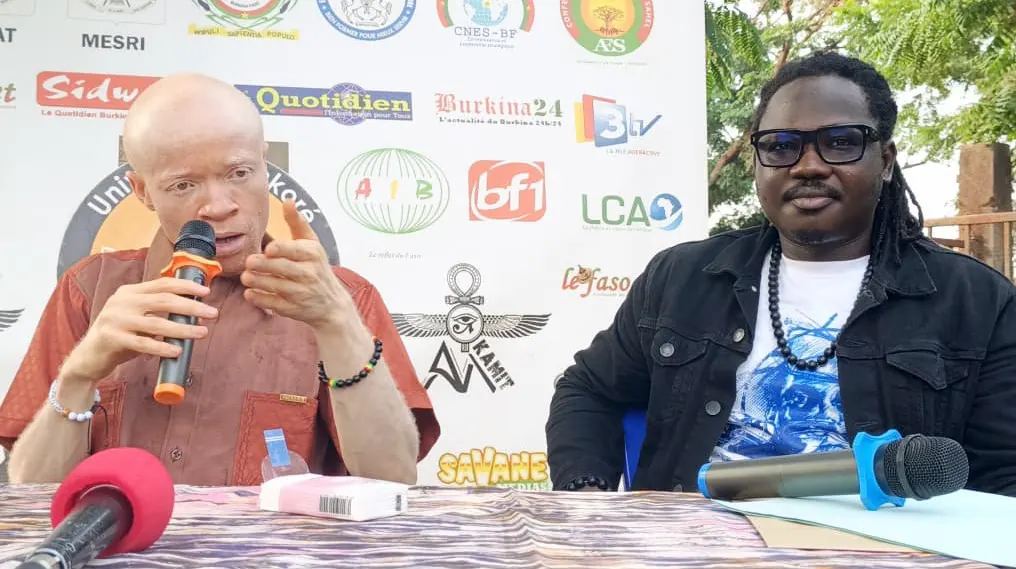
On October 9, 2026, Cameroonian analyst and writer Claude Wilfried Ekanga delivered a public conference in Ouagadougou, Burkina Faso, organized by the "2 Heures pour Kamita" movement. The conference focused on information warfare, communication sovereignty, and Africa's ability to produce its own narratives in the face of external discourses. Ekanga emphasized the importance of communication in contemporary conflicts, comparing it to military strategies. He argued that mastering information is crucial for states, particularly those in the Alliance of Sahel States (AES).
Ekanga advocated for the construction of a "communication wall" to defend African narratives against what he considers hostile external discourses. He stressed that military victories are insufficient without the ability to control the narrative of events. Citing examples from the Vietnam War and US-Iran tensions, Ekanga illustrated the limitations of military superiority without a comprehensive strategy. He urged African youth to strengthen their analytical and communication capacities to counter imperialist narratives.
The conference was part of Ekanga's advocacy for an Africa that can tell its own story. He previously participated in the African Universities of Communication (UACO) held in Burkina Faso, which emphasized the importance of communication in the face of destabilization attempts. Ekanga's message resonated with the "2 Heures pour Kamita" movement, which aims to facilitate exchanges between youth and African intellectual and cultural personalities.
The "2 Heures pour Kamita" movement's coordinator, Lianhoué Imhotep Bayala, explained that the initiative seeks to bring young people into contact with influential figures who can inspire their thinking. Previous guests at the forum include Théophile Obenga, Lilian Thuram, and rapper Youssoupha. Bayala highlighted Ekanga as a young African scholar who can positively impact African mentalities.
Ekanga also questioned the representations of African youth and AES countries in international debates, particularly the labels of "anti-French" or "pro-Russian." He argued that diversifying partnerships should not be automatically interpreted as a political alignment. The conference aimed to promote a nuanced understanding of African perspectives and communication sovereignty.
The autonomy of intellectual analysis emerged as a key takeaway from the conference. Ekanga and the "2 Heures pour Kamita" team emphasized that Africans must be able to analyze their history, explain their choices, and express their positions without relying solely on external narratives. Journalists, intellectuals, and citizens are encouraged to contribute to African communication that balances freedom of speech, critical thinking, and knowledge of continental issues.
The conference concluded with a call to action for African youth to take ownership of their communication strategies. Ekanga's message underscored the importance of communication sovereignty in Africa's positioning within contemporary power dynamics. The event demonstrated the growing recognition of communication as a vital component of Africa's development and self-expression.
Key points
- Wilfried Ekanga calls on African youth to build a "communication wall" to defend African narratives.
- The conference emphasized the importance of communication sovereignty in Africa's development.
- Ekanga advocates for African autonomy in intellectual analysis and communication.