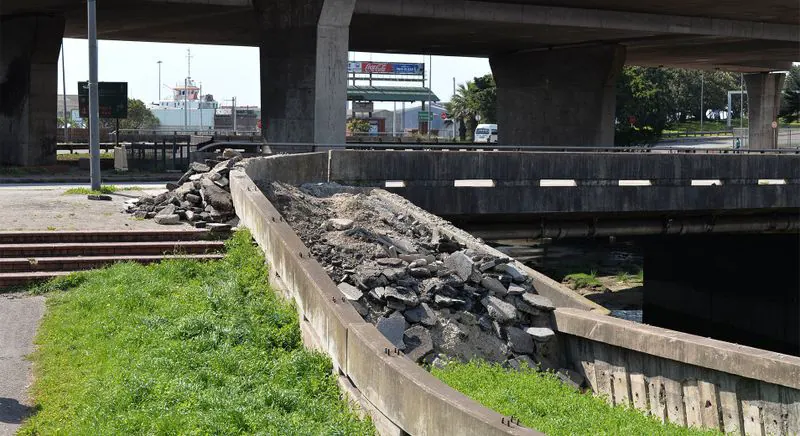
A heap of tar and other building rubble was allegedly dumped on the banks of the Baakens River in Gqeberha, sparking a criminal case after conservationists claimed the waste buried kingfisher nesting sites during breeding season and poses a risk to an already fragile water body. Environmentalist Arnold Slabbert opened the case at Humewood police station, alleging that environmental, waste and animal-protection laws had been contravened.
The rubble, which included large quantities of old tar and other road-building material, was dumped on the bank of the Baakens River near South Union Street. Slabbert alleged that the material covered kingfisher nesting burrows and that birds, eggs and chicks inside the burrows may have been killed. He described the incident as "quite disgusting" and stated that the tar has to be specially disposed of.
The dumping of road rubble and tar is believed to have come from roadworks on South Union Street, carried out by a company contracted by the Nelson Mandela Bay Municipality. Slabbert said the contractor should have disposed of material removed during the roadworks at an authorised facility rather than dumping it beside a river. He expressed concern that this type of incident keeps happening due to a lack of management and knowledge about environmental laws.
A police spokesperson confirmed that a criminal case has been opened at the station in terms of the National Environmental Management: Waste Act 59 of 2008. Slabbert also mentioned that he would look into finding something under the Water Act as well, since the rubble was dumped on the bank of a river. The Nelson Mandela Bay Municipality is already facing two active criminal investigations over alleged sewage pollution.
The destruction of the nesting site has raised particular concern because kingfishers were breeding along the riverbank. Slabbert stated that birds had been inside the burrows when the rubble was dumped, and it is likely that they, along with their eggs and chicks, were killed. He described the incident as a suffocation and crushing of the birds under the weight of the rubble.
The Baakens River is under continuous threat from development and pollution, with Slabbert describing it as having gone from being part of the city's "green lung" to its "sh*t lung". He stated that the river is basically used as a sewage canal due to the lack of maintenance of municipal infrastructure. Chunks of the asphalt had fallen into the already fragile Baakens River, posing a risk to the river's health.
The Nelson Mandela Bay Municipality did not respond to questions, but DA ward councillor Bernhard Wolf described the dumping as "unacceptable" and unprofessional. Wolf stated that some people have to be held responsible and that the contractor should be held accountable for ensuring road-building waste was properly disposed of.
Key points
- The dumping of tonnes of road rubble and tar beside the Baakens River in Gqeberha has sparked a criminal case.
- The incident poses a risk to the river's health and may have killed kingfisher birds, eggs and chicks during breeding season.
- The Nelson Mandela Bay Municipality is already facing two active criminal investigations over alleged sewage pollution.