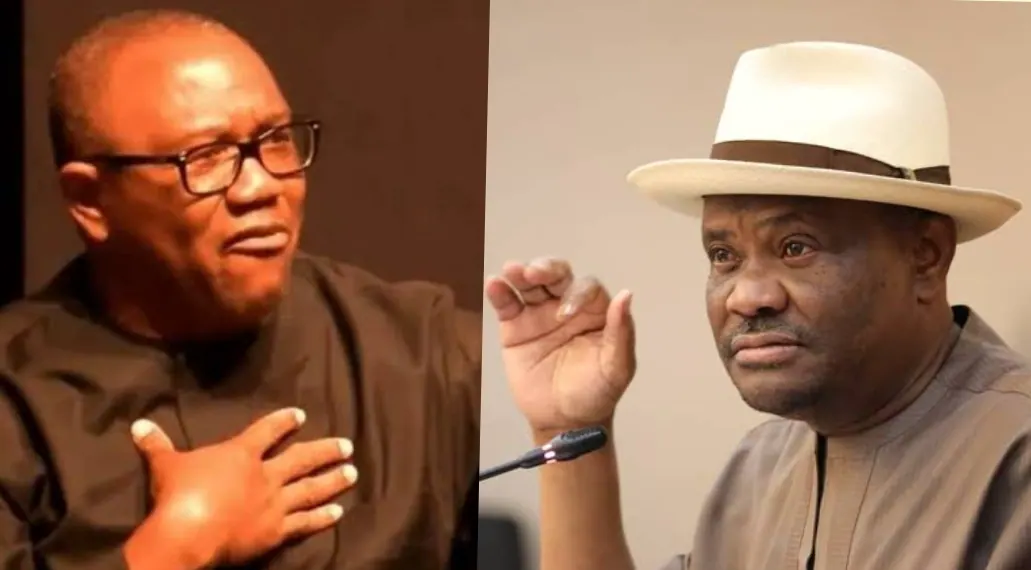
Nigeria's Minister of the Federal Capital Territory, Nyesom Wike, has stated that Peter Obi, the presidential candidate of the New Democratic Coalition, no longer enjoys the same level of support in the South-East region as he did during the 2023 presidential election. Wike made this assertion during an interview on TVC News' Journalists' Hangout, where he discussed the current political landscape ahead of the 2027 general elections. According to Wike, the circumstances that contributed to Obi's strong performance in the region during the 2023 election have changed.
Wike attributed Obi's 2023 performance partly to the political strategies employed by the G5 governors, a group he led alongside governors Seyi Makinde, Samuel Ortom, Okezie Ikpeazu, and Ifeanyi Ugwuanyi. The group had aimed to prevent former Vice President Atiku Abubakar from gaining an advantage in certain regions. Wike explained that the G5 believed the Peoples Democratic Party had a strong base in the South-South but considered Atiku a challenge, leading to a decision that allowed Obi to benefit in some states.
The FCT minister revealed that Rivers State was treated differently due to concerns over the political message an Obi victory could send. Wike stated that he had opposed Obi's candidacy in Rivers State, fearing that his victory could send a signal that might be misinterpreted. This decision, according to Wike, was a tactical move to prevent potential repercussions.
Wike also dismissed the idea that large crowds at political rallies automatically represent electoral strength. He emphasized that political support must be assessed beyond public gatherings, citing that relying solely on rally attendance can be misleading. According to Wike, a more nuanced approach is required to accurately gauge electoral strength.
Speaking on the 2027 election, Wike advised political actors not to judge the contest based solely on the dynamics of the 2023 election. He suggested that the current political landscape has changed and that Obi's previous performance should not be used as a measure of his current strength. Wike's comments come as Obi prepares to contest the presidency again under the New Democratic Coalition.
Obi contested the 2023 presidential election on the platform of the Labour Party, finishing third behind Bola Tinubu of the All Progressives Congress and Atiku Abubakar of the Peoples Democratic Party. His move to the New Democratic Coalition ahead of the 2027 election sets the stage for another presidential bid. Wike's assertions have sparked reactions from various stakeholders, including supporters of Obi.
Wike's comments have significant implications for the 2027 presidential election, particularly in the South-East region, where Obi enjoyed considerable support in 2023. As the political landscape continues to evolve, stakeholders will be watching closely to see how Obi's support base has shifted and how this will impact the election outcome.
Key points
- Peter Obi no longer commands the same level of support in South-East Nigeria as he did during the 2023 presidential election, according to FCT Minister Nyesom Wike.