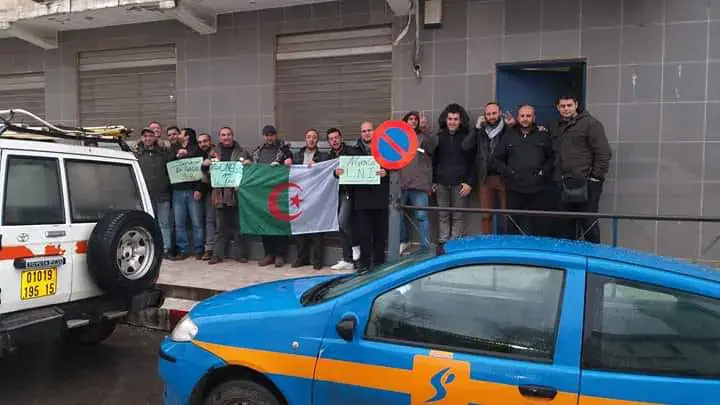
A strike called by multiple Algerian unions has been widely observed in Tizi-Ouzou, with significant participation from various public sectors. The strike, which began on Sunday, has affected several key services, including education, administration, and finance. The call to action was issued to various public sector companies, including oil and hydrocarbon companies, airports, ports, and railways, as well as banks, post offices, and tax authorities.
In the capital city of Tizi-Ouzou, nearly all schools and university campuses were closed, with the entire Mouloud Mammeri university campus shut down. Post offices, the Treasury, and tax services were also paralyzed, along with local government offices. Similar scenes were reported in communes and daïras across the region, with widespread closures reported.
The strike was also observed in other areas of Tizi-Ouzou, including Tigzirt, where the local mayor Moussa Abbou reported that all sectors, except for commerce and healthcare, were on strike. The commune's post office, bank, tax office, and schools were among those closed. Similar reports came from Mechtras, where the P/APC Omar Cheballah stated that the local APC, schools, and post offices were all on strike.
In the Ouadhias region, primary schools, high schools, colleges, banks, post offices, and local government offices were all closed on Sunday. The widespread participation in the strike is seen as a significant show of support for the ongoing popular movement demanding a complete overhaul of the country's political system.
The strike is part of a larger movement that began on February 22, with peaceful demonstrations taking place every Friday. These demonstrations have drawn millions of citizens from all walks of life, calling for radical change and the departure of the current system. The strike on April 10, called by the Confédération des syndicats d'Algérie, has been maintained, according to Hocine T., a spokesperson for the Snapest union.
The impact of the strike was felt across the region, with many essential services disrupted. While some sectors, such as healthcare, continued to operate, the widespread closures are likely to have significant economic and social implications. The strike is seen as a key moment in the ongoing struggle for change in Algeria.
As the movement continues to gain momentum, it remains to be seen how the government will respond to the demands of the protesters. The strike has highlighted the depth of frustration and discontent among many Algerians, who are calling for a complete transformation of the country's politics and institutions.
Key points
- The strike was widely observed across Tizi-Ouzou, with significant participation from various public sectors.
- The strike is part of a larger movement demanding a complete overhaul of Algeria's political system.
- The movement began on February 22, with peaceful demonstrations taking place every Friday.
Reporting sources
- Tizi-Ouzou – L’administration, les finances, les écoles… fermées ! · La Dépêche de Kabylie