A wave of rejections has swept across Libya's educational sector as teachers and schools refuse to return to work despite an agreement between the Government of National Unity and the General Teachers' Union. The agreement, announced on October 8, 2026, was meant to address some of the teachers' demands, but many have expressed dissatisfaction with the terms. The government's announcement to resume classes on Wednesday has been met with widespread criticism.
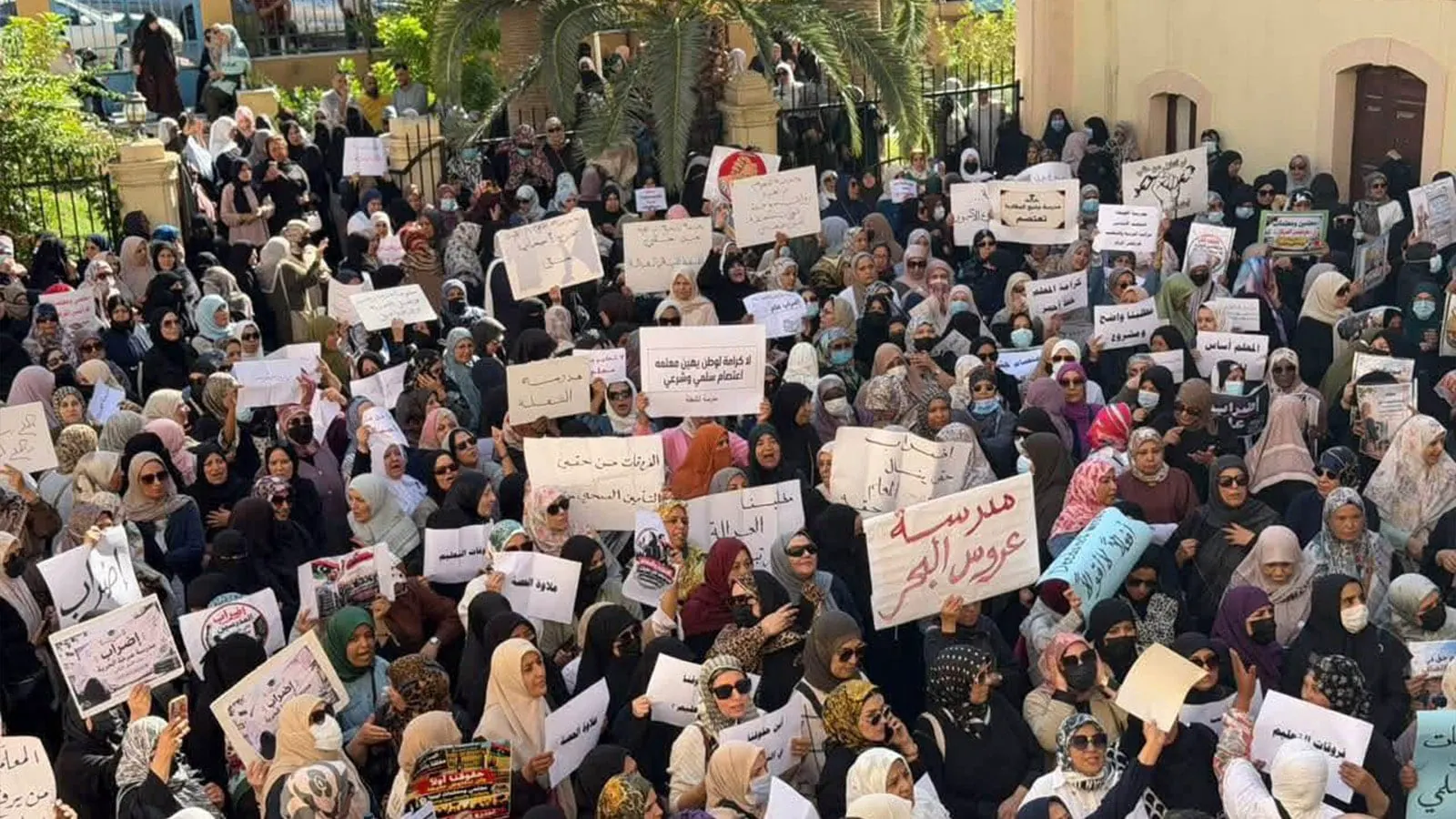
The head of the Teachers' Movement, Ashraf Al-Hadi, has stated that the movement rejects the agreement's outcomes, citing a lack of clear and binding guarantees to implement teachers' demands. Al-Hadi emphasized that the strike will continue, with demands including a unified salary scale, payment of differences and financial entitlements, health insurance, and activation of the teacher protection law.
In several cities, teachers and school principals have announced their rejection of the agreement. In the municipalities of Az-Zintan and Ar-Raiyna, educators have stated they will not return to work until their demands are met and guaranteed by law. Similarly, teachers in Riqdalin have declared their continued strike, while the Educational Inspection Union has suspended its fieldwork until its demands are addressed.
Other regions have also expressed dissent. In Ajdabiya, the Teachers' Union has continued its sit-in, objecting to the resumption of classes without clear guarantees. In Tajoura, the Teachers' Movement has refused to return to school until demands are implemented clearly and bindingly, including increased salaries, payment of differences and allowances, and a specified timeline for implementation.
The rejection of the agreement has also been voiced in Zawiya, where the local Teachers' Movement has refused to attend meetings and rejected the agreement between the union and the government. Meanwhile, in Zliten, a group of teachers affiliated with the Education Monitoring Department staged a protest in front of the local council, demanding payment of their salaries and settlement of their financial status.
The Libyan government had announced the resumption of classes following a meeting between Prime Minister Abdul Hamid Al-Dbeiba and the General Teachers' Union. The union had declared the end of its sit-in and reached understandings on some demands, including adopting a unified salary scale and paying teachers' allowances. However, many teachers and unions have refused to accept these terms.
The situation remains tense as educators continue to push for their demands to be met. Key issues include a unified salary scale, payment of financial entitlements, and improved working conditions. The government's efforts to restart the educational process have been hindered by the widespread rejection from teachers and schools across the country.
Key points
- The Libyan government faces opposition from teachers and schools over its plan to resume classes despite an agreement with the General Teachers' Union.
- Educators demand a unified salary scale, payment of financial entitlements, and improved working conditions.
- The situation remains tense as teachers continue their strike and reject the government's terms.