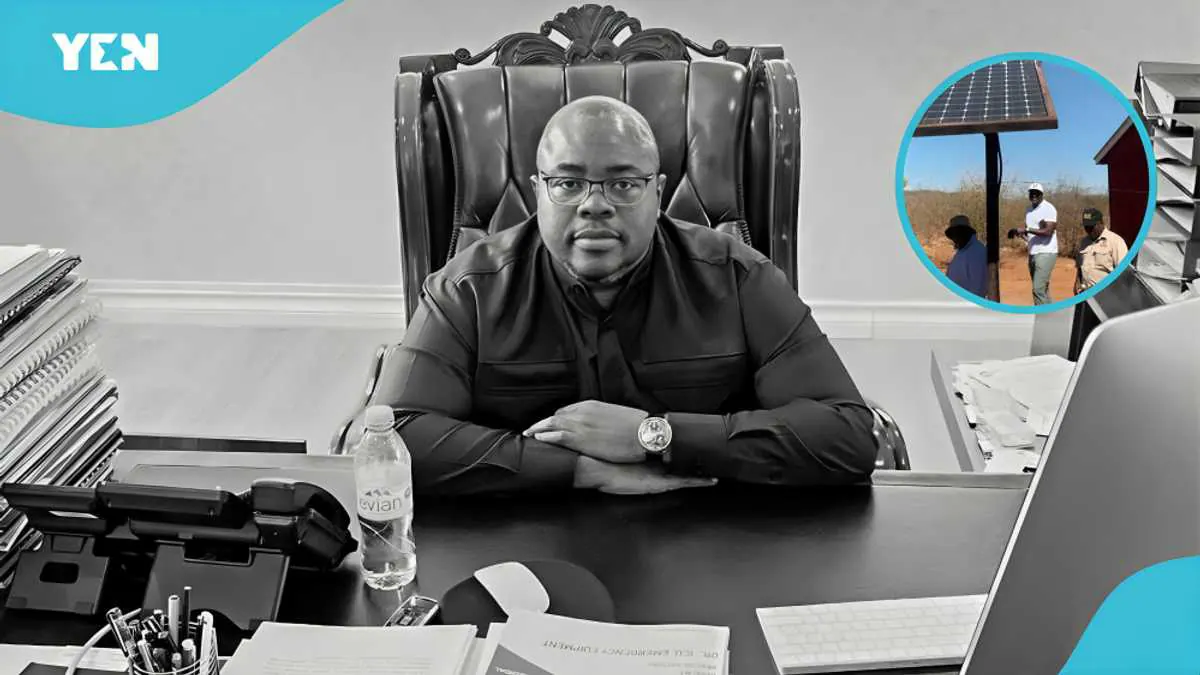
The Gwanda Solar Project, a 100-megawatt initiative aimed at alleviating Zimbabwe's severe power shortages, has been left in a state of disrepair. The project, valued at $172.8 million, was awarded to Intratrek Zimbabwe Pvt Ltd, a company owned by the late businessman Wicknell Chivayo. A recent site visit revealed a landscape overrun with thick bush and shrubs, with only a single solar panel visible, powering a security light. The project's 262-hectare site also features termite-damaged wooden cabins and rooftops missing tiles.
The project was initially tendered at around $5 million, with plans to inject 100 megawatts of solar-generated electricity into Zimbabwe's national grid. However, more than a decade after the contract was awarded, not a single megawatt has been delivered. The access road to the site has deteriorated badly, and the few man-made structures still standing are in a state of disrepair. This stark reality raises questions about the fate of the millions allocated to the project and where the funds ultimately ended up.
Wicknell Chivayo's brother, Joachim, known as G6, recently shared a candid account of his dealings with Wicknell surrounding the contract at Chivayo's funeral. G6 revealed that he had liquidated most of his vehicles and assembled $220,000 after Wicknell persuaded him the venture would generate $5 million, with $1 million set aside for him personally. However, G6 claimed that Wicknell went quiet shortly afterwards, stopped answering his calls, and eventually reappeared with social media posts depicting an extravagant lifestyle.
G6's account of the episode has raised serious public questions about Wicknell Chivayo's business dealings, even with family members. G6 framed the entire episode as a reflection of his late brother's "hustling mentality," observing that even family members were not exempt from his methods. The story has sparked renewed interest in the Gwanda Solar Project and the fate of the millions allocated to it.
Following Chivayo's death, G6 has urged business partners to resolve outstanding dealings with his late brother peacefully and without court action. He also pledged that Wicknell's children would be cared for and his legacy preserved. At the burial, G6 said his brother's business legacy belonged to his children and would continue despite his death.
The Gwanda Solar Project's abandonment is a significant blow to Zimbabwe's efforts to address its severe power shortages. The country's energy sector has been plagued by challenges, including a lack of investment and inadequate infrastructure. The project's failure to deliver electricity has likely exacerbated the country's power woes, leaving thousands of households and businesses without a reliable source of energy.
The site visit's findings and G6's revelations have sparked widespread concern about corruption and accountability in Zimbabwe's business and energy sectors. As the country continues to grapple with power shortages, the Gwanda Solar Project's abandoned state serves as a stark reminder of the need for greater transparency and accountability in the management of public funds and projects.
Key points
- The Gwanda Solar Project, valued at $172.8 million, has been left abandoned with only one solar panel visible on the 262-hectare site.
- Wicknell Chivayo's brother, G6, revealed that he had assembled $220,000 after being promised a $1 million cut from the deal.
- The project's failure to deliver electricity has likely exacerbated Zimbabwe's power woes, leaving thousands of households and businesses without a reliable source of energy.