For women in the Great Lakes Region, peace and development are reflected in safe journeys, reliable markets, and the ability to rebuild a livelihood. The meaning of peace is immediate and tangible, encompassing whether a business can open, goods can reach a market, a journey is safe, and a family can count on tomorrow's income. Regional peace and women's economic development reinforce one another, with insecurity restricting the ability to earn a living. Protecting women's livelihoods and economic opportunities is essential to making peace sustainable.
Research from the Great Lakes Region highlights the close tie between women's livelihoods and safe cross-border trade. A 2011 survey of 628 small-scale traders in Goma and Bukavu, on the border between the Democratic Republic of the Congo (DRC) and Rwanda, found that women accounted for 90 per cent of those surveyed. Cross-border trading was the main source of family income for three in four respondents. The study examined traders' household circumstances and the barriers they faced, including harassment and corruption.
The World Bank's 2013 publication 'Women and Trade in Africa: Realising the Potential' presented findings from the 2011 survey. In June 2022, the World Bank reported that women made up more than three-quarters of traders using the Petite Barrière border crossing on the DRC–Rwanda border. At the time, this border point handled more than 50,000 pedestrian crossings a day. These findings are specific to certain border locations and periods and do not estimate current trade patterns across the entire region.
An earlier World Bank assessment, published in June 2011, examined cross-border trade in agricultural goods between the DRC and neighbouring Burundi, Rwanda, and Uganda. The report documented harassment, physical violence, and unofficial payments, as well as inadequate infrastructure and cumbersome trade procedures. Such obstacles limit the income that women can earn from regional commerce. Safe crossings, predictable rules, accessible information, and functioning channels for complaints are therefore matters of economic development as well as security.
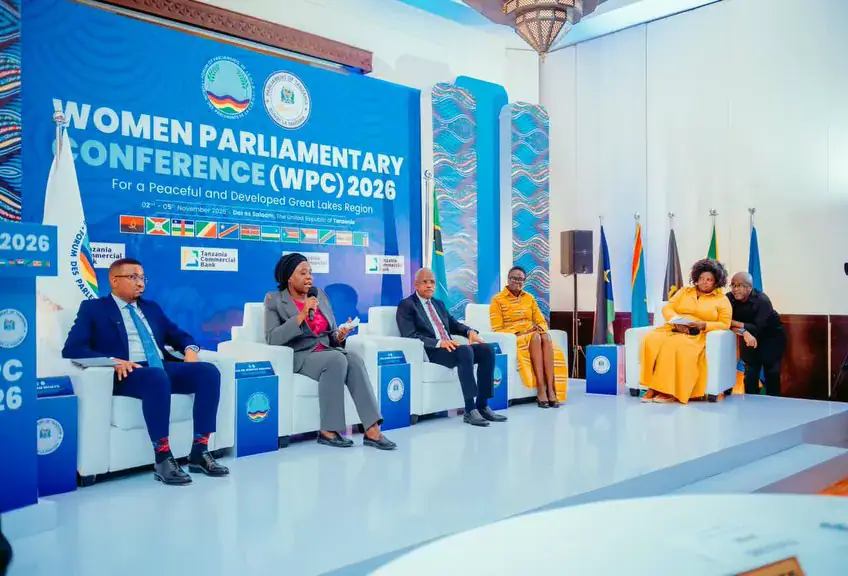
The relationship between security and economic development is directly relevant to the Women Parliamentary Conference 2026, taking place in Dar es Salaam from 2 to 5 November. The Conference will bring together women parliamentarians from the 12 ICGLR Member States to discuss conflict prevention and mediation, inclusive security governance, socio-economic empowerment, and regional partnerships. Parliaments have a direct role in addressing the connection between security and economic development.
Through legislation, budget scrutiny, and government oversight, parliamentarians can help make trade routes safer, border procedures more transparent, and economic services more accessible. Their decisions affect women's access to finance, property and inheritance rights, agricultural support, transport infrastructure, and social protection. Oversight can also establish whether public programmes reach displaced women, traders, farmers, and entrepreneurs whose livelihoods have been damaged by conflict.
Ultimately, peace must be visible beyond a declaration. It should be visible when a woman can cross a border without fear or arbitrary charges, when a farmer can take produce to market, when a displaced family can rebuild its livelihood, and when women can obtain the finance and support needed to participate in their communities' economic future. The measure of the November Conference will be whether its anticipated declaration and regional action plan help translate this link into parliamentary priorities.
Key points
- Women's economic development and peace are closely linked in the Great Lakes Region.
- Insecurity restricts livelihoods and economic opportunities for women in the region.
- Parliaments have a direct role in addressing the connection between security and economic development.