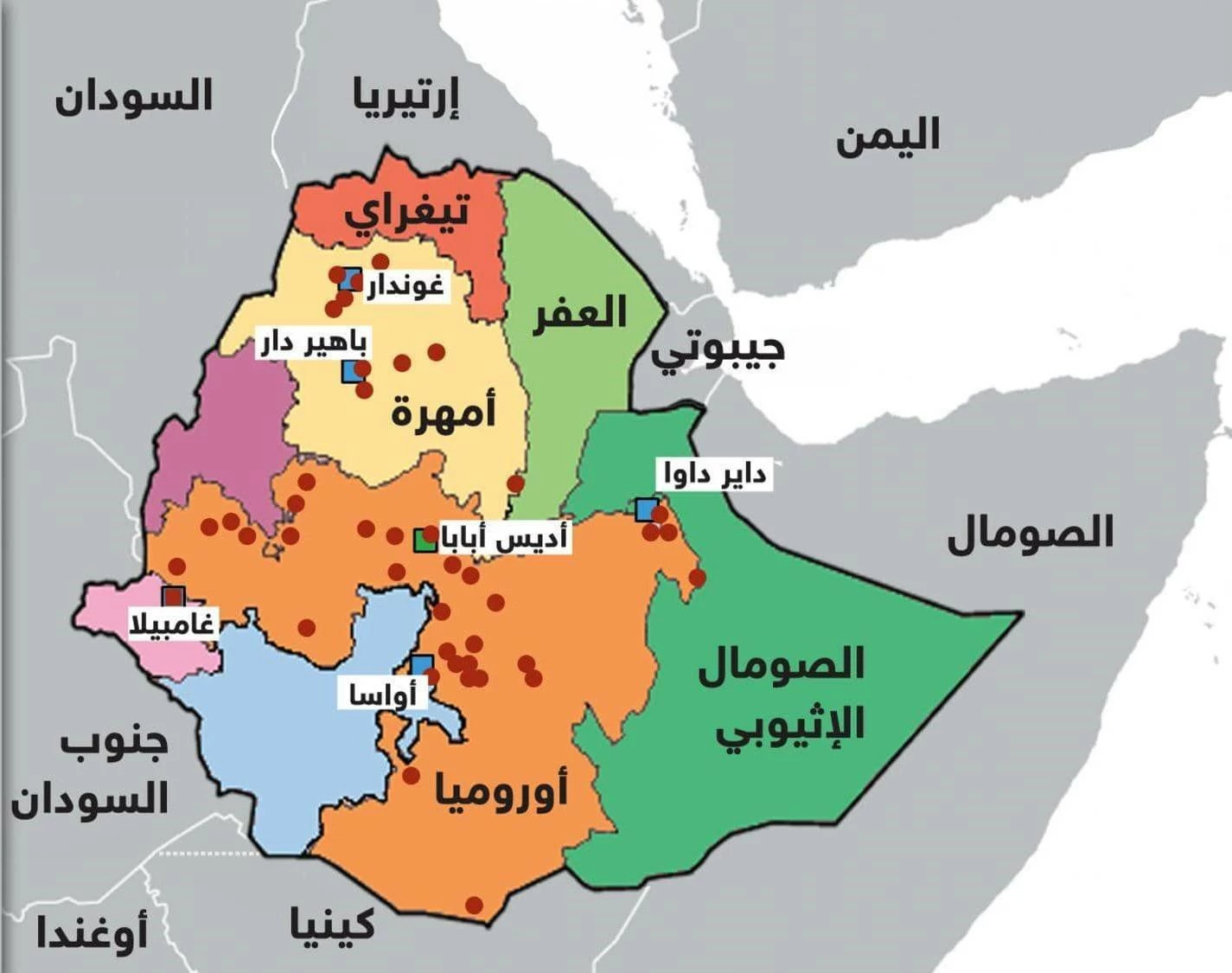
The Afar region in northeastern Ethiopia has emerged as a critical location in the ongoing conflict between the Ethiopian government and the Tigray People's Liberation Front. The region's strategic location on the route connecting Ethiopia to the port of Djibouti makes it a vital artery for Ethiopia's trade. Over 95% of Ethiopia's trade passes through this route, which is also a lifeline for the country's economy. The region's importance extends beyond its geography, with the conflict now affecting the entire region.
The Afar region shares borders with Djibouti and Eritrea, and its control is crucial for Ethiopia's access to the Red Sea. The Ethiopian government has accused Eritrea and other countries of supporting armed groups opposed to the government, which Eritrea has denied. The conflict in Afar has also taken on a regional dimension, with tensions between Ethiopia, Eritrea, and the competition for access to the Red Sea. The region's governor, Ul Arab, has accused Eritrean forces of direct military intervention.
The Afar region is home to important parts of the road network that connects Ethiopia's interior to the Djibouti ports. The region's location makes it a critical transit point for goods, including fuel, and its disruption could have significant economic implications for Ethiopia. According to the World Bank, over 16.5 million tons of goods pass through the Addis Ababa-Djibouti corridor annually. The conflict in Afar has already led to significant displacement, with reports of around 150,000 displaced people.
The renewed conflict in northern Ethiopia comes less than four years after the Pretoria Agreement, which ended the war between the Ethiopian government and the Tigray People's Liberation Front. The conflict has now spread to the Afar and Amhara regions, with seven armed groups forming an alliance to overthrow Prime Minister Abiy Ahmed. The situation is deteriorating, with concerns about a wider humanitarian crisis.
The Ethiopian government has reported gains in the conflict, including the recapture of the town of Alamata in southern Tigray. However, the Tigray People's Liberation Front has made advances in Afar, capturing the town of Eriebti. The conflict has disrupted communication networks and access to affected populations. The humanitarian situation is dire, with concerns about the impact on civilians.
The Afar region's strategic importance extends beyond its role as a transit point for goods. The region is also crucial for Ethiopia's economic development, with the country's aspirations to secure a stable outlet to the Red Sea. The conflict in Afar has significant implications for regional stability and the humanitarian situation.
The international community has expressed concern about the escalating conflict in northern Ethiopia. The situation remains volatile, with ongoing fighting and humanitarian concerns. The Ethiopian government and the international community must work together to address the root causes of the conflict and find a peaceful resolution.
Key points
- The Afar region's strategic location on the route connecting Ethiopia to the port of Djibouti makes it a vital artery for Ethiopia's trade.
- The conflict in Afar has significant implications for regional stability and the humanitarian situation.
- The Ethiopian government and the international community must work together to address the root causes of the conflict and find a peaceful resolution.