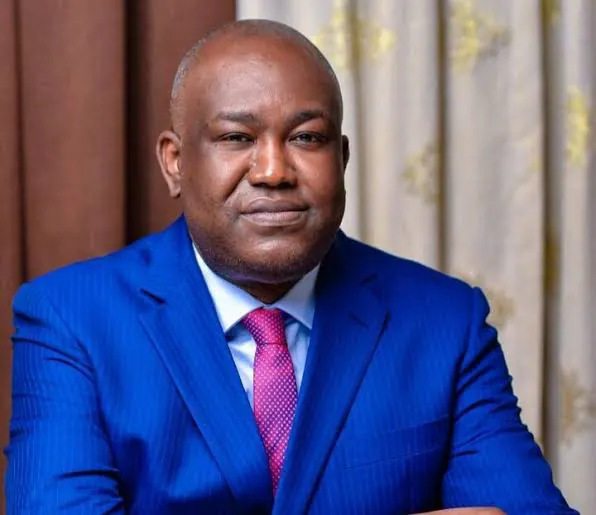
Businessman and politician Gbenga Olawepo-Hashim has argued that petrol could sell for N600 per litre in Nigeria without government subsidy. He made this submission during a September Diaspora Dialogues podcast, citing figures from his experience as a crude oil producer and oil and gas business owner. Olawepo-Hashim maintained that the cost of petrol should be determined after taking into consideration expenses across the upstream and downstream sectors, as well as reasonable profit margins.
Olawepo-Hashim's argument is based on the need for Nigeria to allocate a portion of its crude production for domestic refining. He suggested that such crude should be sold to domestic refiners at a lower price than crude exported to the international market. This approach is similar to the practice of other members of the Organisation of Petroleum Exporting Countries, which have arrangements for supplying crude to their domestic markets at prices different from those applicable to exports.
Olawepo-Hashim's position challenges the traditional framing of Nigeria's fuel pricing debate around the question of whether the government should retain or remove petrol subsidy. Instead, he wants the focus shifted to determining the actual cost of producing and distributing petrol in the country. According to Olawepo-Hashim, petrol should not cost more than N600 per litre at the pump, whether it is produced from locally refined crude or imported.
In a recent interview with Channels TV, Olawepo-Hashim reiterated his position, stating that petrol should cost around ₦500–605 based on actual domestic production costs plus reasonable margins and a modest energy tax. He attributed the current high prices and the entire subsidy story to government-driven accounting fiction. Olawepo-Hashim emphasized that the truth is that the price is currently inflated.
Olawepo-Hashim's argument is rooted in his experience as a crude oil producer and oil and gas business owner. He claimed that the cost of petrol can be reduced if the pricing of crude allocated for domestic refining is properly structured. This, according to him, can be achieved by allocating a portion of Nigeria's crude production for domestic refining and selling it to domestic refiners at a lower price.
The argument by Olawepo-Hashim has sparked a fresh debate on the fuel pricing regime in Nigeria. His submission has challenged the traditional approach to fuel pricing, which has been centered on the question of subsidy removal or retention. Olawepo-Hashim's position has also highlighted the need for a more nuanced approach to fuel pricing, taking into account the actual cost of producing and distributing petrol in the country.
Olawepo-Hashim's call for a review of the fuel pricing regime is timely, given the current economic challenges facing Nigeria. The country has been grappling with high fuel prices, which have had a significant impact on the economy and the livelihoods of Nigerians. Olawepo-Hashim's argument provides an alternative perspective on how to address the issue of fuel pricing in Nigeria.
Key points
- Olawepo-Hashim argues that petrol could sell for N600 per litre in Nigeria without government subsidy if crude pricing for domestic refining is properly structured.
- Olawepo-Hashim wants the focus shifted to determining the actual cost of producing and distributing petrol in the country, rather than debating subsidy removal or retention.
- Olawepo-Hashim's argument challenges the traditional framing of Nigeria's fuel pricing debate.