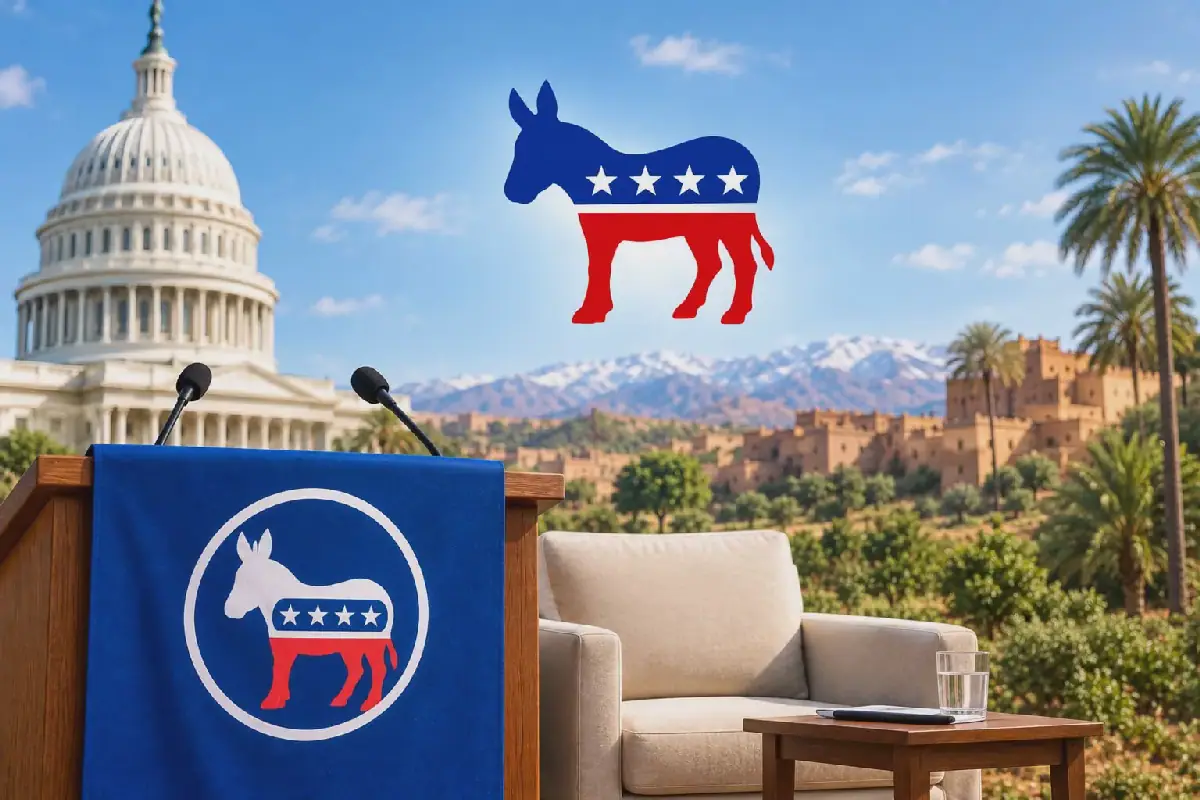
In Morocco, the donkey holds significant cultural and symbolic value, particularly in rural areas where it plays a crucial role in the local economy. However, despite its importance, there is no political party in Morocco with a donkey as its symbol, unlike in the United States where the donkey is the official symbol of the Democratic Party. The absence of such a party in Morocco can be attributed to the country's laws and regulations governing the establishment of political parties.
The law regulating the establishment of political parties in Morocco imposes strict conditions on party names, symbols, and logos. The law requires that these elements have serious and national political connotations. This means that a party with a name or symbol that is deemed to be mocking or frivolous would not be granted a license to operate. In the case of a "Donkey Party," the authorities would likely view it as an attempt to trivialize the political process or create confusion.
The origins of the donkey as a symbol of the US Democratic Party date back to the 19th century. During the presidential campaign of Andrew Jackson in 1828, his opponents mocked him as a "donkey" due to his stubbornness. However, Jackson cleverly used this insult to his advantage, presenting himself as a hardworking and dedicated servant of the people. Over time, the donkey became an official symbol of the Democratic Party, appearing in cartoons and other media from the 1870s onwards.
In contrast, the perception of donkeys in Moroccan society is complex and often ambivalent. While donkeys are highly valued for their role in rural areas, they are also sometimes used as an insult. This dual perception makes it difficult for anyone to openly identify with a party bearing the donkey symbol, as opponents could exploit this negative connotation for their own purposes.
In 2018, a civil society organization attempted to promote the reputation of donkeys in the Taza region, but faced significant challenges in gaining acceptance and legal recognition. Many people and institutions were hesitant to engage with the organization due to the perceived stigma associated with the donkey symbol. This experience highlights the difficulties of using the donkey as a symbol in Morocco, particularly in a political context.
The reluctance to adopt the donkey as a symbol in Morocco can also be attributed to the cultural emphasis on maintaining "dignity" and "respect" in politics. Moroccan politicians and parties tend to prioritize gravitas and seriousness in their messaging and branding, which may make it difficult for a party with a donkey symbol to be taken seriously.
In conclusion, the absence of a "Donkey Party" in Morocco is largely due to the country's regulatory framework and cultural attitudes towards politics and symbolism. While the donkey holds significant cultural value in Morocco, its use as a political symbol is not feasible due to concerns about trivialization and negative connotations.
Key points
- The Moroccan law regulating party names and symbols requires that they have serious and national political connotations.
- The perception of donkeys in Moroccan society is complex and often ambivalent.
- The cultural emphasis on maintaining "dignity" and "respect" in politics may make it difficult for a party with a donkey symbol to be taken seriously.