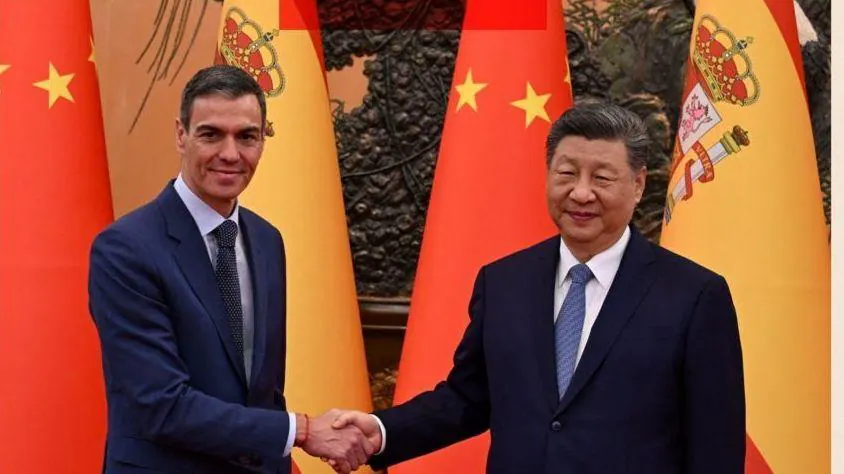
Spain and China are strengthening their ties, with Spanish Prime Minister Pedro Sanchez visiting Chinese President Xi Jinping four times in four years. This growing relationship has raised concerns among some European Union partners, who view China as a strategic competitor and potential geopolitical threat. Sanchez has called for the EU to improve its relations with China, which has not been universally welcomed within the bloc.
The city of Shanghai recently became the first Asian city to be invited as a guest of honor at the famous "La Mercè" cultural festival in Barcelona. The event showcased a mix of Chinese and Catalan traditions, with Chinese performers and artisans participating alongside local artists. This cultural exchange reflects the growing appreciation between Spain and China, with both sides seeking to strengthen economic and cultural ties.
However, not all EU member states share Spain's enthusiasm for China. Germany and France, the EU's two largest economies, have taken a more cautious approach, seeking to limit Chinese investment and protect European industries. They have proposed giving the EU more powers to block Chinese state-backed firms from accessing the European market, citing concerns about the massive trade deficit with China.
Some European countries have expressed concerns about the close relationship between China and Russia, with worries that Beijing may be providing economic and technical support to Moscow's military efforts in Ukraine. As a result, Spain's warming ties with China have led to accusations that Madrid is prioritizing its own interests over broader European concerns.
Despite these concerns, Spain's relationship with China has led to significant investments in the country, particularly in the automotive and battery sectors. Chinese companies such as Chery and CATL have announced major investments in Spanish factories, which could make Spain a key hub for Chinese industry in Europe.
The growing presence of Chinese companies in Spain has raised concerns among some Europeans that this could undermine the EU's economic interests. However, others argue that China's investments could help to revitalize Spanish industries and create jobs. The Spanish government has defended its approach, saying that it is seeking to promote economic growth and national interests.
The debate over Spain's relationship with China highlights the challenges facing the EU as it navigates complex global relationships. As the bloc seeks to promote its economic and strategic interests, it must balance the competing priorities of its member states. Ultimately, the EU's response to the Spain-China rapprochement will depend on its ability to find a unified approach to dealing with China.
Key points
- The EU is concerned that Spain's growing ties with China could undermine the bloc's unity and economic interests.
- Spain's relationship with China has led to significant investments in the country, particularly in the automotive and battery sectors.
- The debate over Spain's relationship with China highlights the challenges facing the EU as it navigates complex global relationships.