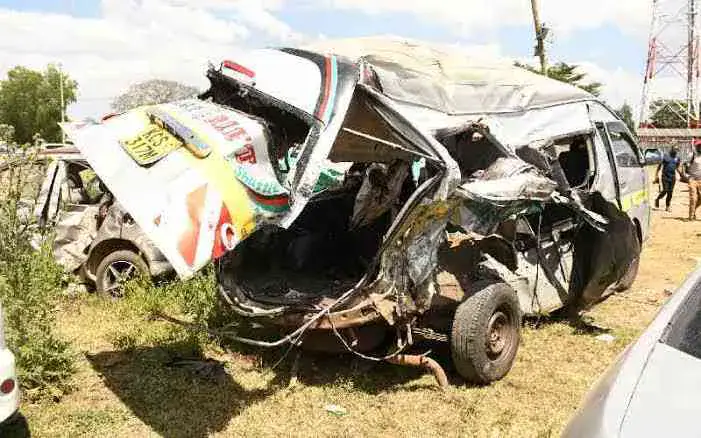
Road safety concerns are growing in Kenya as the country recorded 5,009 road deaths in 2025, up from 4,748 in 2024. Millions of Kenyans rely on matatus for daily transportation, making driver decisions critical to passenger safety. The National Transport and Safety Authority (NTSA) reported 3,995 deaths from January 1 to October 4, 2026, a 9.2% increase from the same period in 2025. These figures cover all road users, not just matatu passengers.
Edwin Mukabana, chairman of the Federation of the Public Transport Sector, argues that knowing how to drive is not enough to ensure passenger safety. He believes driver training should go beyond operating a vehicle and focus on the responsibility of carrying passengers. Mukabana cites the former Kenya Bus Service as an example of an employer that took driver training seriously, with prospective drivers undergoing medical assessments and eight weeks of training in passenger transport and city driving.
Experience does not always translate into safe driving, according to Mukabana. A driver may be familiar with a vehicle and the road but still take risks when rushing to pick up passengers or attempting a dangerous overtake. Drivers need to understand that passenger safety must come before the number of trips they make. Mukabana emphasizes that responsibility does not rest with drivers alone, but also with operators, supervisors, and organizations managing public service vehicles.
The National Transport and Safety Authority (NTSA) has launched a nationwide capacity-building program targeting over 4,000 PSV drivers, operators, supervisors, and Savings and Credit Cooperative Society (SACCO) managers. The program covers defensive driving, hazard prevention, vehicle safety checks, passenger care, and regulatory compliance. By October 20, NTSA reported that 3,201 participants had undergone training, including 2,352 PSV drivers and 849 transport management personnel.
The training program aims to address road safety challenges by bringing drivers and transport management personnel into the same training effort. This recognizes that road safety depends on more than individual decisions behind the wheel. However, questions remain on whether the measures address the pressures drivers face and how effectively they tackle risky behavior beyond basic driving skills.
Mukabana also notes that drivers on long-distance routes need training suited to highway driving, which presents different challenges from navigating traffic in towns and cities. Managing fatigue, judging when it is safe to overtake, and responding to hazards at high speeds all require careful judgment. The NTSA program aims to equip drivers with these skills, but its effectiveness remains to be seen.
The concerns about matatu driver training come amid efforts to strengthen road safety in Kenya. The government and transport sector stakeholders must work together to address the root causes of road accidents and ensure that drivers are equipped to prioritize passenger safety. The success of the NTSA program and other initiatives will depend on their ability to address the complex challenges facing the transport sector.
Key points
- Experience alone may not be enough to keep matatu passengers safe.
- Driver training should go beyond operating a vehicle and focus on the responsibility of carrying passengers.
- A nationwide capacity-building program has been launched to target over 4,000 PSV drivers, operators, supervisors, and SACCO managers.