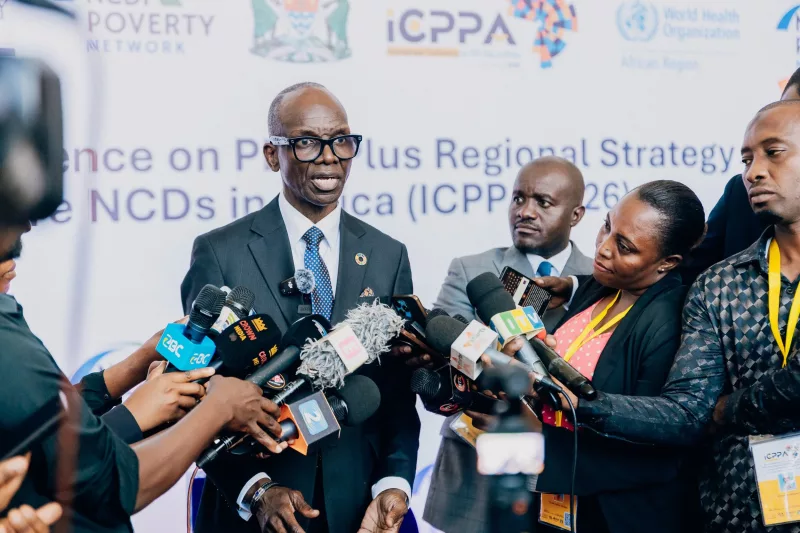
The World Health Organisation (WHO) has praised Kenya for its swift response to an imported Ebola case, saying the country's health authorities acted promptly to detect, isolate and manage the patient. The patient, who tested positive for Ebola, had travelled from the Democratic Republic of Congo through Uganda before arriving in Kenya seeking medical care. WHO Regional Director for Africa Mohamed Janabi commended the government for immediately sharing information about the case.
The patient became ill while in the Democratic Republic of Congo and later travelled to Kenya, where they eventually died. Janabi extended his condolences to the family of the deceased, saying he was saddened by the death. He described the response as an example of the International Health Regulations (IHR) at work, stressing the importance of countries quickly sharing information when dealing with potentially dangerous infectious diseases.
Janabi emphasised that the case should not be interpreted as evidence that Ebola is spreading within Kenya, drawing a distinction between an imported case and an outbreak. He said an imported case occurs when an infected individual enters a country from elsewhere, while an outbreak would require ongoing local transmission within the country. At this stage, no local transmission has been detected in Kenya.
Kenyan health authorities have placed all identified contacts under close monitoring as part of measures to prevent any possible spread of the virus. Janabi said the response would continue to involve health workers, the government and partners, while arrangements were being made for a safe and dignified burial of the deceased in accordance with established public health protocols.
The WHO official cited a similar incident in France several weeks ago, where authorities managed an imported Ebola case involving a French physician who had been working in eastern DR Congo. He said the two cases underline the need for countries to maintain strong disease surveillance systems and the capacity to rapidly detect, isolate and manage suspected infections.
Janabi praised Kenya's health workers and partners involved in responding to the case, saying he appreciated their efforts. The WHO continues to emphasise vigilance among countries neighbouring Ebola-affected areas, particularly given the movement of people across borders. Health officials are seeking to reassure the public that an imported Ebola case does not, by itself, constitute an outbreak in the country.
The WHO's praise for Kenya's response comes as the country prepares for the 2027 elections, with 307 days and 09 hours remaining. The organisation's recognition of Kenya's efforts highlights the importance of transparency and swift action in responding to public health crises. All identified contacts in Kenya remain under close monitoring, and the burial of the deceased will be conducted according to established public health measures.
Key points
- WHO praises Kenya for swift response to imported Ebola case
- No local transmission detected in Kenya
- WHO emphasises vigilance among countries neighbouring Ebola-affected areas