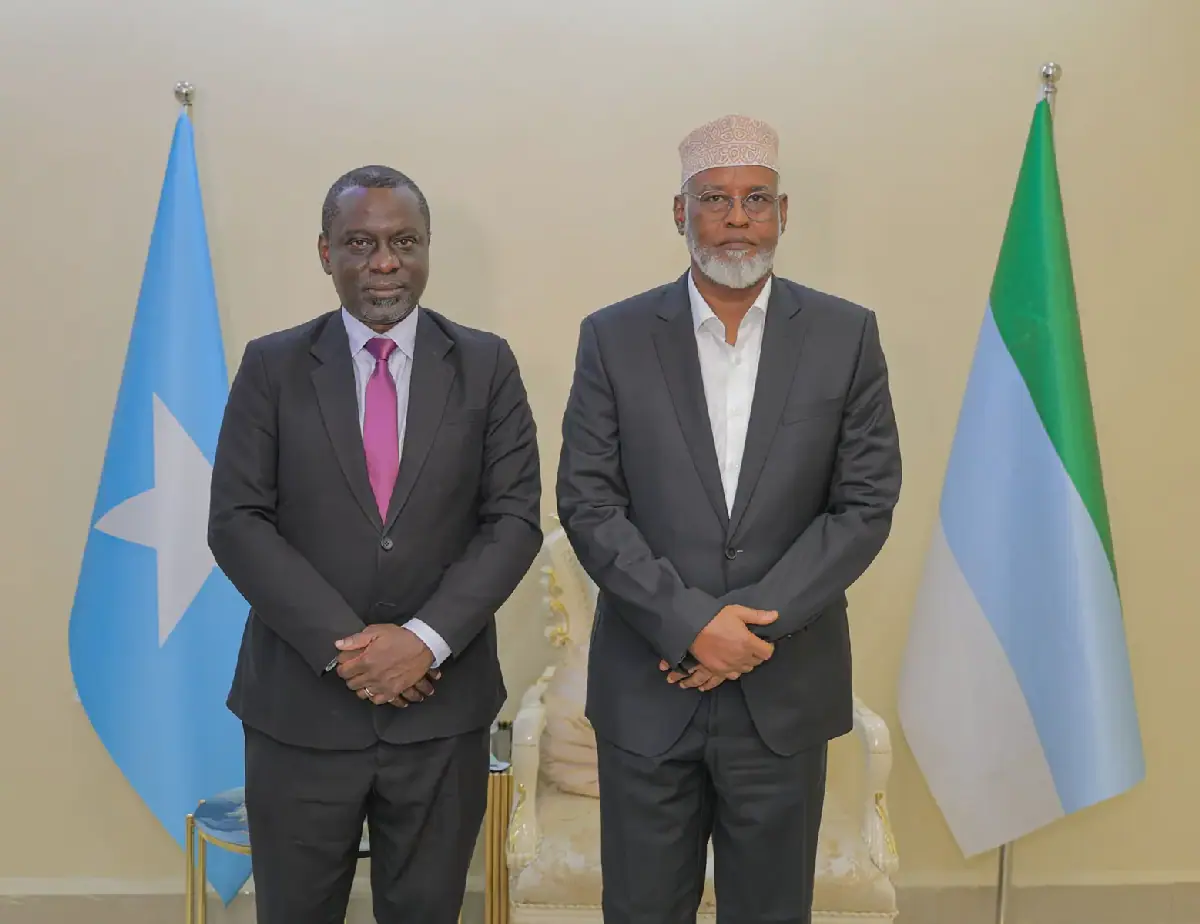
The World Health Organization's representative in Somalia, Dr. Humphrey Karamagi, recently met with Jubaland President Ahmed Mohamed Islam, also known as Ahmed Madobe, in Kismayo to discuss expanding healthcare services. The meeting focused on improving healthcare delivery and addressing medical needs in Jubaland. According to the regional administration, the discussions aimed to strengthen public health services and enhance cooperation between WHO and Jubaland's health authorities.
President Madobe welcomed Dr. Karamagi and reaffirmed his administration's commitment to collaborating with WHO, particularly in improving access to healthcare in areas facing shortages of medical services. He also pledged support for WHO activities and emphasized the importance of delivering humanitarian assistance without political interference. This commitment ensures that aid reaches vulnerable communities in need.
The meeting covered plans to strengthen primary healthcare services, improve Kismayo General Hospital, and expand access to medical facilities across Jubaland. Both sides stressed the need to shift from emergency responses to more sustainable healthcare services. This approach aims to provide continuous and reliable healthcare to communities in the region.
Discussions also focused on improving the capacity of public health workers at the district level, including strengthening medical facilities. The goal is to ensure that communities have access to essential medical services. By enhancing the skills of health workers and infrastructure, Jubaland can better address its healthcare challenges.
Dr. Karamagi reaffirmed WHO's commitment to providing technical assistance and cooperation with Jubaland's Ministry of Health. The organization aims to improve healthcare delivery and develop sustainable solutions to the region's medical challenges. This partnership is crucial in addressing the significant healthcare needs in Somalia, particularly in remote and underserved communities.
Somalia continues to face substantial healthcare challenges, including limited access to medical facilities, shortages of trained health workers, and inadequate resources. WHO works closely with Somali federal and regional authorities to strengthen the country's health system, support disease prevention, and improve access to essential medical services. The organization's efforts are vital in enhancing the overall healthcare landscape in Somalia.
The meeting between Dr. Karamagi and President Madobe highlights the ongoing efforts to improve healthcare in Jubaland and Somalia as a whole. By working together, WHO and regional authorities can develop effective strategies to address healthcare challenges and provide essential services to communities in need. This collaboration is a step towards achieving a stronger, more sustainable healthcare system in the region.
Key points
- WHO and Jubaland's health authorities aim to strengthen primary healthcare services and improve access to medical facilities.
- The meeting emphasized the need to shift from emergency responses to sustainable healthcare services in Jubaland.
- WHO reaffirmed its commitment to providing technical assistance and cooperation with Jubaland's Ministry of Health to improve healthcare delivery.
Reporting sources
- WHO, Jubaland Discuss Expanding Healthcare Services in Southern Somalia · Shabelle Media Network