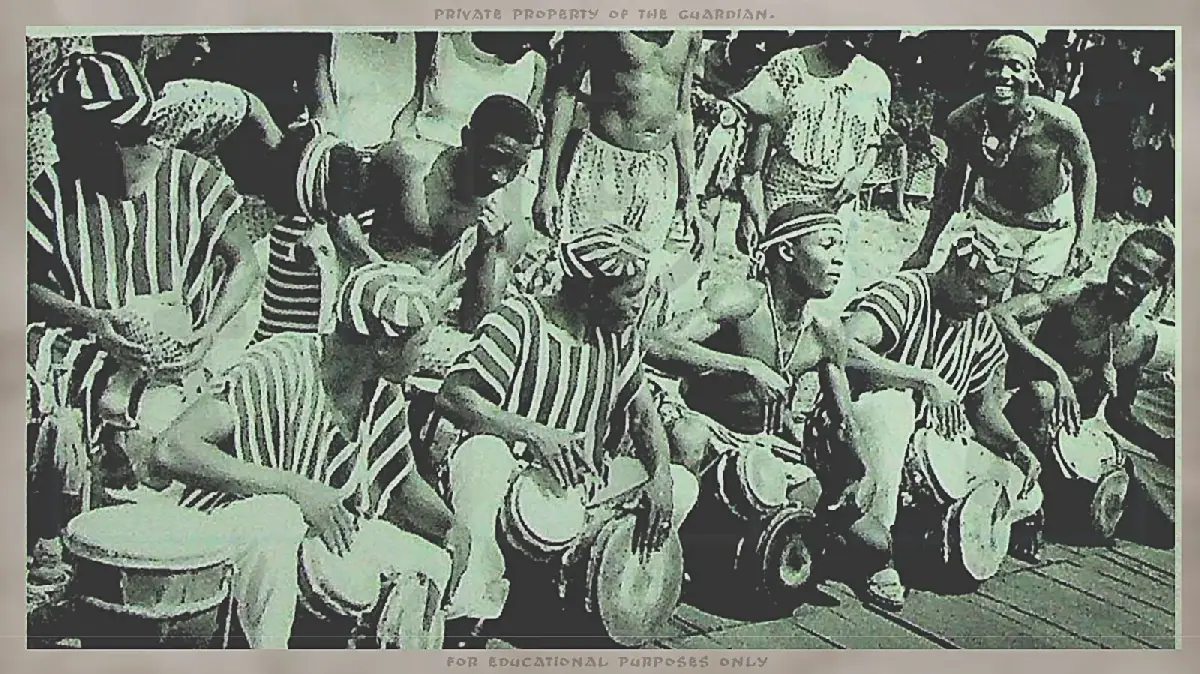
In Nigeria's past, the arrival of a governor or foreign dignitary was marked by a unique display of sound, art, and rhythm, rather than the mechanical and intimidating signs of power commonly seen today. According to historical archives, ancestors used the power of music, art, and rhythm to welcome royalty and dignitaries with immense dignity. These traditional methods of announcement were not only sophisticated but also conveyed a sense of community and celebration.
In Northern Nigeria and parts of the ancient Oyo and Benin kingdoms, royal horn blowers used an instrument known as the Kakaki or royal horns to announce the arrival of a king or important ambassador. The Kakaki is a remarkably long metal trumpet, sometimes reaching over two meters in length, and was strictly reserved for royalty, emirs, and supreme dignitaries. When blown, the Kakaki could project sound across kilometers, acting as an ancient broadcast network.
The Onigangan Squad, a group of master palace drummers, played a crucial role in directing the flow of royal protocol. Dressed in traditional agbada attire and fila caps, these drummers used gangan, the Yoruba talking drums, to speak through their instruments and convey messages to guests and dignitaries. By squeezing the leather strings under their armpits, a master talking drummer could mimic the tonal inflections and pitches of human speech, creating a personalized and artistic welcome.
The arrival of a VIP in old Nigeria was an immersive, high-energy theatrical experience that unified the entire community. The drummers and acrobatic dancers created a shared rhythm that allowed ordinary citizens to gather, dance, and share in the celebration of leadership. This performance served as a powerful reminder to the visiting dignitary that their power was deeply tied to the energy, happiness, and support of the collective public.
The use of sound, art, and rhythm to herald power and welcome dignitaries was a distinctive feature of Nigerian culture. These traditional methods of announcement were not only aesthetically pleasing but also conveyed a sense of respect, dignity, and community. In contrast, modern methods of announcement often create distance between the ruler and the ruled, highlighting the significance of preserving cultural heritage.
The photographs from The Guardian's archive capture Nigeria's original, living protocol teams, including royal horn blowers and elite talking drummers. These images reveal a sophisticated civilization where music was the ultimate red carpet, designed to welcome dignitaries with immense dignity, celebrate authority, and pass messages across vast distances. The legacy of these traditional methods of announcement continues to inspire and educate, offering a unique glimpse into Nigeria's rich cultural heritage.
Key points
- The use of Kakaki or royal horns and talking drums was a unique feature of Nigerian culture used to herald power and welcome dignitaries.
- The Onigangan Squad, a group of master palace drummers, played a crucial role in directing the flow of royal protocol.
- The traditional methods of announcement used in Nigeria's past conveyed a sense of community and celebration, unlike modern methods which often create distance between the ruler and the ruled.