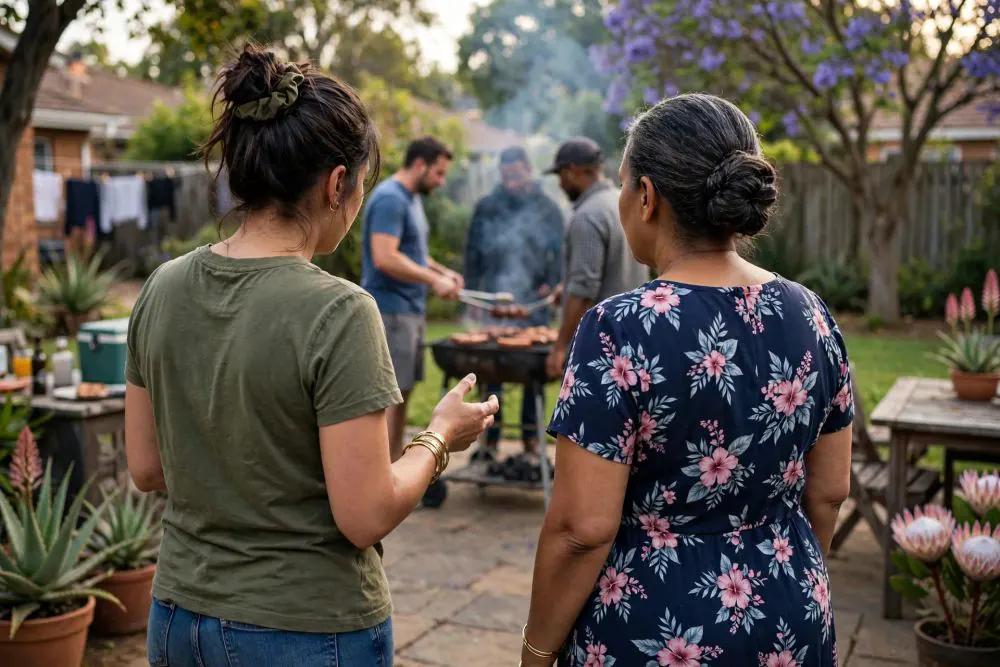
As South Africa celebrates Heritage Day and National Braai Day, many families are reminded of the importance of their cultural heritage. However, for some women, this heritage can be a burden. Seshni Moodley, a human rights lawyer, says that the pressure of "family honour" is a quiet, unspoken idea that still shapes many women's lives. This pressure can manifest in various ways, including the expectation to stay in difficult marriages or to prioritize family reputation over personal safety.
Moodley notes that the pressure to maintain family honour is often not explicitly stated, but it can be felt through comments, expectations, and silences. Women may be discouraged from reporting abuse or speaking out against mistreatment because it will "bring shame" to the family. This can lead to women feeling trapped between their safety and their parents' reputation. Moodley has worked with numerous women who carry this burden quietly, feeling like they are the glue holding their families together.
The pressure to present an ideal life, marriage, home, and children has intensified with the rise of social media. Moodley has noticed extended families using WhatsApp groups to criticise, compare, or shame others. This can lead to disputes escalating rapidly, and women being subjected to cyber-harassment by relatives. Moodley explains that certain forms of harassment by family members, including conduct covered by South Africa's harassment laws, can have legal consequences.
However, the concept of "family honour" is often not a collective responsibility. Men are not subjected to the same level of scrutiny for their mistakes or choices, while women are expected to maintain the family's reputation through silence, sacrifice, and self-control. This inequity is compounded by the fact that women are often expected to prioritize family honour over their own dignity and well-being.
Moodley argues that Heritage Day provides an opportunity to reconsider the values that we wish to transmit to future generations. We can preserve the positive aspects of our culture while choosing not to perpetuate harmful traditions. We can teach our daughters that their worth is not contingent upon obedience or endurance, and our sons that respect is demonstrated through compassion rather than control.
The Constitution, which forms the foundation of South Africa's democracy, safeguards women's rights to equality, dignity, and freedom and security of the person, including protection from violence. These rights are part of our national heritage, and it is essential that we remember this on Heritage Day. By working towards families that support women, communities that keep them safe, and customs that grow from compassion, we can create a more equitable society.
Ultimately, Moodley believes that honour should not require women to diminish themselves, nor should heritage demand their silence. By celebrating our heritage and working towards a more inclusive and compassionate society, we can create a brighter future for all South Africans.
Key points
- The pressure of "family honour" can be a burden for many women in South Africa.
- This pressure can manifest in various ways, including the expectation to stay in difficult marriages or to prioritize family reputation over personal safety.
- The Constitution safeguards women's rights to equality, dignity, and freedom and security of the person, including protection from violence.